by Eszter Hargittai on November 27, 2025
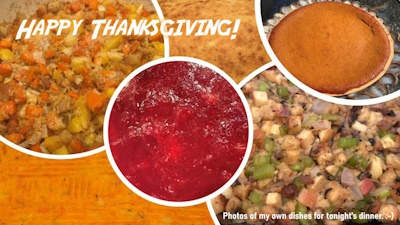
I think a fair bit about how generative AI can help our everydays. (I also think a lot about its challenges, but this post is not about that.) Here is a good example for how it can be useful with a complex meal prep situation for which Thanksgiving is the ultimate case (which I’m celebrating in Zurich this year having taken a day off work since of course it’s not a holiday here, but my cooking requires more than a few hours).
Assuming limited stove top, oven, and counterspace (a very fair assumption in the Zurich housing market), it is important to optimize the order of preparing the various dishes that require a complex mix of preparations. One example is needing to roast some garlic for 30 minutes as just one ingredient in this amazing mashed potatoes and yams dish that I have been making annually for 25 years (I seem to have blogged about it already 20 years ago).
So how can Gen AI help? Give it your list of recipes and ask it to optimize the process for you. I used Google’s NotebookLM for this as cooking optimization is something I want to keep long-term and I like having a separate saved notebook for it (handled well by some AI tools, but not so much Gemini, which is where I have a subscription). (As much as I like NotebookLM – as far as I can tell it requires a Google account – I do wish they would introduce folders.. available as browser add-ons, I know.) This should all work with your preferred Gen AI tool as well, or if it doesn’t then you may want to rethink your Gen AI choices. ;-)
My prompt was simple: [click to continue…]
by Harry on December 13, 2023
This is my marmalade-making time of the year. Not because it’s the only time I can get hold of Seville oranges – I can get hold of the MaMade tins any time of year, and have only ever gotten fresh ones to use one time that I happened to visit a friend in Arizona who complained about the fruit trees outside that produced oranges that were inedibly bitter (I picked 10lbs and brought them straight home). It’s actually because of the grapefruit.
Only being able to get hold of MaMade (very inexpensive, at Amazon, makes excellent marmalade) gives rise to a problem. MaMade is only sold in a thin cut version. So, what if you like thick cut? I finally figured out the solution, which is to buy two white grapefruit, that are only available, here, December-February, and chop the rind roughly. You simply add that to the marmalade and you have a rough cut Seville orange marmalade with just a hint of grapefruit flavour, but really just a hint.
I’m not finished with the regular marmalade yet. I specifically like Oxford marmalade – once you’ve had that its hard to go back. And I like it bitter. Conventional recipes tell you to substitute black treacle or molasses for some of the sugar, but no recipe has gone far enough for me. And the 4lbs of sugar recommended to accompany a tin of MaMade makes for too sweet a result. So – I use 2lbs of sugar and 1lb of treacle/molasses, which gets exactly the flavour I want.
Still there’s a problem. With only 3/4ths the recommended level of sugar, how do you get the marmalade to set properly? One way is to add phenomenal amounts of pectin. But almost as good is just to simmer the concoction for much longer than recommended, just to reduce the liquid, until you have something that, while runny, is adequately viscous to stay on toast (or if you are Paddington or the late Queen, in a sandwich). I generally cook for about around 3 hours, most of it on a very low heat, but occasionally boiling it while stirring vigorously. You’ll end up with less than 5lbs of marmalade, but with an intense flavour so you use less at a time.
A student the other day revealed her obsession with grapefruit and that prompted to me attempt fully grapefruit marmalade.
[click to continue…]
by Eszter Hargittai on December 30, 2020
Is there anyone who hasn’t spent more time in the kitchen this year than usual? Perhaps healthcare workers. I don’t eat bread so I skipped all the sourdough discussions, but I did end up trying all sorts of new recipes. I’ll just share one savory and one sweet, and am otherwise hoping folks will contribute their own favorites.
A Late Show with Stephen Colbert was my go-to daily entertainment watching the previous night’s episode around lunch time. I was so impressed by how he and his team pivoted to the lockdown. In one episode, he cooked a dish based on shallots with Alison Roman that sounded very intriguing since I like shallots, but few recipes ever call for more than a bit of it (or I don’t tend to know them, please educate me). I made the dish the next day and have made it a bunch of times since, it’s excellent. I substituted sardines for the anchovies, because I already had those at home and since it worked well for me, I’ve stuck with that variation.
 For sweets, I tried a sweet potato casserole for the first time this Thanksgiving and was so impressed that I’ve made it twice since (and will definitely be making it again). It seems to be presented as a side dish, but in my book it’s definitely a dessert. I do recommend two modifications to that recipe though that I picked up on from reading the comments on the site: (1) half the white sugar (1/4 instead of 1/2 cup); (2) double the topping except for the butter. Commenters noted that it was too sweet otherwise and they were right. I forgot these modifications the last time I made it and it was indeed too sweet. It’s a straight-forward recipe and doesn’t even really require a food processor (I haven’t used one for it). Try it out!
Your turn, please share your finds (or oldies, but goodies if you prefer).
by Eszter Hargittai on December 23, 2020
Yesterday, I kicked off the “Let’s end 2020 on a positive note” series, which I continue today with a very different angle (we’ll be back to other content types later this week). With Covid-19 imposing lots of restrictions on where we could go this year, many of us spent considerable time in the kitchen. This likely included some innovations. Let’s talk about fresh herbs in particular (I’ll have a separate post about more general cooking/baking finds). What is a fresh herb that you added to your cooking repertoire this year that you definitely plan on keeping long term? Or if you were already a fresh herb aficionado then feel free to mention what was not new per se, but brought continued joy.
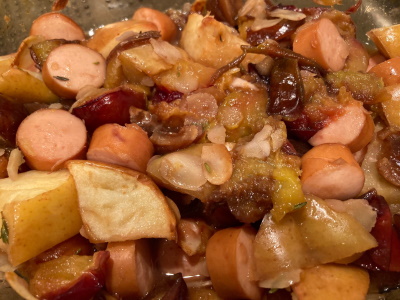 I wasn’t big on fresh herbs in the past, my most consistent use was of rosemary sprigs as adding them to even the simplest dish of oven-roasted vegetables is already a great touch. My most exciting fresh herb addition this year was fresh thyme. I now have fresh thyme on hand all the time as it has proven to be so helpful in numerous dishes. Whether on chicken (my most common go-to meat) or veggies, it has never disappointed. I don’t even have a particular recipe to point to, it’s just been extremely helpful all around. Pictured: chicken hot dogs with apples, plumbs, sliced almonds and, of course, fresh thyme (you can spot it).
I’ll mention a failed attempt: fresh turmeric. Turmeric was the major spice addition to my cooking in 2019 so in 2020 I thought I’d go to the root directly. For me, this was not worth the trouble. First, it’s rather tedious to deal with. More importantly, it stains everything. So unless you want everything in your kitchen to look orange or are extremely careful, beware. I also find turmeric in spice jars to be quite effective so the trouble was not worth it to me.
What fresh herb did you enjoy adding to your cooking and baking this year?
by Belle Waring on September 23, 2015
Hey, do you want a look at Vatican City’s hottest priests? Someone will totally sell a calendar to you. Right there next to the 10,000 other tackiest items for sale along the street that leads to St. Peter’s Basilica. It’s just black-and-white prints of photos taken on the streets in the Vatican during special days. Less appropriate sexy funtimes can be found in the Orthodox Church; the video is mildly unsafe for worth in that the camera ogles shirtless young men while they are laved from a font by a man wearing a chausuble, and that sort of thing, but the still photos are…wait, do you work in a cubicle? You don’t want to seem like this guy from the Key and Peele sketch as you’re surfing the Gaily Grind. I’ve gone tacky figurines and blessed amulets shopping there before, to buy things for Margaret, my granddad’s…maid, sort of? Housekeeper? She lived with him for more than 30 years. She was an adorable, tiny old Irish woman with a number of teeth fewer than is commonly seen, and would always fuss over how much you’d grown and make you (this was mandatory) “just a cup of tea and an English muffin with a bit of butter on it.” She planned to retire at 75. She didn’t actually know exactly how old she was, until my grandfather went to her hometown while in Ireland and looked her up in the parish church. She was older than she thought, a fact which pleases, as Agatha Christie notes, only those younger than 16 and over 80. Her three children put her in an old folk’s home as soon as she turned up. That was some King Lear shit. She called and pleaded with my grandfather to bust her out of this crummy place in New Jersey. And so she returned to her room next to the kitchen, with the old TV and the crucifixes, and the framed photos of Pope John Paul II, and performed increasingly light duties like making breakfast until she was in her late 80s or even early 90s and she needed nearby assisted living for real because she couldn’t manage the stairs. Mildly disjointly, I think the vast majority of the breakfasts my grandfather consumed during his life were brought to his bedroom on a tray and included fresh-squeezed orange juice. Sometimes he would go retrieve the prepared tray himself, but I count this the same. And WWII obviously dragged the numbers down a bit. This is a noble life goal to which we should all aspire.
Even then my grandfather would drive over to see her every Sunday. He would pick her up, take her to church, go to church himself which was shorter because he had the common sense to be an Episcopalian (though it seemed at times he actually believed, a thing likely to cause a furrowed brow among his friends) and then take her back. He didn’t even want to go to church in town! After she died he started to go to the closer Bridgehampton church he preferred, mostly IMO because they have a half-hour service at 8 a.m. without hymns, and one can get the whole thing over with and get a good tee time with leeway for a Bloody Mary, all quite early in the day. The hymns are the best part, though, so going to this service sucked. Also it was too early. Yet one felt obliged to go. But the priest there is a lovely person who married me and John and also baptized both our children. “But why, Belle, that seems like a lot of trouble to go through seeing as you’re not, in fact, a Christian?” Look, being Episcopalian is a social thing, like being a secular Jew, but with a bit more ritual effort required. Anyway it made my grandfather happy. That was the main point. Also, there’s this one awesome part where the priest anoints the kid with chrism and says “CHRIST CLAIMS YOU FOR HIS OWN.” One definitely gets the sense then that if the post-death regions exist and are not quite as one has imagined them, nonetheless one will be on firm ground. You should think of it as an excuse to throw a catered betting party with your friend-with-benefits Pascal.
by Belle Waring on December 3, 2013
I think it’s possible–nay, probable–naw, it is a nigh-certainty that you have not seen one of the best music videos ever made, quite randomly for French electronica duo Justice (they aren’t even, they’re sort of a rock band. But not.) It stars a young Snake Plissken (presumably before he is inserted into, and subsequently [SPOILER ALERT] escapes from, New York, in the movie “Escape From New York.” I strongly encourage everyone to go on and click full screen and listen to the song and everything. Dudes this is so fucking awesome. C’mon. Did they actually program a computer from the 1980s to make some of the “high-definition” graphics?
My best friend from middle school and I once wrote a program like that which, by displaying a series of screens on which we had drawn the lines point to point, created the image of a rotating green wire cube on a black screen on her Apple II c. It took us like four hours or something. More? Her family’s cook made killer shrimp tempura, though, so that was sustaining. And then coffee milkshakes and chocolate cookies for afters. Actually she would ask you egg preferences the night before and bring us breakfast in bed every morning that I ever slept over, which was a billion. With fresh-squeezed OJ. With sugar in the coffee already how she knew you liked it. Mrs. Hong was the shit, but she was prone to get angry and would not let anyone go in the kitchen and make a peanut butter sandwich or anything. Or even a bowl of cereal. Eventually Sacha’s mom had to fire her when Mrs. Hong threw a huge-ass knife at her during an argument over menu planning and it stuck, quivering, embedded a good two inches in the plaster of sloping ceiling of the back stairs. Even then it was a struggle (internally, for her mom). Mrs. Hong claimed it was a “warning shot” and hadn’t gone that close to Sacha’s mom’s head, which was kind of true but kind of not super-relevant. Anyway, A ROTATING CUBE YOU GUYS RLY! We were siced. Just like how siced I am about this video right now.
ETA: sometimes the frame isn’t quite wide enough, so watch on YouTube if not.
by Eszter Hargittai on December 2, 2012
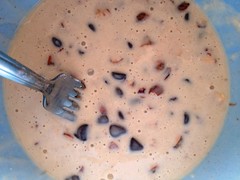 Years ago, a friend I hosted made me pancakes with over a dozen ingredients. This was an interesting concept that had never occurred to me. The plain ones had never really appealed to me, but I’d only experienced the simple addition of chocolate chips, which, while making a bit of a difference, had still not converted me to this American tradition. While my palette does not seem sufficiently sophisticated to appreciate over a dozen ingredients at once, I have since adopted my friend’s approach of adding 4-5 items to the mix and now look forward to this treat on weekends. (I’m no purist, by the way, I just work with pancake mix from a bag.)
In addition to chocolate chips, a hint of mint turns out to be an excellent ingredient. (You really do want to be careful with it though as more than a drop or two can overwhelm all other flavors.) I’ve found dried fruits such as dried cranberries and pineapple work well, too, chopped up into little pieces. Various nuts are other fun options, also chopped. In particular, I recently started using some gingersnap almonds (courtesy of Chicago’s very own Mama’s Nuts) that has been delicious (they’re great on their own as well, but that’s another matter..). Right after Thanksgiving, adding some pumpkin pie filling to the batter was a good way to make something of leftover ingredients while varying things up a bit.
Another tweak that I have not tried yet, but came recommended by my friend David Figlio and sounds very intriguing is the idea of sprinkling one side with some Old Town spiced sugar right before turning it over. Apparently this gives it a little bit of brulee crunch and just the right amount of sweetness (especially helpful if you don’t like to use syrup, which I don’t). This approach is definitely on my list to try in the future. What are your favorite twists on traditional pancakes?
by Chris Bertram on September 16, 2011
Aside from containing a brilliant exposition of how blogospherical “rebuttal” actually works — basically endless posts by halfwits repeating that X (an eminent scholar) is an ignoramus because X has contradicted the received wisdom of a tribe — this post by Dave Graeber at Naked Capitalism has to be one of the most informative and entertaining pieces I’ve read in a long while. What happens when the findings of anthropologists about earlier societies clash with the a priori assumptions of economists about how things _must_ have happened? Well, you can guess. The really interesting stuff is in the anthropological detail, so read the whole thing, as they say, but I’ll just quote Graeber on economics and scientific method:
bq. Murphy argues that the fact that there are no documented cases of barter economies doesn’t matter, because all that is really required is for there to have been some period of history, however brief, where barter was widespread for money to have emerged. This is about the weakest argument one can possibly make. Remember, economists originally predicted all (100%) non-monetary economies would operate through barter. The actual figure of observable cases is 0%. Economists claim to be scientists. Normally, when a scientist’s premises produce such spectacularly non-predictive results, the scientist begins working on a new set of premises. Saying “but can you prove it didn’t happen sometime long long ago where there are no records?” is a classic example of special pleading. In fact, I can’t prove it didn’t. I also can’t prove that money wasn’t introduced by little green men from Mars in a similar unknown period of history.
by Maria on December 16, 2008
Most families have their own cooking lore, developed through accident and necessity into an unimpeachable canon of family food. The culinary canon of my childhood seems quaint, now that I live in California. Orange juice was a Christmas day treat. Corn on the cob was a summer treat (though we bought it frozen – in fact, I never saw a cob with the leaves around it until I was 18 and came to America for the first time). We competed for second helpings by gnawing off every bit of flesh till the cob was as bald as a loofah.
[click to continue…]
by Eszter Hargittai on August 17, 2008
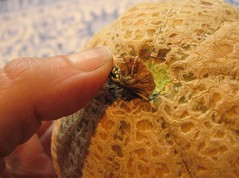 I just had a deliciously sweet cantaloupe. How did I know how to pick it? My favorite* chef, Chef Susan aka Chef Q posted some advice on the topic recently. Not only is she an amazing cook and baker, she is also an excellent photographer so her posts are illustrated with helpful images. I forgive her for all the pounds I gained last year due to her cooking (hey, at least I finally started a regular exercise regime) and thank her not just for all the great meals I’ve had the good fortune to experience, but also the helpful material she shares online.
[*] It’s actually a tie with my Mom, but she’s not officially a chef. Of course, that hasn’t stopped her from publishing a cookbook (see some of her recipes here).
Photo credit: Susan Beach
by Chris Bertram on June 17, 2008
… and, increasingly, fat British too.
For Europeans, one of the really disconcerting things about visiting the United States is the size of the meals. Ok, there’s the phenomenon that the restaurant staff will let you take home what you don’t or can’t eat (and that’s an idea that many Europeans feel uncomfortable with), but there’s still the fact of the sheer volume of stuff that gets put on your plate. It seems it wasn’t always this way. Via someone in my del.icio.us network, I came across this article on how portion sizes have changed in the US over the past twenty years. And not only are American meals bulkier, they’ve also increased two or three times in calorific value. That can’t be good.
by Harry on March 14, 2008
A few Thanksgivings ago my wife heard the analytical marxist’s wife and elder daughter quietly bemoaning to one another the absence of “that iced pie that Harry always brings”. No, not mince pie, but the glorious confection presented below. I gather that it is under threat from healthy living — The Independent says that sales of Mr. Kipling’s Bakewell tarts are declining alarmingly. Well, I quite like Mr. Kipling’s Cherry Bakewells , but they are a pale imitation of the easy-to-bake home made version. And in America, no-one seems to have encountered it before, but everyone seems to love it. If you adopt it, you can call this one the crooked timber bakewell tart, if you like. The lemon icing, by the way, was my eldest daughter’s touch — she suggested it when she was 5. Precocious little bugger.
Its simple. Start with a basic flaky pastry crust in a 10 inch pie pan, and bake at 350 for 10 minutes. Smear 6-8 ounces of raspberry jam evenly over the base of the crust (the higher quality the jam the better the outcome, I promise). While the crust is baking, make the cake mixture. Pour the cake mixture over the jam, and try to cover the jam. Bake at 350 for another 20-30 minutes. Allow to cool. Then cover with an icing made from the juice of one lemon and enough powdered sugar to make a thick paste. Alternatively, skip the icing, and serve hot with Bird’s Custard, or cream.
For the cake mixture:
4oz (1 stick) butter
4oz (1/2 cup) sugar (granulated, or bakers)
3 eggs
6 oz (3/4 cup) self-raising flour
several drops of almond essence
To make the cake filling, cream butter and sugar, beat in the eggs, add almond essence (tastes vary — I like to really taste the almond essence but not everyone does), then mix in the flour.
One last thing. Lots of recipes say to use ground almonds instead of flour, or to go half and half. I’ve never found that works, producing a slightly greasy taste in the cake. If anyone can explain what I’m doing wrong….
by Scott McLemee on March 11, 2008
It seems that everyone else around here is just too quietly dignified to mention that Crooked Timber has been listed as one of the world’s fifty most powerful blogs by The Guardian.
But not me. So: Woo hoo!
It seems appropriate, then, to follow up Henry’s recent post about bookshelves with a notice that Matt Christie is offering wooden shelves to the public at a reasonable price. (They are much more attractive than some I’ve seen lately.) Matt also turns out chopping blocks.
These item are all made by hand from actual crooked timber. Contact him via pas au-delà for rates.
Anybody who combines woodworking with Blanchot deserves a plug on the 33rd most powerful blog in the world. The precise metrics used to determine that ranking are probably among the Guardian‘s trade secrets, of course.
This is a very simple summer dessert from Katie Stewart’s Times Cookery Book . My mother made it twice in the seventies, and the memory lingered till she finally donated one of her two copies of Katie Stewart to me a couple of years ago. It’s as good as I remembered it being.
[click to continue…]
by Harry on March 30, 2007
In response to popular demand (well, a single request from vivian) I’m going to try to do a semi-regular recipe post. I’m aiming for one every couple of weeks or so, but if Eszter, Belle and others join in perhaps we’ll manage weekly. I’m hoping they join in, because my recipes tend to be so be so unhealthy that we’ll kill off the readership.
Today’s recipe is Treacle Tart. Treacle Tart is completely familiar to our British readers, but unheard of by most of our US readers (and I don’t know about the rest of you). If you have a Whole Foods near you you can find Golden Syrup in the syrup section, or, amazingly and very cheaply, at amazon. (It’s also great on pancakes or, if you don’t care what the neighbours think, and I don’t, on toast).
Update: Of course, all our American readers have heard of treacle tart, I apologise. As the last person left in the world who has not read Harry Potter, I didn’t realise that treacle tart had become world famous. This is it, and golden syrup is the key. Now American CT readers can delight their children. Serve with heavy whipping cream, unwhipped. Or, if you dare, Bird’s Custard.
[click to continue…]