So there was a modest puff of articles last month about astronomers discovering “the edge of the galaxy”. They were referencing this recent paper, which… doesn’t really say that. But it’s an interesting paper anyway, so let’s discuss.
As we all learned back in school, our Sun is one star in the Milky Way galaxy, which is a flat spiral containing several hundred billion stars. And spiral galaxies don’t exactly have an “edge”. We can’t see the details of the Milky Way, because we’re inside it. But we have excellent photographs of thousands of other spiral galaxies, and they mostly sort of gradually blur off into intergalactic space.
So if you travelled outwards from Earth, away from the center of the Milky Way, there wouldn’t be any sudden cutoff where stars just stopped. Stars would gradually get further and further apart. At some point, there wouldn’t be any stars anywhere near you.
But there wouldn’t be any “edge” as such. No glowing purple force field —
— or golden pillars or anything.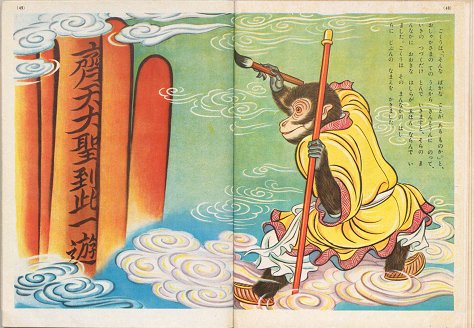
What the paper actually found was the edge of the star-forming region of the galaxy. And that’s a different kind of interesting.
So stars are formed from big clouds of interstellar gas. And galaxies are born with a very large supply of such gas. Very large, but not infinite. After some billions of years, the gas gets used up. After that, the galaxy can’t form any more new stars. Astronomers call this “quenching”.
Astronomers refer to galaxies that have quenched as “red sequence” galaxies. Galaxies that are still forming stars are “blue cloud” galaxies. It turns out that if you plot this graphically, you get a sharply bimodal distribution: you get a lot of star-forming blue galaxies, a lot of quenched red sequence galaxies, and not much in between. So the relatively sparse region in between got called the “green valley”.
— Why is it sparse? Because quenching can happen pretty fast. So you don’t see a lot of galaxies in that in-between period, because it’s a relatively short period in a galaxy’s life.![Galaxies sprinting] through the valley | astrobites](https://astrobites.org/wp-content/uploads/2022/03/Fig-1-1.png)
As it happens, our own Milky Way galaxy seems to be passing through the green valley right now. The Milky Way is still forming new stars, but the rate of star formation is starting to drop quickly. Another couple of billion years, and it’ll be mostly done. Not entirely done, of course — a galaxy is a big place. Here and there a few gas clouds will remain, occasionally giving birth to new stars. But it’ll be a long tail of decline, the cosmic equivalent of searching for loose change under the couch cushions.
Which brings us back to the original paper. Look at a spiral galaxy, and you can see that it gets denser towards the center.
So you’d reasonably assume that star formation would peak and burn out first in the center, because there’s more gas there — more stuff there generally. And then you’d expect it to peak further out, and then last of all out near the ends of the spiral arms. Space is emptier out there, so it takes longer for gas clouds to bump into each other and start condensing. So you might expect to find fewer young stars in the center (raw material gets burned up quickly) and more young stars far out in the arms (star formation takes longer to get started).
As it turns out: half right. There is indeed a gradient of older-to-younger stars (on average) as you move out from the galactic core. But then — well before you reach the end of the arms — the gradient goes into reverse. It makes a U-shaped curve. The far ends of the spiral arms have a lot of older stars and not a lot of young ones. The Milky Way is starting to quench, but not all at once. Our galaxy has an aging heart, and aging extremities, but there’s a big donut-shaped chunk in between that’s still young and vigorous.
Okay, but — why?
Because galaxies churn.
A galaxy is made up of billions of stars, all orbiting around the galaxy’s center of mass. Most of the time, those stars are well separated from each other, light years apart. But every now and then, a couple of stars will pass close enough to influence each other gravitationally. When that happens, one star will gain a bit of kinetic energy and move “up” into a more distant orbit. The other star will lose a bit of energy and move “down” towards the center of the galaxy. This is known as churning, or “dynamical relaxation” if you’re feeling fancy. 
[dynamical relaxation at Eurovision]
So over billions of years, a galaxy will tend to slowly change shape: it will gradually extend outwards (some stars getting bounced up and out) and also get thicker in the center (some stars bouncing down towards the galactic core).
So the reason for the U-shaped curve is that most of the stars in the outer regions of the galaxy didn’t start there. That region used to be empty intergalactic space, without enough gas for star formation. But over billions of years, galactic churning kicked stars into higher, more distant orbits that took them into those regions. The spiral arms slowly stretched outwards into areas of space that had always been pretty empty, without much gas for star formation. You might occasionally get a young star bounced out there by accident, but no new young stars would form there.
And there’s a fairly sharp border between the donut-shaped inner bit where stars are still forming, and the outer reaches where they don’t. We’ve seen that border in other, distant galaxies. And — this is the point of the paper — now we’ve found it in our own Milky Way.
Okay, so that’s the “edge of the galaxy” that’s been found. But what does this have to do with the end of everything?
Well, here’s the thing: the churning never stops.
Over billions and then trillions of years, the Milky Way will continue to evolve. Some stars will fall down towards the center; some stars will get pushed further out.
And this will continue even after all the stars are dead. The Sun and other stars like it will swell up into red giants, then contract into white dwarfs, then — very very slowly — cool down to dead cinders, black and cold. Larger stars will become neutron stars or black holes. Red dwarfs, the smallest stars, will burn for trillions of years, conserving their fuel, but eventually they too will die. In the distant future of ten trilliion years from now, the Milky Way will be completely dark and cold.
But it will still churn. The dead stars will still circle the galaxy’s center of mass. And very eventually, by drunkard’s-walk statistical inevitability, they will either be flung out into interstellar space, to wander forever alone through the endlessly expanding darkness of a dead universe, or they’ll fall down into the Milky Way’s core. Where they will encounter —
— Sagittarius A-Star, the supermassive black hole at the center of the Milky Way.
Eventually — very, very, very eventually — pretty much all normal matter in the Milky Way will end up a dead dark cinder. And that cinder will either be flung out into infinite space to fall forever through darkness, or will plunge into the black hole. The atoms that you’re made of, right now? Churn, churn, flip a coin: either up and out, or down the hatch, as the universe very slowly grinds to a dead cold halt.
Right. Have a great weekend, all!
{ 16 comments… read them below or add one }
Adam Roberts 08.07.26 at 10:37 am
Wondrous.
I’ve always wondered, though: given the timescales, and the relentlessness of gravity, won’t all matter eventually end up in black holes, and all black holes coalesce into one mega-black-hole? Will cold dead matter really just drift about forever?
steven t johnson 08.07.26 at 1:27 pm
The last I looked, Hawking radiation implied that all black holes would eventually dissipate. I believe the usual term is “evaporate?” Large black hole would take more trillions of years if I remember correctly. But that does mean even the black holes are not the end.
Gives you hope for the future, no?
Doug Muir 08.07.26 at 2:24 pm
Adam @1, there’s no particular reason for matter to fall into black holes. The Earth doesn’t fall into the Sun, right? A stable orbit doesn’t care whether it’s around a black hole, a star, or a planet — gravity is gravity.
That’s why churn matters: it provides a process that (given enough time) can move things out of stable orbits.
Steven @2, Hawking radiation is so far entirely theoretical — and seems likely to remain so. Also, the time scales involved are simply insane; a solar mass black hole would need 10^64 years to evaporate, a supermassive galactic-scale black hole more like 10^100 years — well beyond the time scale for galactic relaxation.
That said, you’ll notice I wrote things like “matter” and “normal matter”. If anything eventually comes out of a black hole, it won’t be material.
Doug M.
marcel proust 08.07.26 at 3:19 pm
You describe stars that no longer radiate (electro-magnetic energy?) as cinders, dead & either dark or black & cold.
What are they composed of? When I google, Gemini-AI says white dwarfs consist of carbon and oxygen nuclei + free electrons in a dense gas, and neutron stars consist of neutrons created from protons and electrons crushed together plus quarks crushed together in the inner core. Red dwarfs, after dying, become first helium white dwarfs composed of helium nuclei crushed together, then. black dwarfs.
Surely after hundreds of billions if not trillions of years, there will be (near) collisions of some of these bodies that will cause them to shatter or pieces to peal off reducing the strength of the gravitational fields that holds together what’s left of the stars involved. Enough of these incidents, and it seems like the matter in many will re-form itself (the technical term is transmogrify) and start radiating again, no?
Lee A. Arnold 08.07.26 at 4:39 pm
As satellites and space junk proliferate in Earth orbit, will the churn effect happen there too? E.g. some satellites being boosted into higher Earth orbit?
Thomas Gordon Hewitt 08.07.26 at 9:44 pm
Lee. The “churn” that we are discussing is cause by interactions between two or more massive objects. Two planetoids that pass by each other, their mutual attraction means there is an exchange of momentum. In a very crude sense this is similar to objects colliding and bouncing off. The end result is the orbits over time are getting randomized.
A great example are the globular clusters, ancient clusters of roughly a million old stars, orbiting around a common center. That general form; roughly spherical but high density in the center and lower density further from the center happens pretty quickly and is pretty universal for collections of objects gravitationally bound to each other. Lighter objects are more likely to be boosted up and populate the outer parts, heavier objects on average are found closer to the center. A few objects -stars get boosted enough to escape.
A large galaxy like the Milky Way has a large halo of gas and dark matter. Sometimes some of that gas falls back into the galaxy, so at least a dribble of star formation will continue for a very long time. Other mostly smaller galaxies merge with their larger neighbors, even for near misses tidal drag on soft bodies -collections of stars and gas are very soft, will within a few orbits bring these satellite galaxies into the parent, which has been build up from hundreds of smaller galaxies. Most of the gas is not incorporated into stars, but is expelled by “winds”, driven by very luminous bodies, such as very heavy stars, supernova, and especially supermassive black holes that inhabit the centers of nearly all galaxies. Stars and sometimes even supermassive black holes can receive enough of a gravitational kick that they exit the galaxy all together, or end up is large sparse halos many times larger than the main galactic body. Sometimes supermassive black hole mergers generate sufficiently non-symmetric gravitational waves that the combines new supermassive can be hurled completely out of the galaxy.
Hawking radiation acts like thermal radiation. The temperature is inversely proportional to the radius. Supermassive black holes have temperature of less than a millionth of a degree, and will be gaining much more mass from the background radiation than they emit, it will be many quadrillions of years before they actually start net evaporation. Very small black holes, that maybe were formed in the first second after the big bang can be small and hot enough that the smaller ones could be exploding out of existence, but we haven’t seen any.
Doug Muir 08.07.26 at 10:33 pm
Marcel @4, yes, sometimes stellar remnants will collide. This will result in them temporarily glowing with the heat of collision. In some very rare cases — say, when a brown dwarf that is just below the mass cutoff for fusion collides with something massive — it might even result in a new star being born.
But these will be very occasional incidents that won’t have any effect on the final outcome.
Lee @5, the short answer is no, because satellites and space junk are too small to have any significant gravitational effect on each other. The longer answer is that there are other things that can affect the orbits of satellites — atmospheric drag, tidal forces, solar wind — but they’re beyond the scope of a blog comment.
Doug M.
steven t johnson 08.07.26 at 10:58 pm
My apologies for joking around.
Priest 08.08.26 at 9:02 am
Well, in the near term, in this context the next few/several billion years, the Milky Way and Andromeda galaxies are supposed to “collide” (merge is probably the more accurate term), with various disruptions that will include new star formation at higher rates than would occur in either galaxy absent the merger (please, no use of this to support the corporate-speak of “synergies” when espousing the benefits of company mergers). It’s a quibble, but the OP discussed the long term fate of the Milky Way in a way that could be interpreted as it being an isolated system. The future merged galaxy (I am not a fan of the name “Milkomeda” which seems to be in favor) would then presumably follow the general path described, I have not read anything indicating that any other members of the Local Group would be involved in similar activity.
Thomas Gordon Hewitt 08.08.26 at 4:40 pm
Over a sufficiently long time period essentially all of the local group are expected to merge. Mergers take hundreds of millions of years to complete, we are still absorbing some dwarf galaxies. Since most galaxies have supermassive black holes, and the heaviest objects tend to sink toward the center, these also undergo mergers. The ensuing gravitational energy can be asymmetric, and the resulting larger supermassive black hole, will get a kick, in extreme cases the kick is strong enough for it to leave the galaxy.
Not enough is known about the future of dark energy which seems to be increasing the rate that the universe is expanding. In some scenarios everything will be ripped apart, even at the scale of subatomic particles.
JimV 08.09.26 at 4:41 am
For the record, there is (as I understand it) some controversy in the data as to whether dark energy is real, and more as to whether non-baryonic dark matter is real. (E.g., early galaxy formation found by the James Webb space telescope, which is inconsistent with predictions based on weakly interacting dark matter.) I don’t claim to know what the right answers are, but I am doubtful that anyone else does either at this time.
Doug Muir 08.09.26 at 7:25 am
Priest @8, current thinking is that most of the Local Group will eventually — very eventually — end up merged into one big elliptical galaxy. But the final outcome will be the same: churn, relaxation, a long-term trend for normal matter to either fall down or be flung out.
Thomas / Jim @ 9 / 10, yeah dark energy is still somewhat confusing and there’s still some controversy as to whether it’s really a thing. Dark matter is almost certainly a thing — the alternative theory, MOND, is not looking too good — but just what dark matter is and how it works are still very much open questions. But, again, this is why I refer to “normal matter” in the OP.
Doug M.
both sides do it 08.09.26 at 8:36 am
Obligatory: dark matter is an observation that has to be explained, not a theory
Angela Collier at the link above is pretty crooked timber-y. Like if Henry Farrell had Belle Waring’s sense of humor and explained physics instead of social science. Highly recommended.
Laban 08.09.26 at 8:55 am
I gather that neither dark matter nor the various alternatives completely explain observational evidence, so there’s still work to be done.
Seems like an odd time to be shutting down Jodrell Bank, which is part of a network f UK radio telescopes which will presumably also close. All to save £16 million, a rounding error in UK budgets.
https://en.wikipedia.org/wiki/MERLIN
steven t johnson 08.10.26 at 3:12 pm
There is a story I read somewhere that goes something like this:
An eminent physicist is lecturing on the solar system. He talks on one point about how in a few billion years the sun will become a red giant that swallows the Earth. After the program, a well-dressed, grandmotherly woman comes up to him and asks, with some distress, “Do you really believe the Earth will be destroyed?”
Slightly perplexed, the eminent gentleman replies, “Well, yes, in a few billion years.”
Sighing with relief, she replies “Oh thank goodness, I thought you said a few million years!”
lf 09.17.26 at 1:47 am
> Obligatory: dark matter is an observation that has to be explained, not a theory
Nonsense. There is no “observation” except for unexplained gravitational attraction, and that doesn’t necessarily mean “dark matter” _or_ “dark energy”, given that we don’t know everything about gravity yet.