From the category archives:

US Politics

Dave Weigel calls this, from Yuval Levin, the ‘best riposte’ to the new HHS regulations. I must say: if this is the best they can do …

Levin’s objection is that HHS is just looking for a way in which they can say that, technically, we’re not doing this thing people say infringes their religious liberty. HHS is hereby neglecting to address the larger spiritual issue of religious freedom. But the original complaint about the contraception mandate was that technically you can be made out to be making us do this thing. Technical hitch calls for technical fix. It ain’t pretty, but what were you expecting from a lawyerly work-around? [click to continue…]

I was planning this post yesterday, but other events intervened[1]. I woke up this morning to see that Corey had already written my post, but with the opposite conclusion. Corey’s 1905 analogy is a good one. Obama is not a “good father standing above the fray”, but the ruler who gives orders to Cossacks like Carmen M. Ortiz. The vindictive pursuit of Aaron Swartz is of a piece with the Obama Administration’s whole approach to the security state, from drone assassinations to the persecution of whistleblowers (Obama is worse even than Bush in some aspects of his civil liberties record).

But the Czar had choices[2], and so does Obama. Under current procedures, the White House must respond to a petition with 25 000 signatures, and the answer in this case must be “Yes” or “No’. So, this is one of the very few ways that Obama can be pushed to take an explicit stand one way or the another on an issue he prefers to address through leaks and ambiguities.

A pardon for Swartz, however qualified, would undercut the case for severe punishment (including, possibly, the death penalty) of Bradley Manning and others. It would amount to an acceptance that Swartz’ motivation in seeking the free distribution of information was a noble one, and that his offences should have been judged in that light. Perhaps some people would see it as exonerating the state, but I think more would see it as a signal of a new direction, and a precedent to be followed.

A refusal or evasion would serve the same function as the Czar’s orders to his Cossacks in 1905. Those who still believe Obama’s pledge to run the most transparent administration in history would see the reality, and might be moved to protest a bit more.

fn1. Among them, a stoush with a silly Oz politician
fn2. I don’t want to refight the whole “individual in history” debate, but Nicholas could have chosen to meet Father Gapon, could have promised reforms and could have delivered at least some of them. And, in the light of subsequent events, it would have been far better for him, his family, his class, and just about everyone else in Russia had he done so.

Invisible Men

by Kieran Healy on January 11, 2013

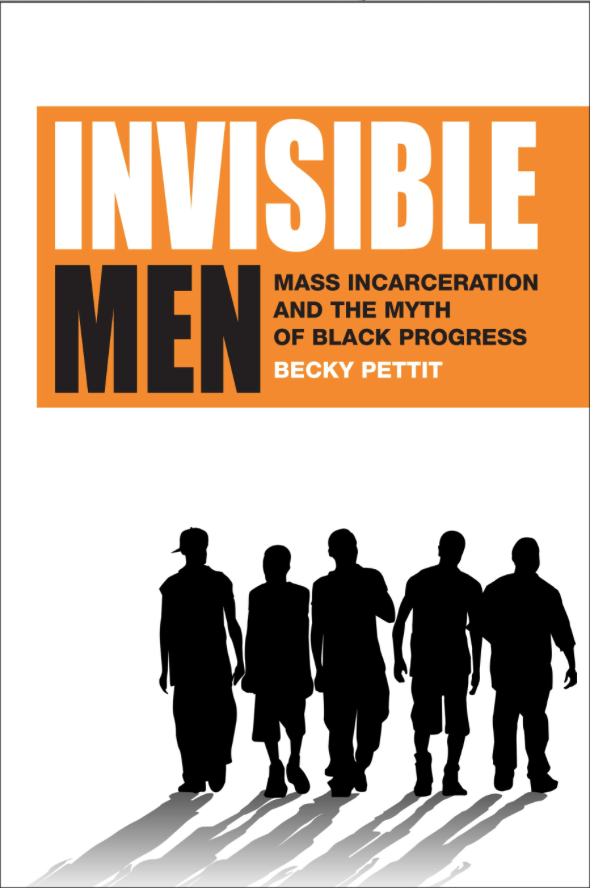
Over the years I’ve [written](http://kieranhealy.org/blog/archives/2004/07/16/a-new-analysis-of-incarceration-and-inequality/) [about](http://kieranhealy.org/blog/archives/2006/05/23/incarceration-rates/) the work of [Bruce Western](http://www.wjh.harvard.edu/soc/faculty/western/), [Becky Pettit](http://faculty.washington.edu/bpettit/), [Chris Uggen](http://chrisuggen.blogspot.com), and other scholars who study mass incarceration in the United States. By now, the basic outlines of the phenomenon are pretty well established and, I hope, widely known. Two features stand out: its [sheer scale](http://kieranhealy.org/blog/archives/2006/05/23/incarceration-rates/), and its [disproportionate concentration](http://kieranhealy.org/blog/archives/2004/07/16/a-new-analysis-of-incarceration-and-inequality/) amongst young, unskilled black men. It should be astonishing to say that more than one percent of all American adults are incarcerated, and that this rate is without equal in the country’s history and without peer internationally. Similarly, it may seem hard to believe that “five percent of white men and 28 percent of black men born between 1975 and 1979 spent at least a year in prison before reaching age thirty five”, or that “28 percent of white and 68 percent of black high-school dropouts had spent at least a year in prison by 2009”.

Those numbers come from the first chapter of Becky Pettit’s new book, [*Invisible Men: Mass Incarceration and the Myth of Black Progress*](http://www.amazon.com/Invisible-Men-Incarceration-Black-Progress/dp/0871546671). You can read [the first chapter](https://www.russellsage.org/sites/all/files/Pettit_Chap1.pdf) for free, but I recommend you [buy the book](http://www.amazon.com/Invisible-Men-Incarceration-Black-Progress/dp/0871546671). Pettit’s argument is that mass incarceration is such a large and intensive phenomenon that it distorts our understanding of many other social processes.

[click to continue…]

Maybe Hyde Park on Hudson only really makes sense from a British point of view. It’s right there in the title – “Hyde Park on Hudson” reminds you that there’s another Hyde Park, “on Serpentine,” if you like, in London – and if you didn’t catch it from the title, Queen Elizabeth says it in the middle of the movie. “Why is it called Hyde Park? Hyde Park is in London. It’s confusing.”

The movie itself would be confusing if you don’t recall that Hyde Park in London, although technically crown property, is now overrun by the public and indeed home to radical speech and protest, and if you don’t concede that this description also applies pretty well to Hyde Park in New York, formerly a crown colony, and home to Franklin Roosevelt, then – in 1939 – seen as a radical tribune of the American people.

The two kindred parks yield two kindred stories.

In one, FDR’s distant cousin Daisy has an affair with him, believes she is unique, then discovers he has other lovers. One of them, FDR’s secretary Missy LeHand, tells Daisy that she will learn to share. And she does; in the end, happily.

In the other story, George VI (“Bertie”) and his queen, Elizabeth, come to the American Hyde Park to visit the President and court his support for Britain’s defense. It is the first visit by a British monarch to the United States, and a dark hour for Britain. But Bertie hits it off with FDR, feeling he has found a father figure in him, and declaring (in one of several bits of invention) that the two nations have forged a “special relationship.”

In case we miss the point, Daisy also says she has a “special relationship” with Franklin Roosevelt. Bertie’s special relationship with FDR is no more unique than Daisy’s. The movie ends on a high note, but we know that one day, soon, the British will learn they must share his promiscuous affections; by Bretton Woods and Yalta, FDR was courting Josef Stalin.

Perhaps, like Daisy’s bond with FDR, Britain’s tie to the US is not less special because America is so profligate with its affections.

Historians are supposed to quarrel with the film’s depiction of Roosevelt. I don’t think it’s necessary; the Roosevelt in the movie isn’t the human, historical FDR – he’s America personified – smiling, inscrutable, shameless, exploitive, powerful, popular. Bill Murray doesn’t do an impersonation – though he gets the smile right.

But there are essential things about Roosevelt the film does show, more economically and elegantly than I imagined a work of fiction could.

He got along because he made people feel good about themselves – after their meeting, Bertie bounds up the stairs, two or three at a time.

And he let people think he had not made up his mind, when in fact he had – he talks ambivalently about an alliance with Britain, but by the end of the movie we realize he has meant to make it happen, and has worked hard to make it happen.

And people did look to him, craving his attention, trusting him, even though his interior life was finally inaccessible.

The meeting between FDR and Bertie is a really terrific scene, as are all the scenes between Bertie and Elizabeth – but especially the one when they discuss the web of FDR’s promiscuity, and conclude with relief they did not bring Lilibet. There are some gorgeous scenes of the parklike Hudson scenery, humid, rolling in thistle capped by pale blue skies stacked with billowing clouds. It is a beautiful film to look at, and to think with.
Poor Little Burckhardt

by Henry Farrell on January 3, 2013

Perhaps these heebie-jeebies are mine and mine alone, but the parallels between this “Sasha Issenberg piece”:http://www.technologyreview.com/featuredstory/508851/how-obama-wrangled-data-to-win-his-second-term/

bq. The Obama campaign embedded social scientists from the Analyst Institute among its staff. Party officials knew that adding new Democratic voters to the registration rolls was a crucial element in their strategy for 2012. But already the campaign had ambitions beyond merely modifying nonparticipating citizens’ behavior through registration and mobilization. It wanted to take on the most vexing problem in politics: changing voters’ minds. … as campaigns developed deep portraits of the voters in their databases, it became possible to measure the attributes of the people who were actually moved by an experiment’s impact. … An experimental program would … develop a range of prospective messages that could be subjected to empirical testing in the real world. Experimenters would randomly assign voters to receive varied sequences of direct mail—four pieces on the same policy theme, each making a slightly different case for Obama—and then use ongoing survey calls to isolate the attributes of those whose opinions changed as a result.

and this “classic Frederik Pohl short story”:http://www.gutenberg.org/files/31979/31979-h/31979-h.htm

bq. It was the morning of June 15th, and Guy Burckhardt woke up screaming out of a dream. It had been a monstrous and incomprehensible dream, of explosions and shadowy figures that were not men and terror beyond words. He shuddered and opened his eyes. Outside his bedroom window, a hugely amplified voice was howling. Burckhardt stumbled over to the window and stared outside. There was an out-of-season chill to the air, more like October than June; but the scent was normal enough — except for the sound-truck that squatted at curbside halfway down the block. Its speaker horns blared: “Are you a coward? Are you a fool? Are you going to let crooked politicians steal the country from you? NO! Are you going to put up with four more years of graft and crime? NO! Are you going to vote straight Federal Party all up and down the ballot? YES! You just bet you are!” Sometimes he screams, sometimes he wheedles, threatens, begs, cajoles … but his voice goes on and on through one June 15th after another.

are a little more immediate than I would like.

I’m bullish about how experimentalism can improve democratic practice, when it happens under conditions of rough power equality. But it can equally be used to improve techniques of manipulation. One of the big themes of Pohl’s 1950s science fiction (The Space Merchants, “The Wizards of Pung’s Corners”) was how unpleasant the world could become if advertising _actually worked._ We may be about to find out if he’s right.

Guns and drones

by John Q on December 21, 2012

Glenn Greenwald contrasts the horror over the Newtown mass murder and the immediate political reaction with responses to the deaths of children in US drone attacks. He focuses his criticism particularly on Obama supporters.

While there are many different views, and combinations of views, my perspective (as a non-American who would have voted for Obama) is a bit different. Until Newtown my perspective on US gun violence and drone attacks was pretty much identical

* They are horrible
* I thought Obama would change things for the better, but they changed for the worse (no action on semi-automatics, spread of concealed carry and stand your ground, expansion of the drone war)
* Given the attitudes of the majority of Americans, little hope for improvement
* Repubs would be even worse

I think most of these views were shared by most participants in the “lesser evil” debate before the election. But what strikes me in retrospect is that the entire debate was focused on drones and related issues. Implicitly, I and I think, most others, regarded gun control as a cause so thoroughly lost that Obama couldn’t be blamed for abandoning it. The Trayvon Martin case changed this a bit, but not much. By contrast, Newtown showed that the apparent pro-gun consensus was if not illusory, at least fragile. In his trademark ‘lead from behind’ style, Obama captured the new consensus and seems likely to push it forward.

The hopeful reading of this is that public opinion about drones could change just as radically, if public understanding improved. At the moment, it’s hard to see that happening without some truly horrible shock, like a drone wiping out a primary school. Perhaps, however, the widespread view among those who have actually examined the drone war, that it’s both cruel and counterproductive, may start to seep into public discussion, as part of a reaction against the culture of violence that supports both drones and guns.

The Good and Bad of Occupy

by Henry Farrell on December 12, 2012

Not a proper post – just a very strong recommendation that you read Quinn Norton’s “extraordinary article on Occupy”:http://www.wired.com/opinion/2012/12/a-eulogy-for-occupy/all/.

Heckman on predistribution

by Harry on December 9, 2012

Last month’s issue of Boston Review has a very good essay by James Heckman, and follow-up discussion. Heckman’s essay argues forcefully for early childhood interventions of various kinds as efficient means for mitigating inequality of opportunity.
I’d especially recommend that you read Charles Murray’s comment, just so you can read Heckman’s (devastating) response, but also Annette Lareau’s and David Deming’s. And, if you want, mine and Swift’s.

One thing I am curious about. Heckman is consistently accused by lefties of not understanding that poverty, not parenting, is the fundamental problem. For all I know that is true, and it is not impossible that I have a tin ear, but when I read his essay (and hear him talk etc) everything he says is consistent with the (entirely reasonable) assumption that as things stand, though the fundamental problem may well be poverty, elected officials are pretty determined to do very little to reduce poverty in general and child poverty in particular, so we need to look for policy levers that would improve the prospects of poor children without addressing their poverty. (And, if by some chance, this pessimistic assessment is wrong, still the measures he proposes would play an important role during the long transition to a more equal society). Is it just because he is known to be, broadly speaking, a conservative that people read him the less charitable way? Or am I, indeed, missing something?

Why Can’t We Say What Color Our Skin Is?

by John Holbo on December 8, 2012

Corey’s post about the more toxic stuff in Jefferson’s writings was interesting, wasn’t it?

This bit –

Are not the fine mixtures of red and white, the expressions of every passion by greater or less suffusions of colour in the one, preferable to that eternal monotony, which reigns in the countenances, that immoveable veil of black which covers all the emotions of the other race?

– reminded me of something else I read recently, in The Vision Revolution: How the Latest Research Overturns Everything We Thought We Knew About Human Vision, by Mark Changizi [Kindle version only $1.99. Good deal!]

The book manages to hit the popularized-but-substantive sweet spot pretty consistently. The chapter on skin color reports some of Changizi’s own research. He starts with a puzzle: why is it no one has a good name – a name they are satisfied with – for their own skin color? ‘White’ people aren’t white: tan, pink, salmon, off-white, peach? There are 11 ‘basic’ colors, per Berlin and Kay. None are good descriptors of anyone’s skin color. This result generalizes. ‘Black’ people aren’t any better at finding words for their own skin color they are satisfied with than ‘white’ people are.

Why would that be? A hypothesis. [click to continue…]

Jonah Goldberg : “If the GOP wants to win more black votes, it will need to get a lot more ‘racist.'” Yes, if there’s one thing black voters are waiting for, that might bring them back into the warm embrace of the GOP, it’s the enticing prospect of attending an endless pity party with a ‘liberals – and blacks! – have wrongly accused the GOP of racism’ theme. (Because, after all, the Davis-Bacon Act was totally racist!) But Charles Murray gave Goldberg a run for his money, in the anti-Dale Carnegie sweepstakes, with his hypothesis that the reason Asians don’t flock to the Republican Party is that, as a group, they have a ‘ludicrously inaccurate’ view of … well, of political reality.

Goldberg and Murray – and others I could mention – are casting about for a way for the GOP to win over minorities without saying ‘sorry’. Indeed, they are looking for a way to win over minorities while saying ‘you’re welcome!’ in an aggrieved, long-suffering sort of way (this white man’s burden hasn’t been lifting itself, y’know!) [click to continue…]

Mark Steyn, Texas Sharpshooter

by John Holbo on November 19, 2012

Mark Steyn: “Just to be clear: I think Obama won the election, and his victory represents the will of the American people. Which is why the Democrats should have heeded Mubarak’s words and not over-stolen it.”

Glad we cleared that up!

By contrast, it actually is clear what fallacy Steyn is committing in his post. He’s a Texas Sharpshooter, if there ever was one. [click to continue…]

Radicals for Capitalism

by Henry Farrell on November 17, 2012

Some of the bits of the Web that I pay close attention to are trying to figure out how to react to the “Republican Study Committee’s new thinkpiece on copyright”:http://rsc.jordan.house.gov/uploadedfiles/rsc_policy_brief_–_three_myths_about_copyright_law_and_where_to_start_to_fix_it_–_november_16_2012.pdf. On the one hand, they want to cheer on every word of the document, even if it is written from a more directly market-oriented perspective than their own. E.g.:

bq. Copyright violates nearly every tenet of laissez faire capitalism. Under the current system of copyright, producers of content are entitled to a guaranteed, government instituted, government subsidized content-monopoly … It is a system implemented and regulated by the government, and backed up by laws that allow for massive damages for violations. These massive damages are not conventional tort law damages, but damages that are vastly disproportionate from the actual damage to the copyright producer. … we do know that our copyright paradigm has … Retarded the creation of a robust DJ/Remix industry … Hampering scientific inquiry … Stifling the creation of a public library … Free 12-year copyright term for all new works – subject to registration, and all existing works are renewed as of the passage of the reform legislation. If passed today this would mean that new works have a copyright until 2024.

On the other … Republican Study Committee. Republican Study Committee claiming the mantle of protector of DJ culture, scientific inquiry and public library. But still. Republican Study Committee.

I don’t know anything about the motivations of the aide who wrote this paper. However, I think it’s reasonably safe to speculate that if the Republican party takes this up, it will be less because of its burning desire to promote a healthy remix culture (‘tho perhaps their desperation to appeal to the kids might play a small role), and more because they’d like to screw an industry largely composed of people who give to the Democratic party (think movie stars and record industry executives as trial lawyers). One could be more cynical still, and see this as a shakedown intended to encourage entertainment industry people to give lavishly to Republican PACs so as to sway them away from the cause of righteousness (personally, I doubt this was the rationale for the paper, but it certainly might end up describing the outcome).

Even so, it poses an interesting question. Would we be better off in a world where this position prevailed, so that (a) copyright law was much looser, (b) the entertainment industry was much poorer, and (c ) giving to the Democratic party and other liberal causes was significantly lower as a result? Personally, my answer is emphatically yes, but there is a tradeoff here, where others might reasonably disagree (and perhaps even convince me that I’m wrong …).

‘Southern White’ as an ethnicity

by John Q on November 16, 2012

A while ago, I posted about the supposed capture of the ‘white working class’ by Republicans, pointing out that the term was being used to refer to those with less than college education. On more traditional measures of class, such as income, the Democrats do much better, though still getting only about half the vote.

In response to this post a number of commenters pointed out that the data was not disaggregated by region, and that the South was anomalous. A couple of things I’ve seen recently support this. Here’s Charles Blow, reporting that 90 per cent of white voters in Mississippi supported Romney. Kevin Drum observes that Obama won about 46 percent of the white vote outside the South and 27 percent of the white vote in the South. Here’s a bit more from The Monkey Cage.

It strikes me that the best way to understand the distinctive characteristics of US voting patterns is to to treat “Southern White ” as an ethnicity, like Hispanic. With that classification each of the major parties becomes an coalition between a solid bloc vote from an ethnic minority and around half the votes of the “non-Southern white” ethnic majority, which is more likely to vote on class lines. The question then is which ethnic/class coalition is bigger. As in other countries, voting for the more rightwing party is correlated, though not perfectly with higher incomes and (conditional on income) lower education, and to shift according to broader ideological movements.
[click to continue…]

Open up your Golden Gate…

by Eric on November 7, 2012

Californians gave their 55 electoral votes to Barack Obama – of course; the networks called it the instant the Golden State’s polls closed. But more importantly, the state routinely derided as ungovernable1 has got its best chance of governance in generations. [click to continue…]

The climatic case for Obama

by John Q on November 6, 2012

I don’t have a vote in the US election and, even if I had taken the necessary steps, I would be unlikely to live anywhere my vote counted, with the possible exception of northern Virginia. On the other hand, as someone who lives on the same planet as 300 million or so Americans, I do have a stake in the outcome.

If I had a vote that might be decisive, I would vote for Obama. Despite having failed to mention climate change in the campaign, or to push at all hard for the Waxman-Markey bill for an emissions trading, he has put in place regulations that will significantly reduce US emissions, to the point where the announced target of a 17 per cent reduction between 2005 and 2020 looks achievable. Regulation isn’t the most efficient means of reducing emissions, but I’m happy to leave that choice to the US political system.

If Obama wins, fuel efficiency regulations for cars and emissions limits for power stations will be locked in, and there will be hope for more in the future. If Romney wins, they will be repealed or not enforced. That’s enough reason for me to hope that Nate Silver’s odds are right.