As the last to write her piece on Jonathan Strange and Mr. Norrell (JSAMN), I have the benefit of reading my fellow Timberites’ pieces and developing on some of their themes. Henry points out that JSAMN, which seems to begin as a comedy of manners ultimately becomes something altogether more serious. I agree. I think JSAMN is about the forgetting and remembering of a history that unleashes the downtrodden of the past, freeing them, in E.P. Thompson’s famous phrase “from the enormous condescension of posterity.” John Holbo notes that Susanna Clarke’s Austen-like voice emerges almost unbidden to channel perfectly her own magical reality. I suspect that Clarke’s choice of Regency England as the time and place for a novel about the tension between political and folk memory is no accident.
[click to continue…]
From the category archives:
Books
Here are, more or less, two thoughts on Susanna Clarke’s Jonathan Strange & Mr. Norrell.
§1 The Magic Christians
The setting is England at the turn of the 19th Century. Once upon a time, there was real magic – no more. Hence such comedy as the York Society Of Magicians:
They were gentleman-magicians, which is to say they had never harmed any one by magic – nor ever done any one the slightest good. In fact, to own the truth, not one of these magicians had ever cast the smallest spell, nor by magic caused one leaf to tremble on a tree, made one mote of dust to alter its course or changed a single hair upon any one’s head. But, with this one minor reservation, they enjoyed a reputation as some of the wisest and most magical gentlemen in Yorkshire.
John Segundus appears, who "wished to know, he said, why modern magicians were unable to work the magic they wrote about. In short, he wished to know why there was no more magic done in England." The society is discomfited.
The President of the York society (whose name was Dr. Foxcastle) turned to John Segundus and explained that the question was a wrong one. "It presupposes that magicians have some sort of duty to do magic – which is clearly nonsense. You would not, I imagine, suggest that it is the task of botanists to devise more flowers? Or that astronomers should labour to rearrange the stars? Magicians, Mr. Segundus, study magic which was done long ago. Why should anyone expect more?"
Magic is socially disagreeable, "the bosom companion of unshaven faces, gypsies, house-breakers ; the frequenter of dingy rooms with dirty yellow curtains. A gentleman might study the history of magic (nothing could be nobler) but he could not do any." A debate breaks out. A few members are roused from historicist slumbers to Secundus’ defense. One such – Honeyfoot – soons explains to Segundus about the Learned Society of Magicians of Manchester, a failed clutch of magical positivist hedge wizards.
It was a society of quite recent foundation … and its members were clergymen of the poorer sort, respectable ex-tradesmen, apothecaries, lawyers, retired mill owners who had got up a little Latin and so forth, such people as might be termed half-gentlemen. I believe Dr. Foxcastle was glad when they disbanded – he does not think that people of that sort have any business becoming magicians. And yet, you know, there were several clever men among them. They began, as you did, with the aim of bringing back practical magic to the world. They were practical men and wished to aply the principles of reason and science to magic as they had done to the manufacturing arts. They called it ‘Rational Thaumaturgy’. when it did not work they became discouraged. Well, they cannot be blamed for that. But they let their disillusionment lead them into all sorts of difficulties. They began to think that there was not now nor ever had been magic in the world. They said that the Aureate magicians were all deceivers or were themselves deceived. And that the Raven King was an invention of the northern English to keep themselves from the tyranny of the South (being north-country men themselves they had some sympathy with that.) Oh, their arguments were very ingenious – I forget how they explained fairies.
If only Max Weber had written "Magic as Vocation" [Zauber als Beruf], on the process through which the activity of enchantment has gradually become disenchanted. [click to continue…]
One of my students asked whether it would be possible to receive a hard copy of students’ blogs for the quarter. This is a nice idea. I don’t know how long the course blog will stay online (and some of it will probably start anew next time I teach the class) so such a solution could be nice for archiving the material. (The Web Archive hasn’t picked up their blogs yet.) I had created archives of the blogs from last year using HTTrack, which is a handy tool, but an additional hard copy would be nice.
I have been looking around and although I have found some options, I am interested in finding some more. I know that Qoop has a Blog Printing service in beta, but it doesn’t seem to be open to just anyone (plus it is not clear whether they are supporting all blogging software at this point). In any case, given my experiences with Qoop’s Flickr photobook printing, I would rather explore some alternatives first. (The result was okay. The cover was very nice, but the rest seemed more like a notebook than a book per se. For that, the price seemed a bit too high.)
It looks like LiveJournal users have a ready-made solution. But I need something for WordPress. This person seems to have done a nice job printing a book (or “blook”), but the process seems extremely tedious. Does anyone have experiences with BlogBinders? (I don’t like the idea that they strip out the images from the blog.)
Has anyone done this? Any recommendations? Any thoughts on what to avoid or what not to forget?
My preference would be for paying a bit more if it meant having to do less work on it.
A friend alerts me by email that a new Rousseau biography is out in the US. “Jean-Jacques Rousseau: An Unruly Mind”:http://www.amazon.com/exec/obidos/ASIN/0618446966/junius-20 by Leo Damrosch is “reviewed in the books section of the NYT”:http://www.nytimes.com/2005/11/06/books/review/06schiff.html today. It is hard to see how this will better Cranston, although Cranston unfortunately died before he completed his final volume (it was finished by someone else and is the thinnest of the three). I’m off to the US tomorrow, and will get myself a copy of Damrosch’s book asap.
On a couple of long plane flights this week, I read Janet Browne’s Charles Darwin: The Power of Place, the second volume of her biography of Darwin. (I haven’t read “Volume One”:http://www.amazon.com/exec/obidos/ASIN/0691026068/kieranhealysw-20/.) I strongly recommend it. Three things stood out for me.
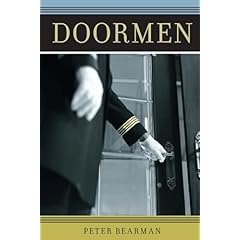 I just finished reading Doormen, by “Peter Bearman”:http://www.iserp.columbia.edu/people/faculty_fellows/bearman.html. It’s a study of the residential doormen who work in the building’s of New York’s Upper West and East sides. A fairly restricted topic, to be sure, but the book is a small gem: the kind of sociology that takes a particular job and investigates it in a way that derives quite general lessons even as it delves into the specifics.
Appropriately, _Doormen_ was featured in the New Yorker recently, though the article didn’t convey the flavor of the book all that well. To get a better sense of it, you can “read an excerpt”:http://www.press.uchicago.edu/Misc/Chicago/039706.html from the chapter about the twists and turns surrounding the all-important Christmas bonus. In _Micromotives and Macrobehavior_, Thomas Schelling remarks that “not all ellipses are circles,” meaning that not all systems of interdependent, decentralized interaction are markets. He uses the example of people trapped in a cycle of Christmas-card sending. Figuring out the bonus is one of life’s ellipses, too, though a more complex one:
The optimal position for each tenant in the bonus sweepstakes is right at the top of the pile, but within close range of the others’. Little is gained from being in the middle; aside from avoidance of the bottom. The bottom quartile of the distribution is obviously exactly where tenants do not want to find themselves. The dilemma is that it is impossible to know how to position oneself without learning about the expected behavior of the other tenants. And this is why, around Thanksgiving, tenants start to position themselves to learn what their fellow tenants are intending to do. Eventually, they will have to start talking.
Speaking of “website gadgets”:https://crookedtimber.org/2005/10/26/map-of-ct-readers/, yesterday I tried out “Library Thing”:http://www.librarything.com, a service that lets you catalog your books online. Think of it as “Flickr”:http://www.flickr.com for your books. About 70 percent of the books in my office are already in a “Delicious Library”:https://crookedtimber.org/2004/11/13/delicious-monster/ catalog, which Library Thing can import, so I uploaded the lot. Like Delicious Library, the most obviously useful feature of a catalog is as yet unavailable — namely, the ability to do a full-text search on the books you own. Something like Amazon’s Search Inside. Maybe in the future there will be a way for applications like this to talk to Search Inside or “Google Print”:http://print.google.com/.
In the meantime, Library Thing lets you explore an affiliation network. You’re tied to other users through ownership of the same books, and in your “profile”:http://www.librarything.com/profile.php?view=kjhealy you can see who overlap the most with. It turns out that the user I’m closest to none other than “Chris Brooke”:http://users.ox.ac.uk/%7Emagd1368/weblog/blogger.html, of the Virtual Stoa. “He”:http://www.librarything.com/profile.php?view=chrisbrooke and I share 38 titles. This may partly be a size effect, as Chris has more than three times as many books cataloged as I do. But it may also index up our relative closeness in “Blau Space”:http://icc.oxfordjournals.org/cgi/content/abstract/13/1/263. Further evidence of affinity in tastes comes from the fact that “Chris’s photo”:http://www.librarything.com/profile.php?view=chrisbrooke and “mine”:http://www.librarything.com/profile.php?view=kjhealy come from the “same source”:http://www.planearium2.de/flash/spstudio.html.
Well, a fruitless trip into Hodges Figgis in Dublin this weekend yielded nothing more than the news that George R.R. Martin’s next installation to the Ice and Fire series is delayed by several more weeks. Two younger Farrells – Annaick and Eleanor – have been haunting the place asking when A Feast for Crows will finally arrive. Don’t feel too sorry for them, though. When George R.R.R. himself was in town a few months ago, the girls ended up going out for a very pleasant dinner with him and his missus.
Anyway, the email below arrived this morning:
We thought you would like to know that the following item has been sent to:
Maria Farrell
…
using International Mail.
Your order #026-7258405-0413217 (received 31-May-2005)
————————————————————————-
Ordered Title Price Dispatched Subtotal
————————————————————————-
1 A Feast for Crows (Song of Ic £14.09 1 £14.09
————————————————————————-
Subtotal: £13.29
Delivery Charge: £4.98
Total tax: £1.10
Total: £19.37
Which is a bit bloody cheeky of them as they’re now selling the book at a 40% discount to people who didn’t pre-order it!
This paragraph from Brian Hinton’s _South by South West: A Road Map to Alternative Country_ could perfectly well do service as a caption to a Far Side cartoon:
bq. Lazily labelled as “folk rock” during their ten-year career together, Richard and Linda were as attuned to Americana as anyone living in a Sufi commune in rural Norfolk could ever hope to be.
Probably the high-point of a book which mainly consists of a long list of obscure band names.
There’s an interesting piece, "Molecular Self-Loathing", in the Oct 1-7 issue of The Economist. On a personal note, the degree of self-loathing programmed into my molecules is, apparently, this: I turn first to Lexington, notice there’s a cartoon of an aging hippie hitchhiking, thumb out; a car with a USA license-plate is passing him by. I read the whole thing. (To save yourself that trouble, do the following: say "He didn’t think that was so groovy", in a Monty Burns voice. Favorite line: "For their part, the Republicans have been trying to get beyond Richard Nixon’s ‘southern strategy.’")
My draft review of Ray Kurzweil’s Singularity is below. Comments much appreciated, and thanks to commenters on earlier posts on this topic.
Update Lots of great comments, thanks. This will improve the final version a lot, and is one of the ways in which blogging works really well for me. Keep ’em coming.
I’ve finally received my copy of Ray Kurzweil’s Singularity, which was posted to me by its American publisher six weeks ago …
I’ve been too busy thinking about all the fun I’ll have with my magic pony, designing my private planet and so on, to write up a proper review of Ray Kurzweil’s book, The Singularity is Near. The general response seems to have been a polite version of DD’s “bollocks”, and the book certainly has a high nonsense to signal ratio. Kurzweil lost me on biotech, for example, when he revealed that he had invented his own cure for middle age, involving the daily consumption of a vast range of pills and supplements, supposedly keeping his biological age at 40 for the last 15 years (the photo on the dustjacket is that of a man in his early 50s). In any case, I haven’t seen anything coming out of biotech in the last few decades remotely comparable to penicillin and the Pill for medical and social impact.
But Kurzweil’s appeal to Moore’s Law seems worth taking seriously. There’s no sign that the rate of progress in computer technology is slowing down noticeably. A doubling time of two years for chip speed, memory capacity and so on implies a thousand-fold increase over twenty years. There are two very different things this could mean. One is that computers in twenty years time will do mostly the same things as at present, but very fast and at almost zero cost. The other is that digital technologies will displace analog for a steadily growing proportion of productive activity, in both the economy and the household sector, as has already happened with communications, photography, music and so on. Once that transition is made these sectors share the rapid growth of the computer sector.
Henry pointed me to this Financial Times report of an interview (over lunch) with rightwing Australian historian Keith Windschuttle, which begins with Windschuttle saying he regrets his involvement in the dispute over Australia’s Aboriginal history, seeing as a distraction from his ambition to write a polemical defence of Western civilisation, aimed at the US market, and make heaps of money in the process.
”If you have a reasonably big hit in America you’re talking about hundreds of thousands of dollars,” he says. “That’s my aim – to have a couple of big sellers and have a leisurely life.”
It is unclear how much of this is intended as tongue-in-cheek affectation, but it’s certainly consistent with notable elements of Windschuttle’s past career, which has been marked by repeated political and methodological somersaults.
Although a lot of attention has been focused on Windschuttle’s political jump from Marxist left to Christian right, I’ve always been more interested in his shift in methodological stance. Having made his name as a defender of objective truth against politicised history in both left-wing and right-wing varieties, Windschuttle has become a practitioner of an extreme form of politicised history, and now looks ready to abandon any remaining links to the world of fact.
Routledge publish a nice line of “classic social science, literary criticism and philosophy”:http://www.routledge.com/classics/. A couple of months ago I picked up their edition of “Words and Things”:http://www.amazon.com/exec/obidos/ASIN/0415345480/kieranhealysw-20/ref=nosim/, Ernest Gellner’s entertaining hatchet-job on linguistic philosophy _a la_ Wittgentein, J.L. Austin and the like. The flyleaf has a couple of blurbs from Bertrand Russell and the Times (“The classic attack on Oxford Linguistic Philosophy”, etc) but also one from Bryan Wilson, the sociologist of religion. He says “No one who has flirted with, or been puzzled by, postmodernism, or wondered about the meaning of resurgent Islam, should fail to read this tour de force.” What? This is in fact an endorsement of another of Gellner’s books, “Postmodernism, Reason and Religion”:http://www.amazon.com/exec/obidos/ASIN/041508024X/kieranhealysw-20/ref=nosim/. Perhaps a small, once-off error, I thought — but then last night I was in a bookshop and saw Routledge’s edition of “The Protestant Ethic and the Spirit of Capitalism”:http://www.amazon.com/exec/obidos/ASIN/041525406X/kieranhealysw-20/. While the front cover affirms the author as Max Weber, the spine insists that credit should go to Friedrich Hayek. Perhaps there’s an intern somewhere in need of a harsh performance review. I suppose these errors aren’t quite so bad as they might have been: a friend of mine who was an editor for a major university press once told me that they had to recall the entire run of a prominent astronomy book because, mysteriously, every instance of the word “quasar” in the text had been replaced by the word “banana.”
Listening to “Bob Harris Country”:http://www.bbc.co.uk/radio2/shows/bobharriscountry/playlist.shtml last Thursday, I was really captivated by “Tom Russell”:http://www.tomrussell.com/ talking about Charles Bukowski. I didn’t know anything about Bukowski, except having a vague idea that he might be something to do with the beat poets. Anyway, I was intruiged enough to go out and buy “Post Office”:http://www.amazon.com/exec/obidos/ASIN/0876850867/junius-20 , Bukowski’s grittily written account of working for the US post office as a relief postman and then as a clerk whilst being almost permanently drunk, gambling and womanizing.
bq. It began as a mistake.
A great opening line to hook you in, reminiscent of Hammett or Chandler, except this isn’t a crime story. Brilliant muscular writing about snagging with petty authority figures, trudging around delivering letters to lunatics in the pouring rain, mean and manipulative men and women, making money at the track, routine, boredom, cheating the system.
One of the best things I’ve read in a while, I don’t mind saying. Completely non-boring. I’ve now gone out and bought “Ham on Rye”:http://www.amazon.com/exec/obidos/ASIN/0876855575/junius-20 , which I’m really looking forward to, as well as a book of poems: “You Get So Alone At Times That It Just Makes Sense”:http://www.amazon.com/exec/obidos/ASIN/0876856830/junius-20 . Comments to further remedy my Bukowski-related ignorance (or my Tom Russell-related ignorance for that matter) would be most welcome.