Remembering Aaron Swartz

by Henry Farrell on January 12, 2013

I don’t want to write about the circumstances of his suicide – it’s too raw. I do want to write about who he was. I suspect that the media will turn this into a story of Aaron as persecuted hacker, which gets at only one part of him. He was one of the kindest, sweetest, and most generous people I ever knew. He made a lot of money at a very young age, which would have ruined most people (including me). It didn’t ruin Aaron. He used it to live an itinerant life, jumping from project to project, all intended to work towards creating a better world. His enthusiasm was boundless, as was his generosity. When Crooked Timber had big server problems a few years ago, he immediately jumped in to offer to host us (we ended up finding hosting elsewhere). He saw that Rick Perlstein didn’t have a website, back before Rick Perlstein was Rick Perlstein, and he built one for him. He gathered together everything he could of the old Lingua Franca, preserving it and making it available. A skilled techie, he helped put together the revived Baffler, a journal noted for its discontent with things technological. Aaron’s life was a struggle against the forces of entropy, decay and political corruption. He never saw a good cause, but he wanted to adopt it, and do everything he could for it (if a criticism could be made of him, it was that he moved on too quickly from project to project). I knew he had been in a dark place the last few months, because of what was happening to him, but I didn’t know how dark. I’ve lost a dear friend, but American politics and intellectual life has lost someone who did many good things for many people, often quietly, but always to good effect. Other CTers may have other memories of him; those are mine.

Update: “Aaron’s family and current partner”:http://rememberaaronsw.com. “Quinn”:http://www.quinnnorton.com/said/?p=644 Also, “Cory Doctorow”:http://boingboing.net/2013/01/12/rip-aaron-swartz.html#more-205376, “Larry Lessig”:http://lessig.tumblr.com/post/40331489608/aaron-rip, “Mark Bernstein”:http://www.markbernstein.org/Jan13/AaronSwartz.html, “James Fallows”:http://www.theatlantic.com/technology/archive/2013/01/aaron-swartz/267110/, “Brewster Kahle”:http://blog.archive.org/2013/01/12/aaron-swartz-hero-of-the-open-world-rip/ , “Carl Malamud”:https://public.resource.org/aaron/, “The Baffler”:http://thebaffler.com/blog/2013/01/aaron_swartz. By request, “Aaron’s guest-posts here at CT”:https://crookedtimber.org/author/aaron_swartz/. Scott McLemee’s “story on Aaron from a few years back”:http://www.insidehighered.com/views/mclemee/mclemee117 is here.

Update 2: “What Larry Lessig Says”:http://lessig.tumblr.com/post/40347463044/prosecutor-as-bully.

bq. For remember, we live in a world where the architects of the financial crisis regularly dine at the White House — and where even those brought to “justice” never even have to admit any wrongdoing, let alone be labeled “felons.” In that world, the question this government needs to answer is why it was so necessary that Aaron Swartz be labeled a “felon.” For in the 18 months of negotiations, that was what he was not willing to accept, and so that was the reason he was facing a million dollar trial in April — his wealth bled dry, yet unable to appeal openly to us for the financial help he needed to fund his defense, at least without risking the ire of a district court judge. And so as wrong and misguided and fucking sad as this is, I get how the prospect of this fight, defenseless, made it make sense to this brilliant but troubled boy to end it.

The last time I saw Aaron, we didn’t talk about the JSTOR incident itself, for all the obvious reasons. We did talk about the Kafkaesque nightmare he had landed in, where literally _anything he said_ could be taken grossly out of context and used against him by a prosecutorial apparatus apparently more driven by vindictiveness, stupidity and politics than by any particular interest in justice or the public interest. He told me how, when the police finally came around to search his apartment, some weeks after the charges had been laid, he jokingly asked them what had taken them so long. Of course, he then found these words being twisted by the prosecutors to suggest that he had effectively admitted he was guilty.
{ 38 comments }

Aaron Swartz, 1986—2013

by Kieran Healy on January 12, 2013

I just woke up to the terrible news that Aaron Swartz took his own life yesterday. He was twenty six years old. I don’t have much else to say at the moment other than that I am so, so sorry. Aaron was such a force for good in the world.

{ 28 comments }

Buchanan and market Leninism (re-re-post)

by John Q on January 11, 2013

Summer[1] is the best time for reruns. A tweet from Kieran commenting to Matt Yglesias on the work of the late James Buchanan points to this 2003 post, which is itself a rerun of an article published back in the early 1990s. For added nostalgia value, it links to CT, before I joined. Thanks to Twitter, everything has a DD-style “Shorter” version now, and Kieran does a nice job “Buchanan allowed Economists to have a Marxist-Leninist theory of the capitalist state”.

The article was originally published in an Australian libertarian magazine, and annoyed plenty of readers. I expect that some readers here will be annoyed, for different reasons, and I wouldn’t write the article quite this way for a different audience (I would have qualified some points, and emphasized others, for example), but I don’t see any reason to change the basic argument.

Repost over the fold.

[click to continue…]

{ 25 comments }

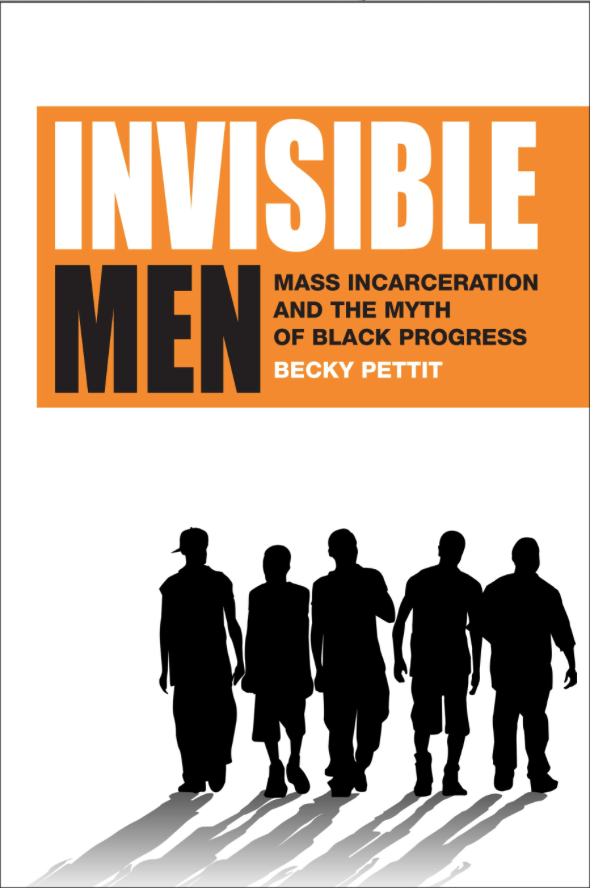
Invisible Men

by Kieran Healy on January 11, 2013

Over the years I’ve [written](http://kieranhealy.org/blog/archives/2004/07/16/a-new-analysis-of-incarceration-and-inequality/) [about](http://kieranhealy.org/blog/archives/2006/05/23/incarceration-rates/) the work of [Bruce Western](http://www.wjh.harvard.edu/soc/faculty/western/), [Becky Pettit](http://faculty.washington.edu/bpettit/), [Chris Uggen](http://chrisuggen.blogspot.com), and other scholars who study mass incarceration in the United States. By now, the basic outlines of the phenomenon are pretty well established and, I hope, widely known. Two features stand out: its [sheer scale](http://kieranhealy.org/blog/archives/2006/05/23/incarceration-rates/), and its [disproportionate concentration](http://kieranhealy.org/blog/archives/2004/07/16/a-new-analysis-of-incarceration-and-inequality/) amongst young, unskilled black men. It should be astonishing to say that more than one percent of all American adults are incarcerated, and that this rate is without equal in the country’s history and without peer internationally. Similarly, it may seem hard to believe that “five percent of white men and 28 percent of black men born between 1975 and 1979 spent at least a year in prison before reaching age thirty five”, or that “28 percent of white and 68 percent of black high-school dropouts had spent at least a year in prison by 2009”.

Those numbers come from the first chapter of Becky Pettit’s new book, [*Invisible Men: Mass Incarceration and the Myth of Black Progress*](http://www.amazon.com/Invisible-Men-Incarceration-Black-Progress/dp/0871546671). You can read [the first chapter](https://www.russellsage.org/sites/all/files/Pettit_Chap1.pdf) for free, but I recommend you [buy the book](http://www.amazon.com/Invisible-Men-Incarceration-Black-Progress/dp/0871546671). Pettit’s argument is that mass incarceration is such a large and intensive phenomenon that it distorts our understanding of many other social processes.

[click to continue…]

{ 29 comments }

Home truths about Euro crisis

by niamh on January 11, 2013

Jean-Claude Juncker said some remarkably candid things to the European parliament yesterday. His role as the chair of the Eurozone group of countries has given him limited scope to speak freely to date. Indeed he’s someone who is quoted as saying ‘I’m for secret, dark debates‘.

Now that he’s about to step down, he’s made some extremely critical comments about the entire approach the EU has adopted in response to the crisis. Eurointelligence summarizes his ‘furious attack on Berlin’ as follows, noting:

  • that he disagreed with the rhythm of adjustments “imposed on certain countries”, and that the Eurogroup has not made political valuations of the adjustments which too often were just rubber-stamping recommendations by the Commission, ECB and IMF “whose democratic legitimacy is not clear”.that “the choice was made to make the adjustment fall on the weakest”;
  • that certain countries who benefitted from capital flight out of Greece were not doing anything about it;
  • that the mistake has been made to “underestimate the drama of unemployment” and to “give the impression that Europe is only there to punish” and by not rewarding the “program countries” for following through with their adjustment plans;
  • that his successor would be well advised to “listen to all Eurozone members on an equal footing” even if it takes a long time to go through a meeting, or else “we’ll see the results in 6 months if my successor doesn’t”;
  • that the ESM should have “some degree of retroactivity” and be able to “recapitalise banks” and not just address “new problems that may apply in the future”;
  • that the results of the latest European Council were “disappointing”, because “the original idea was to present a road map for the following decades”;
  • in respect of economic policy coordination, that “we can’t carry on with a system where the Frankfurt monetary arm is strong and the economic policy arm is feeble” and “those who refused [in 1997] are now the largest voices calling for this idea”. And “we have to make sure that every time a government recommends a structural reform it is explained to the Eurogroup and that the ministers in charge explain the consequences and others say what the consequences of such reforms will be  on policy in their countries”;
  • “there’s a need for all member states to agree on a ‘minimum social wage'”, a need for “a basis of minimum social rights for workers”, as “otherwise we’re going to lose the support of the working classes”. There’s a need to “agree on the elements of solidarity”, “principle and ways and means of bank resolution”, and “a deposit guarantee scheme”;
  • that the Green party in Luxembourg will vote against the Fiscal Treaty because “they are fed up with what they see as a German diktat”.

I’m especially struck by his recognition that poor coordination and procrastination has resulted in unacceptable costs in the form of unemployment, inequality, and social hardship, because this is where the real human cost of unremitting austerity is felt. Unemployment in the Euro area is now 11.8% – worst of all in Spain and Portugal, where it is over 26%; very serious too in Portugal, Ireland , Latvia and Slovakia. And even these official data conceal a lot: the standardized unemployment rate in Ireland, for example is 14.6%, but there are also a great many under-employed people and discouraged workers who don’t appear in the official statistics.

The end of the Christmas holidays has been a particularly poignant time in Ireland this year. It’s the start of Ireland’s seventh phase of holding the rotating Presidency of the EU, so Dublin is full of Euro-bureaucrats; all the commissioners arrived yesterday. It’s also the start of a year-long government initiative to boost tourism called ‘The Gathering’, which is meant to promote an influx of visitors analogous to Scotland’s ‘Homecoming’ a few years ago. But we’re also seeing large numbers of people leaving, especially young people, and lots of sad friends and families have been saying goodbye. The gathering up and out of a new generation of emigrants, sadly.

{ 67 comments }

Maybe Hyde Park on Hudson only really makes sense from a British point of view. It’s right there in the title – “Hyde Park on Hudson” reminds you that there’s another Hyde Park, “on Serpentine,” if you like, in London – and if you didn’t catch it from the title, Queen Elizabeth says it in the middle of the movie. “Why is it called Hyde Park? Hyde Park is in London. It’s confusing.”

The movie itself would be confusing if you don’t recall that Hyde Park in London, although technically crown property, is now overrun by the public and indeed home to radical speech and protest, and if you don’t concede that this description also applies pretty well to Hyde Park in New York, formerly a crown colony, and home to Franklin Roosevelt, then – in 1939 – seen as a radical tribune of the American people.

The two kindred parks yield two kindred stories.

In one, FDR’s distant cousin Daisy has an affair with him, believes she is unique, then discovers he has other lovers. One of them, FDR’s secretary Missy LeHand, tells Daisy that she will learn to share. And she does; in the end, happily.

In the other story, George VI (“Bertie”) and his queen, Elizabeth, come to the American Hyde Park to visit the President and court his support for Britain’s defense. It is the first visit by a British monarch to the United States, and a dark hour for Britain. But Bertie hits it off with FDR, feeling he has found a father figure in him, and declaring (in one of several bits of invention) that the two nations have forged a “special relationship.”

In case we miss the point, Daisy also says she has a “special relationship” with Franklin Roosevelt. Bertie’s special relationship with FDR is no more unique than Daisy’s. The movie ends on a high note, but we know that one day, soon, the British will learn they must share his promiscuous affections; by Bretton Woods and Yalta, FDR was courting Josef Stalin.

Perhaps, like Daisy’s bond with FDR, Britain’s tie to the US is not less special because America is so profligate with its affections.

Historians are supposed to quarrel with the film’s depiction of Roosevelt. I don’t think it’s necessary; the Roosevelt in the movie isn’t the human, historical FDR – he’s America personified – smiling, inscrutable, shameless, exploitive, powerful, popular. Bill Murray doesn’t do an impersonation – though he gets the smile right.

But there are essential things about Roosevelt the film does show, more economically and elegantly than I imagined a work of fiction could.

He got along because he made people feel good about themselves – after their meeting, Bertie bounds up the stairs, two or three at a time.

And he let people think he had not made up his mind, when in fact he had – he talks ambivalently about an alliance with Britain, but by the end of the movie we realize he has meant to make it happen, and has worked hard to make it happen.

And people did look to him, craving his attention, trusting him, even though his interior life was finally inaccessible.

The meeting between FDR and Bertie is a really terrific scene, as are all the scenes between Bertie and Elizabeth – but especially the one when they discuss the web of FDR’s promiscuity, and conclude with relief they did not bring Lilibet. There are some gorgeous scenes of the parklike Hudson scenery, humid, rolling in thistle capped by pale blue skies stacked with billowing clouds. It is a beautiful film to look at, and to think with.

{ 23 comments }

Krugman on 2013 vs 1958 macro

by John Q on January 9, 2013

At the recent American Economic Association meeting in San Diego, Brad DeLong chaired a panel on ” Stimulus or Stymied?: The Macroeconomics of Recessions“, and has posted a transcript. Paul Krugman was there and picked up my claim that macroeconomics has, on balance, gone backwards since 1958. I’ve extracted his section here. Lots of useful stuff, but I’d stress this:

the whole basis on which we constructed monetary policy during the Great Moderation, which is that stabilizing inflation and stabilizing output are the same thing, is all wrong: you can have a sustained period of low but not negative inflation consistent with an economy operating far below its potential productive capacity. That is what I believe is happening now. If so, we are failing dismally in responding to this economic crisis. This is in contrast to what some central bankers are saying—that we have done well because inflation has stayed relatively stable.

To push this a bit further, I’d argue that there will be no real recovery as long as central banks continue to treat the inflation-targeting polices of the (spurious) Great Moderation as the pre-crisis normal to which we should strive to return

[click to continue…]

{ 58 comments }

Roger Farmer, professor of economics at UCLA, has sent a response to my post on the fiscal multiplier, which is over the fold. I’ll make some substantive points in comments, but I’d like to start by saying that this is a good example of a discussion to which blogs are ideally suited. Contributions from people like Roger who have something important to say, but not the time or inclination for a regular blog, make it even better.

[click to continue…]

{ 152 comments }

Tom Slee’s Self-Assessment

by Henry Farrell on January 7, 2013

“Tom Slee”:http://whimsley.typepad.com/whimsley/2013/01/looking-back.html

The first half of that 15 years was spent writing and studying/researching _No One Makes You Shop at Wal-Mart._ Whimsley started off as an attempt to promote the book, but soon moved into technology & politics, where it has stayed ever since. The total cost of this writing project to me and my family is now well into six figures in foregone income: several years ago I “negotiated” a four-day working week, largely to pursue this project. On the other hand, it has to coexist with a nearly-full-time job, which means that although much of what I write has a pseudo-academic bent, I doubt that I’m in a position to obtain qualifications relevant to what I write about. … That is not a picture of success, and given the generous support I have received, the responsibility for remaining mistakes clearly lies, as they say, with the author. My major reward from blogging has been to discover a small but select group of very smart people who have continued to read this blog, promote it from time to time, and engage in conversation. Thanks to each of you.

… writing to have an impact at the age of 53 feels very different from writing at the age of 38, and the numbers make it clear that it’s not working. To reinforce that feeling, the traffic for an individual post at the blog depends hugely on whether some of a small number of individuals link to it: I am still dependent, that is to say, on patronage and on chance, and I have not managed to build an audience of my own to sustain significant interest. I write slowly and infrequently, and usually long pieces. Clearly the style and content of my writing has failed to build a significant audience. … I have no credentials behind what I write, I’m terrible at self-promotion, my networks related to my writing are minimal, and although some pieces have been provocative I am uncomfortable in the culture of quickfire debate that drives much political writing. None of those things is likely to change. If anything, the effort has emphasized to me the importance of credentials

[click to continue…]

{ 82 comments }

Shirky, Udacity and the University

by John Holbo on January 7, 2013

Very interesting – and long – bloggingheads discussion on the future of higher education in the age of MOOCs – Udacity, Coursera – between Tamar Gendler and Clay Shirky. Shirky’s thesis: Napster got killed but its brief and dramatic algae-bloom of a life changed the ‘story’ of music distribution. No going back. So now we have iTunes and other stuff and record companies don’t look like they once did. Likewise, maybe Udacity isn’t the future, but the ‘story’ changes after recent, dramatic successes. That’s a wishy-washy way for me to put it, but it is one of those ‘the revolution is coming but we can’t know what it will be like yet’ prophecies, which are inherently – and sensibly! but frustratingly! – bet-hedging. Here’s a slightly more concrete way to cash out ‘story’: we tend to operate with notions of the proper form and function of the university that are too closely tied to pictures of the ideal college experience that are, really, too atypical to function as paradigms. ‘We’ meaning pretty much everyone still: academics, our students, their parents. Shirky’s idea is that MOOCs are going to unbundle a lot of stuff. You don’t have to buy the 4-year package to get some learning. It’s pretty obvious there’s more unbundling to come – it’s gonna make buying individual tracks on iTunes seem a minor innovation – and it will put pressure on current higher education’s strong tendency to bundle a lot of functions together to the point of indistinguishability (teaching, research, socialization, credentialing). Beyond that, the success stories about these MOOC’s are going to shift our sense of what is ‘normal’ to such a degree that there will be no going back. It has a lot to do with how previously under-served populations will inevitably be much better served; that’s going to become too obvious for old ways of doing it to continue to seem at the center of higher education. (Now I’m back to being vague, while also sounding radical. Sorry about that. Read Clay’s piece on all this – probably you’ll have to wait for his blog not to be down, which it appears to be at the moment.) [click to continue…]

{ 118 comments }

The illusion of consistency

by Chris Bertram on January 5, 2013

The New York Times has an interesting piece on the variability of people’s personalities, tastes and opinions over time and how we tend to underestimate the amount we will change in the future:

when asked to predict what their personalities and tastes would be like in 10 years, people of all ages consistently played down the potential changes ahead. Thus, the typical 20-year-old woman’s predictions for her next decade were not nearly as radical as the typical 30-year-old woman’s recollection of how much she had changed in her 20s. This sort of discrepancy persisted among respondents all the way into their 60s. And the discrepancy did not seem to be because of faulty memories, because the personality changes recalled by people jibed quite well with independent research charting how personality traits shift with age. People seemed to be much better at recalling their former selves than at imagining how much they would change in the future.

This wouldn’t have come as any surprise to Montaigne, whose whole project was predicated on the idea of constant change in the self:

I am unable to stabilize my subject: it staggers confusedly along with a natural drunkenness. I grasp it as it is now, at this moment when I am lingering over it. I am not portraying being but becoming: not the passage from one age to another … but from day to day, from minute to minute. I must adapt this account of myself to the passing hour. (“On repenting”, Screech trans 908-9)

But how much this contradicts the central presupposition of much intellectual biography, which is to find as much consistency as possible among the attitudes and doctrines adopted by a person throughout their life.

{ 53 comments }

Much of the recent discussion in the “state of macroeconomics” has concerned the question

* Is macroeconomics making progress?
* If not, when did it stop?

I’m not going to survey the whole debate, but I will point to a good contribution from Robert Gordon (linked by JW Mason in comments to a previous post). Gordon argues that 1978-era New Keynesian macro is better than the DSGE approach dominant today. That implies 30 years of retrogression.

My own view is even more pessimistic. On balance, I think macroeconomics has gone backwards since the discovery of the Phillips curve in 1958 [1][2]. The subsequent 50+ years has been a history of mistakes, overcorrection and partial countercorrections. To be sure, quite a lot has been learned, but as far as policy is concerned, even more has been forgotten. The result is that lots of economists are now making claims that would have been considered absurd, even by pre-Keynesian economists like Irving Fisher.

[click to continue…]

{ 110 comments }

The biggest theoretical issue in macroeconomics is “what causes unemployment”. As discussed in the last post, the classical answer, that unemployment is caused by problems in labor markets, is obviously wrong as an explanation of the simultaneous emergence of sustained high unemployment in many different countries. Unemployment is a macroeconomic problem.

The central macroeconomic policy issue, then, is “what, if anything, can macroeconomic policy do to move the economy back to full employment”. If you accept that, under current conditions of zero interest rates, there’s not much positive that can be done with monetary policy[1], and you stay within the bounds of mainstream policy debate, this question can be restated as “how effective is expansionary fiscal policy” or, in Keynesian terms, “how large is the fiscal multiplier in a depression”.

[click to continue…]

{ 59 comments }

Poor Little Burckhardt

by Henry Farrell on January 3, 2013

Perhaps these heebie-jeebies are mine and mine alone, but the parallels between this “Sasha Issenberg piece”:http://www.technologyreview.com/featuredstory/508851/how-obama-wrangled-data-to-win-his-second-term/

bq. The Obama campaign embedded social scientists from the Analyst Institute among its staff. Party officials knew that adding new Democratic voters to the registration rolls was a crucial element in their strategy for 2012. But already the campaign had ambitions beyond merely modifying nonparticipating citizens’ behavior through registration and mobilization. It wanted to take on the most vexing problem in politics: changing voters’ minds. … as campaigns developed deep portraits of the voters in their databases, it became possible to measure the attributes of the people who were actually moved by an experiment’s impact. … An experimental program would … develop a range of prospective messages that could be subjected to empirical testing in the real world. Experimenters would randomly assign voters to receive varied sequences of direct mail—four pieces on the same policy theme, each making a slightly different case for Obama—and then use ongoing survey calls to isolate the attributes of those whose opinions changed as a result.

and this “classic Frederik Pohl short story”:http://www.gutenberg.org/files/31979/31979-h/31979-h.htm

bq. It was the morning of June 15th, and Guy Burckhardt woke up screaming out of a dream. It had been a monstrous and incomprehensible dream, of explosions and shadowy figures that were not men and terror beyond words. He shuddered and opened his eyes. Outside his bedroom window, a hugely amplified voice was howling. Burckhardt stumbled over to the window and stared outside. There was an out-of-season chill to the air, more like October than June; but the scent was normal enough — except for the sound-truck that squatted at curbside halfway down the block. Its speaker horns blared: “Are you a coward? Are you a fool? Are you going to let crooked politicians steal the country from you? NO! Are you going to put up with four more years of graft and crime? NO! Are you going to vote straight Federal Party all up and down the ballot? YES! You just bet you are!” Sometimes he screams, sometimes he wheedles, threatens, begs, cajoles … but his voice goes on and on through one June 15th after another.

are a little more immediate than I would like.

I’m bullish about how experimentalism can improve democratic practice, when it happens under conditions of rough power equality. But it can equally be used to improve techniques of manipulation. One of the big themes of Pohl’s 1950s science fiction (The Space Merchants, “The Wizards of Pung’s Corners”) was how unpleasant the world could become if advertising _actually worked._ We may be about to find out if he’s right.

{ 41 comments }

The big issues in macroeconomics: unemployment

by John Q on January 3, 2013

Following up my previous post, I want to look at the main areas of disagreement in macroeconomics. As well as trying to cover the issues, I’ll be making the point that the (mainstream) economics profession is so radically divided on these issues that any idea of a consensus, or even of disagreement within a broadly accepted analytical framework, is nonsense. The fact that, despite these radical disagreements, many specialists in macroeconomics don’t see a problem is, itself, part of the problem.

I’ll start with the central issue of macroeconomics, unemployment. It’s the central issue because macroeconomics begins with Keynes’ claim that a market economy can stay for substantial periods, in a situation of high unemployment and excess supply in all markets. If this claim is false, as argued by both classical and New Classical economists, then there is no need for a separate field of macroeconomics – everything can and should be derived from (standard neoclassical) microeconomics.

[click to continue…]

{ 88 comments }