Posts by author:

John Holbo

Stupid, stupid upgrade creatures

by John Holbo on April 10, 2008

I just upgraded to MS-Office 2008 for mac. God help me. I did it without reading the reviews. Now I discover custom macros are history. I don’t really care so much, except I worry that EndNote won’t play nice now. (Won’t that be lovely?) And I used to have a custom macro for converting ascii/plaintext – i.e. stripping out all the hard returns. So I could cut&paste email or a Gutenberg book, select one menu item, and get the lines to wrap instead of being all sullen and jagged out there on the right. It’s such a common problem. Now how am I going to solve it?

What’s a simple fix for converting ascii/plaintext to MS-Word?

UPDATE: OK, on reflection it’s pretty clear how to make a 4-step fix using find&replace. Having bothered to figure this out, I’ll just put the simple solution under the fold. [click to continue…]

So here we are

by John Holbo on April 1, 2008

I’ve been wondering when the ‘we are not torturers the media should stop spreading lies’ meme would smoothly transition to the ‘obviously we are torturers why is the media peddling old news?’ meme. It’s been a slow train a comin’, but here it is.

Media Blitz

by John Holbo on March 22, 2008

Henley:

So many publications have expressed such overwhelming interest in the perspectives of those of us who opposed the Iraq War when it had a chance of doing good that I have had to permit multiple publication of this article in most of the nation’s elite media venues – collecting, I am almost embarrassed to admit, a separate fee from each. Everyone recognizes that the opinions of those of us who were right about Iraq then are crucial to formulating sane, just policy now. It’s a lot of pressure, so please forgive anything glib or short you read herein: between articles, interviews, think-tank panels and presentations before government agencies and policy organs I’m not permitted to mention, I’m a little frazzled …

Sometimes I think the other question is almost more interesting: What the fuck were those other people thinking? Alas, answers to that one are hard to come by, since understandable shame has closed many mouths. So my own side of the story will have to suffice.

Kindled?

by John Holbo on March 21, 2008

Apparently Amazon’s Kindle is selling well. So says their front page. I’ve always wanted an eBook reader I could really want. [click to continue…]

I have to say: Victor Davis Hanson should probably stop trying to write about the difference between right and wrong. (I know, I know. But this one is unusually terrible.) In response to the Obama speech, he objects that ‘racism is a universal wrong’. Furthermore, because there should be an “absolute sense of wrong and right that transcends situational ethics, context, and individual particulars”, it is not acceptable to attempt to mitigate charges of racism by pointing out parallel wrongs committed by others, or by adducing facts about the background of the racist; or by arguing that the racist has done good things, which ought to be weighed in the balance. Last but not least, it is apparently necessary to ‘disown’ all racists, regardless of prior personal attachment or loyalty.

Now, to note only the most obvious, flagrantly salient consequence of this rigorous refusal of ‘situational ethics’: Hanson has just provided an argument that Wright was absolutely right to damn America (right?) And the fact that Hanson is not saying so himself therefore gives me a chance to pull a serious face and say I am very sorry to see him falling prey to moral relativism and, if I may say so, kneejerk victimology. It must be all the rap music. [click to continue…]

The Brick Moon

by John Holbo on March 18, 2008

Brickfront
Tonight’s selection goes with last night’s. Late 1860’s US SF. Ergo, for fun, another Lulu edition.

"No," said Q. bravely, "at the least it must be very substantial. It must stand fire well, very well. Iron will not answer. It must be brick; we must have a Brick Moon."

Along with The Epic of Gilgamesh and The Three Little Pigs, Edward E. Hale’s "The Brick Moon" (1869) is one of the three great brickpunk classics of world literature.

Sandemanian technopreneurs look to the bold, bricks & mortar future, with a flywheel-launched, satellite-based global positioning system; but learn valuable life lessons instead.

Brick. It’s awesome stuff.

"The Brick Moon" was originally serialized in The Atlantic Monthly. And there is an interesting thematic connection with the Steam Man, above and beyond the nigh simultaneous publication. Apparently the inspiration for the Steam Man was – the BigDog of its day – this. "However, by observing carefully the cause of failure, persevering and perfecting the man-form, and by substituting steam in place of the perpetual motion machine, the present success was attained." Words to live by.

As I was saying, in "The Brick Moon", our protagonists are likewise weaned off unreal dreams. "Like all boys, we had tried our hands at perpetual motion. For me, I was sure I could square the circle, if they would give me chalk enough." Then, having put away childish things, they are soon enough hyrodynamically flywheeling tons of bricks into the lower atmosphere.

Here’s a free PDF.

Arguably, this version of the three little pigs is even better.

If you are more old school, here’s Gilgamesh: "Go up on the wall of Uruk and walk around, examine its foundation, inspect its brickwork thoroughly. Is not (even the core of) the brick structure made of kiln-fired brick, and did not the Seven Sages themselves lay out its plans?"

Brick. Awesome.

The Huge Hunter or, The Steam Man of the Prairies

by John Holbo on March 17, 2008

Hugehunter

I’ve been making books. I need your help. (Do you like my cover design?)

Allow me to quote editorial matter from my new edition (which you can download for free in a moment, keep your pants on.)

Edward Sylvester Ellis (1840-1916) was an educator and journalist, best known for his prolific authorship of over a hundred ‘dime novels’, under his own and more than a dozen noms de plume. Ellis’ The Huge Hunter or, The Steam Man of the Prairies (1868) is considered perhaps the first ‘edisonade’ (the term is John Clute’s): tales of young American inventors whose ingenuity gets them into, and out of, adversity. Ellis’ Steam Man was prodigiously knocked-off, first by Harry Enton, author of Frank Reade and His Steam Man of the Plains; which spawned a regular ‘story paper’ series. When Enton gave it up,  Luis Senarens (then aged just 14) took over. The steam man became electric; the youthful protagonist, Frank, acquired an extended family and many new inventions and adventures, populating the weekly Frank Reade Library. Known as ‘the American Jules Verne’, Senarens corresponded with the French Verne, who, inspired by American sources or not, put a ‘steam elephant’ in The Steam House (1880).

This ain’t your grandfather’s steampunk. It’s your great-grandfather’s steampunk. Isn’t that fascinating? Now my trouble starts. First, Senarens, although our focus will be Ellis. A 14-year old Cuban-American wunderkind who, apparently, wrote over 1500 ‘novels’ in his career and was admired by Verne. He’s like a cross between Daisy Ashford and Stephen King, with Latin flair. And what can I learn about him? Damned little. Wikipedia: his dates (1863-1939) and a ‘may not meet the general notability guideline’ note. That’s pitiful. And his stuff is completely unavailable. Oh, you can buy a few old issues of the Frank Reade Library on eBay. Go look. And there’s a bit around the web. But why hasn’t someone made a decent edition of the lot. (Apparently there was one in the recent past. But it’s totally unavailable.) My Frank M. Robinson Science Fiction of the 20th Century, an Illustrated History – nice book: out of print – has a few images, and not a lot of information to go with it. [click to continue…]

No. Nothing to do with Spitzer. I’ve been reading some of the works of 18th Century right-wing blogger German counter-Enlightenment intellectual Justus Möser. (Wikipedia.) [click to continue…]

Fo Shizzle’ My Nietsizzle On Morality

by John Holbo on February 21, 2008

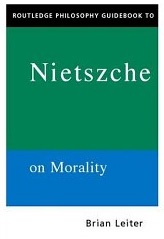
Just to be clear: I have the highest respect for Brian Leiter’s scholarship and have personally ordered a copy. That said – and while we are on the subject of strange covers showing up on Amazon – there is a problem. I can’t help but feel Routledge must be somehow responsible.

Let’s assume for the sake of argument that we witness the first stage of the process here [Powell’s Books]:

powellsniet.jpg

At this point, someone leaned over someone’s shoulder: ‘Dude, it should have, like, an S in it.’

Thus, the happy final product displayed on the Amazon page

amazniet.jpg

My colleage, Axel G., noticed it. (Don’t know whether he cares for getting credit, but now he has it.)

Ornamentation Recapitulates Phylogenet – oh ferget it

by John Holbo on February 20, 2008

This is rather odd.

ornament.jpg

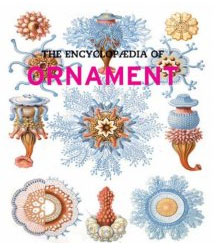
Pepin books has a forthcoming title, Encyclopedia of Ornament [amazon]. Which, frankly, is just the sort of thing I might buy. Pepin books – all those Agile Rabbit titles, maybe you’ve seen them – are great, if you like that sort of thing.

But, as I am very prepared to notice, that cover is just plate 17 of Haeckel’s Kunstformen der Natur, with the title on top. I wonder whether this is some sort of joke. Maybe, since the book isn’t out until June, they decided to have some fun, putting a dummy graphic up. It is pretty funny to have a bunch of ornamental-looking things, none of which are actually ornaments, most of which are carnivorous colony life-forms.

Say what you will about Stalin … he was no Babbitt.

by John Holbo on February 19, 2008

I’ll state my question first: to what extent did people believe, in the 30’s and early 40’s, that capitalism was doomed? [click to continue…]

Rawls and ‘Liberalism’

by John Holbo on February 7, 2008

It is often suggested that what distinguishes Rawls’ Political Liberalism from his earlier A Theory of Justice is the ‘political’ bit. This second book is a ‘political’ interpretation of the first one. But I just noticed something. The word ‘liberalism’ does not appear in the index of Theory, and occurs in the text (thank you, Amazon search inside) only three times; none of the three is a self-reference to features of his own theory. What about ‘liberal’? It has no entry in the index either (one entry is for ‘liberal equality’). It occurs 18 times, which is still pretty light. Again, none of the occurrences has a clear ‘mine is a liberal theory’ character. There are several references to works by others with the word ‘liberal’ in the title. The one bit that even makes it into the index is a brief, ‘liberal’ interpretation of equality that is, however, rejected in favor of the ‘democratic’ conception encoded in the so-called ‘difference principle’.

I don’t really have any point to make. But I’m curious. When did Rawls become a ‘liberal’ – when did justice-as-fairness become a theory of ideal ‘liberalism’?

Prediction Markets In Republican Spin

by John Holbo on January 30, 2008

In November, we’ll be sending out our most liberal, least trustworthy candidate to take on Hillary Clinton—perhaps not more liberal than Barack Obama, but certainly far less trustworthy. And the worst part for the Right is that McCain will have won the nomination while ignoring, insulting and, as of this weekend, shamelessly lying about conservatives and conservatism.

(Over at the Corner.)

In this election the right hand has no clue what either the right or left hands are doing. Apparently. Nor can I really believe it’s some sort of deep game – Operation Briar Patch.

This can’t last. Quite possibly, it can’t last another week. If McCain wraps it up, what will Republican wisdom be? (Obviously the bumperstickers won’t read ‘McCain: probably less liberal than Obama’.) There are basically three options: 1) McCain as maverick liberal goes down the memory hole. Don’t look back. We have always been at peace with McCainia. 2) McCain as new direction. So far, there is zero evidence of this sort of framing. But there is obvious desire to get the Republican party back on track, after Bush. So, if McCain is it, there is an advantage to brandishing his former maverick status as evidence that real change has been achieved. 3) It was personal, not political. It will be discovered that McCain’s maverick status was just a function of his personal rivalry with Bush. We’re done with Bush, so we’re over that.

It is very hard for me to imagine a world in which Republicans reliably say any of 1)-3) about the formerly anathema McCain. But they can’t call him a liberal, or run him as an ‘until 2012’ placeholder. What, then? What will be the reason why McCain was obviously always the best man for the job?

Liberal Fascism: Wings Over the World Edition

by John Holbo on January 24, 2008

I know, I know. But I’m going to talk about it anyway. Here he is, today:

I tried to explain, for those whose feelings were so hurt they didn’t even crack the spine, that the title Liberal Fascism comes from a speech delivered by H. G. Wells, one of the most important and influential progressive and socialist intellectuals of the 20th century. He wanted to re-brand liberalism as “liberal fascism” and even “enlightened Nazism.” He believed these terms best described his own political views — views that deeply informed American progressivism and New Deal liberalism.

I happen to know a thing or two about this, through research on Wells’ work on his cinematic (Wells scripted, Korda produced, Menzies directed) good-bad boondoggle, the 1936 SF film, Things To Come [wikipedia].
I’ve posted about the film before on CT here. I wrote a really fun post about it at the Valve: how H.G. Wells prevented steampunk. [click to continue…]

Liberte, Suburbie, Fraternite!

by John Holbo on January 23, 2008

I’m reading David Frum, Comeback Conservatism [amazon]. So far, so mushy. But it does, at the very least, contain the third silliest argument I’ve encountered in the last 6 hours. (The top two contenders arrived, courtesy of Jonah Goldberg, in his bloggingheads exchange with Will Wilkinson.)

Here is Frum, protesting the notion that John Edwards is a friend of the poor, or in any sense an economic egalitarian:

Voters sense this truth. It’s an observable fact that those voters who care most deeply about equality – deeply enough to organize their lives to live in egalitarian communities – overwhelmingly vote Republican.

Take a look at a map of the state of Missouri. A recent study conducted by the state identified a dozen of the state’s 114 counties as “equality centers.” These equality centers were located on the outer fringes of St. Louis, Kansas City, Columbia, and Springfield. Every single one of these highly egalitarian areas of the state voted overwhelmingly Republican.

Meanwhile, the most unequal parts of Missouri, the cities and especially the city of St. Louis, voted heavily Democratic. Where you find many different lifestyles and races; where you find singles, immigrants, and gays; where you find high-rise buildings, country estates, and really great take-out – there you find inequality. After all, what is inequality but another form of “diversity”? And what is “equality” but another word for homogeneity? Communities with lots of married families, lots of single-family homes, and low proportions of nonwhite minorities and single people – communities that Democrats and liberals would inwardly disparage as “white bread” – are communities in which people tend to earn similar amounts of money. (p. 37)