Watched the classic Rudolph the Red-Nosed Reindeer X-Mas special with the kids last night. I wonder: was such a message of tolerance, across color lines, considered faintly radical in 1964? (Did anyone object to this X-Mas special when it came out?) Well, anyway, Zoë (the 8-year old) was disturbed by the fact that Santa was morally in the wrong for most of the show, incapable of distinguishing naughty from nice. She expressed concern about the integrity of the system by which she is to receive her due. If Santa thinks it’s ‘nice’ not to let Rudolph join in any reindeer games, etc., until he needs the guy, he might “give all her presents to some racist.”
This post is going to have it all: comics, fonts, broadbrush high-lowbrow cultural opinionation, curiously reasonably priced British TV.
We’ll start with fonts. Why did the modernists go ga-ga for sans serif? Take Tschichold, my recent subject of study. Early in his career, he dogmatizes that there is something technically obligatory, inherently suited to the Engineering Age, about sanserif type. What induced him to make such an implausibly strong claim, and induced others to buy it, was somehow a tremendous aesthetic impulse in this direction. This felt so necessary. Human beings aren’t skeptical of arguments that give them exactly what they want, so bad arguments are often most interesting as indices of desire. But what was the Big Deal with filing down all the little pointy bits, all of a sudden? [click to continue…]
I’m an undisciplined note-taker. I like to read a lot, putting post-its or other suitable markers in the pages as I go, and planning with the best of wills to take notes later. (I type very quickly, after all. I should be able to take notes even though I use so many post-its.) But then I just never get around to the sloggy, typing-it-all-in part. Recently I’ve tried to change things up. I sit down with a stack of books full of post-its and scan in just the post-it’ed bits, plucking the fluttering yellow feathers from these literary birds as I go, until I could stuff a whole pillow with used post-its by the time the night is over. I turn all the scans from any given book or article into one PDF, and I use Acrobat’s OCR capacity to make it semi-searchable. I can do something else while I work, like listen to an audiobook or podcast. I find this semi-mindless tidying of the aftermath of my reading mind’s life to be relatively pleasant activity. Now I want to take it to the next level, making the most of all my PDF’s (and docs in other formats, too, of course): does anyone here use, for example, DEVONthink, which some people have told me is good and useful. (But I am suspicious that these people are more obsessive than I about this sort of thing. I’m not a database-devotee by nature. I’m not going to go scripting stuff for DEVONthink. I know I won’t.) DEVONthink seems like a good deal because it has OCR based on ABBYYFineReader. And DEVONthink doesn’t even cost more than FineReader. Acrobat’s OCR, although adequate for basic purposes, is not great, and FineReader is supposed to be pretty good. So even if that was all I used it for …
Tell me of your time-saving note-taking methods, but don’t tell me to type it all in. What are good scanning products and OCR software suites and notetaking software. I’ve been using Zotero and I like it just fine. But maybe DEVONthink is better enough to be worth paying for, especially with the OCR?
The Plain People of the Internet: It hadn’t any McArdle in it!
I: Surely, my good man, we have not come to such a pretty pass as that.
The Plain People of the Internet: But here we are, and here you are.
I: I prefer to think it was due to modesty. False modesty, perhaps. But if it weren’t for false modesty, some people would have no modesty at all. Or so I like to flatter myself.
The Plain People of the Internet: What are you babbling about, you great baby, and bottomless bag of blog posts!
I: In my post, I quoted John Kricfalusi on the baneful influence of cool. “Why do young artists say they like UPA? Because it makes ‘em cool. Hipster Emo time. (It’s also easy to fake) It’s like when teenagers discover communism. They think it’s real cool to go against common sense and experience. But then when they meet the real world head on later, they realize it was youthful folly. You’re supposed to grow out of it. I too fell under the UPA spell for the 3 weeks I wanted to be cool.” But what is it, of which he speaks? A contrarian herd instinct, thus a bleating contradition in terms? An emo knee-jerk? What is the common denominator of Gerald McBoingBoing and the dream of One World Government? In short, what’s cool? Or if you prefer, what does ‘cool’ mean? Compared to this question, the trouble with McArdle’s opposition to health care is but a bagatelle.
The Plain People of the Internet: Blast your eyes!
I: I have been doing some research on the subject. Here is a passage from Charles Dickens, Great Expectations. Joe Gargery – honest soul, who wears his heart on his rolled up sleeve, as he works an honest day at the open flame of the forge – reports on what has become of Miss Havisham’s fortune: [click to continue…]
Lemme horn in on Quiggin territory here. I just flew home to Singapore from New York and read about a third of Justin Fox’s The Myth of the Rational Market: A History of Risk, Reward, and Delusion on Wall Street [amazon] on the flight. (You can view my takeoff here.) Verdict: it’s good! Chapter 1 contains a lively portrait of Irving Fisher. He was, I have learned, a boldly quantitative economic pioneer who pronounced in print just before the crash of ’29 “stock prices have reached what looks like a permanently high plateau.” He lost his personal fortune in the Great Depression. (So he’s a nice emblem for Fox’s book – quants come to practical grief when reality neglects to live up to ideal model standards.)
For his doctoral thesis [completed in 1893] he devised the most sophisticated mathematical treatment yet of economic equilibrium, and he also designed and built a contraption of interconnected water-filled cisterns that he described as “the physical analogue of the ideal economic market.” Many decades later, economist Paul Samuelson judged this work to be “the greatest doctoral dissertation in economics ever writter.” It launched Fisher into a leading role among the world’s still-sparse ranks of mathematical economists. (10)
I want to hear more about his bold, pre-20th Century design for a compucistern system. [click to continue…]
Hey look! Our book (Belle’s and mine) – Reason & Persuasion: Three Dialogues by Plato – is available for pre-order from Amazon! And I’ve uploaded the final version for free viewing on Issuu. Yes! You can just click the image below read the whole book online in a full-screen flash-based thingy. It works quite well, I find.
You can also click here if you want to download the whole book as a PDF. (Harder to find the download link via that other method.) The PDF is print-locked but otherwise functional. (Download requires a simple sign-in. But you can’t argue with the price.) Finally, the official book site is here. Now I want all you instructors to adopt it for course use. (Free online! How can you neglect to avail yourself of this fine resource?)
But selling you my book about Plato isn’t everything. There’s also … the life of the mind! Here’s a question for discussion. And it will do double-duty as a foretaste of our upcoming George Scialabba event. [click to continue…]
The New York Times Magazine has a long, appreciative article on Jack Vance, which seems to me to be more or less exactly right on his virtues (his wonderful prose, most especially his characters’ ornate conversational style, which confects a froth of cupidity, _amour-propre_ and sundry other ignoble motives into spun-sugar extravagances of rococo diction), while touching on some, at least of his flaws (poor ability to plot; I would also note his difficulties in creating complex characters, especially female ones). The NYT piece has a nice illustration of the former from _Eyes of the Overworld_, describing a conversation between Cugel, whose efforts to become a vendor of purportedly magical artifacts have proved unavailing, and the far more successful proprietor of the neighboring booth, who possesses many small items of great value.
bq. “ ‘I can resolve your perplexity,’ said Fianosther. ‘Your booth occupies the site of the old gibbet, and has absorbed unlucky essences. But I thought to notice you examining the manner in which the timbers of my booth are joined. You will obtain a better view from within, but first I must shorten the chain of the captive erb which roams the premises during the night.’
bq. ‘No need,’ said Cugel. ‘My interest was cursory.’ ”
Vance’s description of the foppish Ivanello, whose facial expressions run “the somewhat limited gamut between amused indifference and easy condescension,” is shorter, but has some of the same flavor.
One topic that the piece’s author doesn’t touch on is Vance’s sociological imagination, which I’ve always admired. He has a particular interest in status relations – the society of his late novel, _Night Lamp_, where everyone strives to become members of clubs of ever-increasing exclusivity, culminating in the Clam Muffins who are at the top of the social pyramid, is described in especially droll terms. But the village in _Cugel’s Saga_, where the men sit all day on pillars to soak up the purportedly healing fluxes of the upper atmosphere, while paying assiduous attention to which of them has the highest pillar, is a very nice discussion of the relative nature of status games (Cugel discerns that they don’t pay any attention to the absolute height of their pillars and uses this to bilk them). One of the novels in the _Planet of Adventure_ series (sadly, I don’t think it is the gloriously named ‘Servants of the Wankh’) has a set-piece that anticipates Mancur Olson on the distinction between stationary and roving bandits. I’ve wanted for years to write a short piece on the sociology of Jack Vance (and now that I have tenure can perhaps do the occasional thing for pure fun). Anyone have suggestions for other sociologically rich parts of the Vance corpus?
First: why aren’t you reading more Squid and Owl? Last week we had assassination by siege engine and undersea regicide. Now we are off on a thrilling mock-Kipling romp. You are a fool not to click.
When a man gets to be around 40 – maybe a bit older – he starts to look back on life and wonder: what thing have I done for which I will be remembered? The next thing he does is start a webcomic. Maybe sell a few t-shirts, other Cafe Press-type stuff. Which brings us to:
No, really. I honestly don’t know whether it’s a comic or not. It’s an illustrated childrens book for adults, maybe. I’m planning to serialize it on Flickr. Here’s the set. Subscribe to the RSS feed! I decided to start things out by posting the first 21 pages. I’ll be adding a page a day, weekdays. (Not like there’s a story or anything, but it rhymes.)
Then it will become wildly popular. (Step 3: Profit!) Maybe I’ll be able to find a publisher, eh?
The only other really good idea I’ve had lately is … Bob, can we just show them the picture? [click to continue…]
I just discovered that Daniel Pinkwater has a regular podcast [that’s the link to the site, but I prefer to get it through iTunes], which includes readings of his old books! He just got through chapter 3 of Borgel, which is drop-dead my favorite novel that isn’t Melville’s Confidence Man. And he’s reading other stuff with it. There’s this screamingly hilarious, alliterative bit about Bugsy Schwartz, M.D.-to-be. “I was looking after this broad with … a stomach ache.” You have to listen.
What are your favorite podcasts that I probably don’t know about? (I have this weird problem where iTunes decides it doesn’t like certain podcasts after a while and won’t download them anymore. Example: I can only download Rachel Maddow at work because my home mac doesn’t do that stuff anymore. I click. It tries for a second then gives up. Very strange.)
God, I don’t want to read such a thing (you reasonably protest, and I can offer no cogent counter-argument.) Then, after you read it, you come back and complain: after all that hemming and hawing, you don’t even say whether Nietzsche has an unsatisfactorily one-dimensional account of power, in your considered opinion, or not?
Very well: it is my opinion that Nietzsche’s philosophy of power is precisely isomorphic, in dimensionality, to the subject matter of this work of art, “Monster Attack”, by young Eli Kochalka. It is the greatest work of art ever. Ergo, Nietzsche is a very sophisticated theorist of power!
I suggest you click on the Monster Attack link and leave it at that.
I know, I know: it’s been two days since my last Haeckel post. Well, worry no longer! My X-Mas cards got a link from the University of Chicago Press! They just put out a new biography of Haeckel that is, I gather, more of a general intellectual history of the reception of evolutionary theory in the second half of the 19th Century, doubling as an attempt to burnish a somewhat tarnished reputation: The Tragic Sense of Life: Ernst Haeckel and the Struggle over Evolutionary Thought [amazon]. Here’s a TLS review – or rather, a longer version of one – that is, effectively, a thumbnail biography in itself.
All well and good, you agree: but surely there is more to life than German X-Mas jellyfish imagery? Yes, indeed! ASIFA has posted a wonderful series of Einar Norelius illustrations from a 1929 Bland Tomtar Och Troll (a Swedish x-mas annual of fairy and folktales). For example, here’s some sort of Aquatomten admiring a bunch of jellyfish. (Or maybe the guy’s just drowning.)
You see: there’s also Swedish X-Mas jellyfish imagery. So I added another card image to my flickr set, to add variety. (Not my best work, admittedly. But I only have so much 100-year old Swedish holiday card stock in my ephemera file.)
Next: there has been some indignation in response to Gerecht’s piece in the NY Times, defending torture and extraordinary rendition. Yglesias starts like so: “Because Reuel Marc Gerecht adheres to an appalling and cruel ethical system and the people who decide what runs on major newspaper op-ed pages have no ethics whatsoever …” [click to continue…]
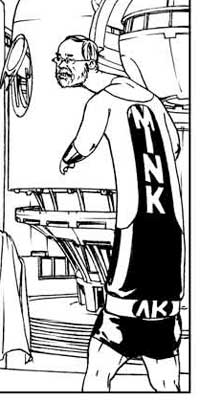
I can’t believe I beat Josh Marshall to this one. Check out this preview page for #3 of the new Top 10 run. To the right, in the center panel, see an elongated Don Young with ‘AK Mink’ – Alaska Mink – on his spandex. (See this old TPM post for backstory.) Also, Newt Gingrich is there. Of course I know all this because like a sensible person I listened to the John Siuntres Word Balloon podcast interview with Gene Ha, the artist for Top 10.
If you don’t know: Top 10 was an Alan Moore-authored series now being written and drawn by two of the original artists, Zander Cannon having shifted to writing. And so this seems like an appropriate time to reflect on the fact that Alan Moore is famous, and everyone has heard of Watchmen and V for Vendetta and League of Extraordinary Gentlemen. But I like a lot of other Moore work as much, if not better. [click to continue…]
 [amazon] on the flight. (You can view my takeoff
  – is available for pre-order from Amazon! And I’ve uploaded the final version for free viewing on Issuu. Yes! You can just click the image below read the whole book online in a full-screen flash-based thingy. It works quite well, I find.
 [amazon]. Here’s a