by Kieran Healy on March 20, 2010
Influential upon myself, I mean. Everyone else is doing it, at least for “American/white/politics/economics/mostly libertarian type guys” values of “everyone”. I suck at lists like this. It’s hard to give an honest answer, in part because I’m not prone to conscious conversion experiences, but mostly because I’m good at repressing things and so really find it hard to remember things I read that really hooked me at the time.
In any event, and in roughly chronological order:
[click to continue…]
by Harry on February 28, 2010

Cambridge has just published a new book, Measuring Justice: Primary Goods and Capabilities (UK
(UK ), which Ingrid and I edited (the idea of doing it was entirely Ingrid’s, I should say, and a brilliant idea it turned out to be). Its a fairly tightly focused collection, for which we invited two kinds of contribution. It opens with a shortened version of Pogge’s essay “Can the Capabilities Approach be Justified?” which many of the contributors refer back to, and the first part continues with a series of chapters considering the relative merits of Rawls’s social primary goods approach and the capabilities approach to the metric of justice; for this we invited contributors whom we believed would defend one or another of these metrics while giving careful criticisms of the rival, plus Dick Arneson whom we believed (rightly) could be relied on to help make progress despite not being associated with either view. For the second part we invited contributors who would think about some specific issue of justice (in health, education, gender, the family, disability) and consider the relative merits of the approaches with respect to that specific issue. We wrote a short analytical introduction which locates the debate in a broader context, and which, we hope, helps guide the reader through the book (the CUP page has a pdf of it, so you can judge for yourselves); the book concludes with a nice, partly autobiographical, essay by Sen engaging with the chapters in the first part of the book. The contributors so far unmentioned are Erin Kelly, Elizabeth Anderson, Norman Daniel, Lorella Terzi, Colin MacLeod, and Elaine Unterhalter. This is the second volume I’ve co-edited for Cambridge, and both times they have come up with much better titles than the editors would have done, good-looking but demure covers, and, most importantly, a reasonable price.
by Kieran Healy on December 23, 2009
Some work of mine on presumed and informed consent for organ donation has been picked up by Catherine Rampell at the New York Times’ Economix blog. It’s a good summary of the paper. We’ve had some discussion before about this stuff on CT, in the context of the possible introduction of a presumed consent rule in Britain.
by Henry Farrell on November 18, 2009

[self-promotion]My first book is out from Cambridge (and has been for a few weeks). Entitled _The Political Economy of Trust: Interests, Institutions and Inter-Firm Cooperation in Italy and Germany_, it sets out a rational choice account of how institutions affect the ways in which people do or do not trust each other, and applies it to explain cooperation among firms in Italy and Germany, as the title suggests, as well as among Sicilian mafiosi. I received some help from CT readers on Sicilian dialect, which is duly acknowledged in the book itself. I’ve set up a basic website for the book at http://www.explainingtrust.com with information, blurbs and the book’s introductory chapter. The book is an academic hardback, and hence not cheap, but those with (a) an interest in the topic, and (b) a research budget/substantial discretionary income, or (c ) a friendly institutional librarian are warmly encouraged to take all appropriate steps (if it sells well, it will then go into paperback). If you order directly through Cambridge before the end of the year, you can use the discount code E09FARRELL which will get you 20% off the book, and indeed any other purchases you make (as far as I can make out, this is the cheapest source). Alternatively, you can buy it at Powells, Amazon, Barnes and Noble or Amazon UK. And if you do read it, comments, rejoinders etc are all warmly welcomed.[/self-promotion]
by Kieran Healy on August 17, 2009
I think everything should be back to normal now. We ran out of various stuff. I blame society.
by Henry Farrell on July 7, 2009
by John Q on July 2, 2009
We’ve been very happy over the last few weeks to have a number of guest posts from Michèle Lamont who’s been visiting us virtually while travelling around physically, often to places with limited Internet access. I’ve put a list of her posts over the fold, for easy reference.
Among other things, I’ve particularly enjoyed the way in which Michèle has brought some actual evidence and intellectual rigour to the kinds of interdisciplinary and metadisciplinary discussions that go on all the time at a place like CT. From us at CT, thanks Michèle and our hopes that your foray into blogging has been enjoyable and enlightening.
[click to continue…]
by Kieran Healy on June 7, 2009
by John Q on February 16, 2009
One of the big points to emerge from the collapse of the investment banking industry is that sky-high salaries for CEOs and star performers in banking aren’t just immoral and unjustified; they are an indication of unsound risk management practices. Such reward systems create an incentive for one-way bets with other people’s money. If high risk investments pay off, the genius who advocated them gets the rewards of stardom. If they go wrong, the worst that can happen is the loss of a job, and there may well be another one waiting.
The evidence for such an analysis has been available at least since the big disasters of the 1990s, such as LTCM and Barings Bank. But when was it first put forward, and who deserves the credit.
[click to continue…]
by Harry on January 6, 2009
I tried to run away from home once, when I was 7. I was not at all unhappy, I had just spent a lot of time reading Alison Uttley’s Little Grey Rabbit books, in which one character wandered around with all his belongings wrapped in a hanky on the end of a stick that he carried over his shoulder. I wanted to be like that. My mother, remarkably, helped me wrap up the belongings. It now occurs to me that she was probably reasonably confident that, in the middle of a massive thunderstorm, I wouldn’t get very far. I spend a very cheerful hour eating whatever she’d packed while sitting in a stream of water under a rather large table in the playground of the school, the schoolhouse of which we inhabited at the time. Then I returned home, defeated, cold, sodden, but full and happy.
But I never thought of eloping.
by Henry Farrell on January 6, 2009
I’ve a piece in the current issue of the _American Prospect_, which is now available on their website. The argument, in a nutshell, is that there is likely to be a clash between Obama style post-partisan politics (which builds on a general anti-party sentiment in American political thought and in recent arguments from Putnam, Fishkin etc about civic renewal), and the quite partisan electoral machine that he built in order to win the election.
The rebirth of civic participation this year is not a product of experiments in deliberative democracy or a new interest in league bowling. Rather, it is based on party politics, coupled with and accelerated by new opportunities provided by the Internet. Skocpol’s claim that “conflict and competition have always been the mother’s milk of American democracy” tells part of the story.
The one regret I have is that I hadn’t read Nancy Rosenblum’s _On the Side of the Angels_ (Powells, Amazon) before writing it. Rosenblum’s new book is the first serious political theoretic defense of partisanship that I’ve ever read. More on that when I work my way through the other items on my queue …
by Henry Farrell on November 18, 2008
My first book is coming out with Cambridge next year, _The Political Economy of Trust: Interests, Institutions and Inter-Firm Cooperation_, and the publisher is asking me whether I want to suggest a cover image. My first thought – to do a Wordle of the text – apparently isn’t going to work – and my visual imagination and knowledge of the visual arts leaves a fair amount to be desired. So I thought that I would throw it open to CT readers, who might have some ideas of where to go for good images (or even some proposed images of their own). The themes of the book include trust and distrust, the mechanical engineering industries in Germany and Italy and the Sicilian Mafia. Possibilities might include classical art, cartoons, political images related to the above. Ideally, nothing with expensive rights of reproduction, since I think that I have to cough up the fees myself, but any suggestions would be gratefully appreciated (and reciprocated with the admittedly modest reward of acknowledgment in the book’s introduction).
by Eszter Hargittai on November 8, 2008
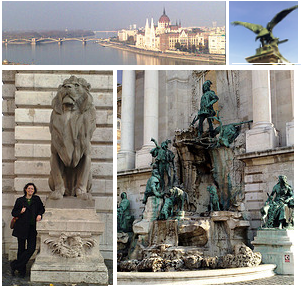 Are there any readers of Crooked Timber in either Budapest or Zürich who would be interested in meeting up in person? I’m on the road and it’s one of the rare occasions when I’m not simply in-and-out of a town. Budapest options are this weekend or Monday. Zürich options concern next week. Drop me a note if you’re interested and we can figure out specifics. (Email info on my Web site or send a note to my last name @gmail.com.) For those interested in Budapest, you can see some of my photos of the castle district here.
by Daniel on August 6, 2008
Talk about burying the lead! All the press coverage of Shadow Education Secretary Michael Gove‘s recent speech to the Institute of Public Policy Research focused on the fact that he had a bit of a go at “Nuts” and “Zoo”[1]. But they missed the real highlight of Gove’s speech, which is that he favourably cited CT’s own Harry Brighouse (and some bloke called Adam Swift, who is less newsworthy. Yay Harry.
If you look at Gove’s speech, it’s actually surprisingly socially liberal and sensible stuff – a bit of apologia for the Tory Party’s historical treatment of gays and single mums, a bit of blah about communitarianism and a strong hint that Crooked Timber will be invited to draft future Conservative education policy once they get into power (I may be reading a bit too much between the lines here). I could almost see myself voting for the guy if it wasn’t all so transparently a pack of bollocks. I mean really, the Conservative Party, in office, is going to subsidise unprofitable post offices? I was born during a shower of rain, but I wasn’t born during the last shower of rain. Increased devolution to local government? Subsidised maternity nurses on the Dutch model? I scratch my chin, sir, and nod vaguely in the direction of the marginal rate of capital gains tax. About the only thing in this speech which you’re ever going to see is the education vouchers proposal, and I confidently predict that the administration of that one is going to be cocked up on an epic scale.
But nonetheless, the philosophical underpinnings of Cameronism, in as much as Gove sets them out here, are both interesting and sensible. Worth a look.
Update: Despite the implication given by the title of this post, the Conservative Party are not currently the government.
[click to continue…]
by Henry Farrell on August 1, 2008
Norm Geras has put up a profile of me – if you’re interested, click over. The bit I’d recommend really has nothing to do with me, except that I was there when it was uttered – my favorite take on a proverb. It came from an Australian friend whom I’ve fallen out of touch with, Mac Darrow. Off the cuff, he glossed _in vino veritas_ as
Many a true word
Is slurred
which I’ve always thought was a translation tinged with genius.
Also, two very good appreciations of writers. First, Julian Barnes has a lovely piece on Penelope Fitzgerald both as a person and as a novelist. I fell in love with _The Blue Flower_, less for the portrait of Novalis than for the quiet tragedy of Karoline Just, and read everything else by her that I could get my hands on. As an aside, while she may seem as far from genre as a writer could be, her pastiche of an M.R. James short story in _The Gate of Angels_ is uncanny and brilliant. Second, Kathy G. has a great discussion of Tom Geoghegan. His _Which Side Are You On?_ (Powells, Amazon ) is a wonderfully written contrary class of a book about the union movement. As Kathy says:
bq. a lot of people just don’t get his charmingly idiosyncratic writing. He writes about politics, and about policy, but God knows his books and essays don’t read like formal scholarly papers or dry think tank reports — they’re far more fluid, inventive, and playful than writing about policy has any right to be. But the problem is, political types often don’t appreciate the literary qualities of his writing, and the literary types don’t get the politics.
I suspect that’s right – his books don’t have arguments so much as they _are_ arguments – going backwards and forwards between different points of view, looking at different aspects of the issue, proposing viewpoints and counter-viewpoints. For those who haven’t read him, he’s really wonderful; one of the best and most original political writers alive.
