I’m not writing about the debates over health insurance (as, indeed, I am not writing about most policy debates), because I simply don’t think I’m informed enough to say anything very useful about the pros and cons of the specific options under discussion. Still, “this”:http://www.marginalrevolution.com/marginalrevolution/2009/07/the-uninsured-adverse-selection-problem-or-distribution-problem.html by Alex Tabarrok struck me as a bit odd. [click to continue…]
It is disappointing to get what appears to be definitive evidence that Robert Capa’s photograph of the falling soldier was staged. Sadly, too, I’m inclined to agree with the thought that the staging in that case also amounts to fakery. Still, I’m far from certain about my reactions here: staging a photograph is not, in itself, sufficient to make the charge stick. I was thinking last night about the US Civil War photographs where we suspect the photographers rearranged the bodies, and that is one of the examples that Philip Gefter discusses in an essay on the problem at the New York Times. Many of Bill Brandt’s photographs of English upper and working-class lives were staged, but that staging doesn’t make them bogus. Rather Brandt was using artifice to get his subjects to enact a role more general than any particular haphazard moment. That also seems true of the Lewis Hine pictures that Gefter discusses. Capa’s soldier seems altogether more problematic. We _could_ say that he is an icon standing for the many soldiers who did in fact die for the Republic, but that doesn’t feel right since it would be hard for the image to play that role for us if we knew that the man was simply acting. Brandt’s subjects were (barely) acting, but they were at least playing parts that they also played in life. And for reasons Susan Sontag discussed long ago, the fact of photographic _selection_ means that even where a picture appears to have a definite semantic charge, it would be naive to take that as a veridical report, since the image may well have been chosen for that effect from a sequence of which all the rest conveyed a quite different impression.
{ 7 comments }
We have one old cassette tape of Peter Hawkins reading 2 Pugwash stories, that my eldest enjoyed so much that for about a year I had to invent further stories just about every night for her. Fortunately, it was always easy to come up with the final line. BBC obit here. Liberal England memories here. Channel 4 (youtube).
Part of his masterpiece:
And the entire opening episode of Sir Prancelot:
{ 11 comments }
I got more very useful comments on my section on the rise of the Efficient Markets Hypothesis, and I will get down to editing it before long. In the meantime, here’s my draft section on Implications of the EMH
At least in the draft, I’m following a standard structure: One chapter per dead/zombie idea, with sections on Beginnings, Implications, Failure and What Next? It seems to go OK for EMH, and we’ll see how it works for the others.
As before, comments of all kinds, and particularly pointers to (putative) errors, are most welcome.
{ 46 comments }
Horrible Histories (the best thing currently on television in Britain?) takes a less jingoistic view of Britain than the Ladybird Books — the 3 minutes history of the British Empire is, alas, not yet up on youtube, but there’s plenty else there: Witchfinders Direct; Christians versus Lions; Born 2 Rule; etc.
Btw, according to wikipedia, not only was Titus Oates not really called Titus (I always thought it was odd that there were two of them), but he disliked Scott intensely, which makes the whole thing seem even more tragic.
{ 49 comments }
Hey look! Our book (Belle’s and mine) – Reason & Persuasion: Three Dialogues by Plato
You can also click here if you want to download the whole book as a PDF. (Harder to find the download link via that other method.) The PDF is print-locked but otherwise functional. (Download requires a simple sign-in. But you can’t argue with the price.) Finally, the official book site is here. Now I want all you instructors to adopt it for course use. (Free online! How can you neglect to avail yourself of this fine resource?)
But selling you my book about Plato isn’t everything. There’s also … the life of the mind! Here’s a question for discussion. And it will do double-duty as a foretaste of our upcoming George Scialabba event. [click to continue…]
{ 22 comments }
A bit more from my book-in-progress. I’m currently toying with the title Zombie Economics: Seven Economic Ideas that Aren’t Dead but Should Be. As always, I’m keen to get suggestions on this, and on improvements to the text. I’m particularly happy to have putative errors pointed out. If I agree with you about the error that saves me from putting it in print. If not, it will be a point I need to anticipate and respond to.
{ 55 comments }
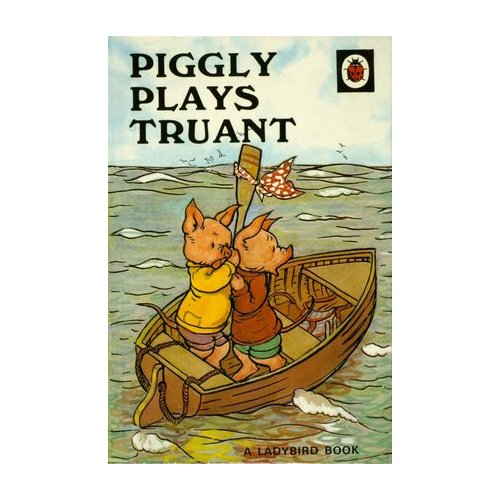
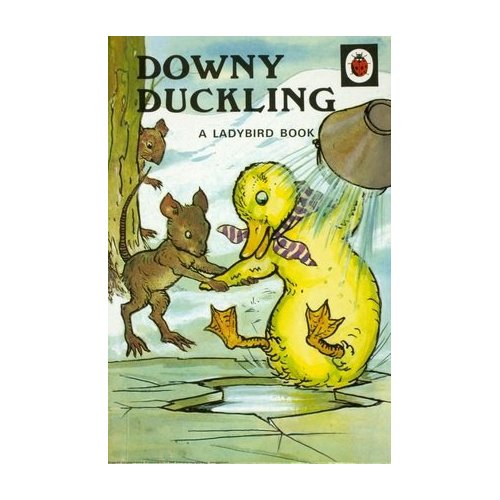
Ladybird Books play an integral part in the prehistory of CT (and, as my daughter points out, in the upbringing of her monstrous brother).[1] Above are the covers of the two that my father recited over and over again to me as a kid (and that we recite to the little horror in turn). Very different; whereas Piggly is a ne’er do well, Downy is punished for good deeds (but — spoiler alert — is rescued at the last minute). Almost unknown in the US (though, in one of the odder moments in my marriage, I was being entertained by my wife’s former boyfriend’s parents when I happened upon Piggly on one of the bookshelves where they were keeping books in preparation for the hoped-for grandchildren). Anyway, in addition to the addictive Boys and Girls: A Ladybird Book of Childhood

{ 13 comments }
One source that may possibly help illuminate the controversy over Skip Gates’ arrest is Peter Moskos’ book, _Cop in the Hood_ (Powells, Amazon). Moskos, a sociologist, spent a year as a beat officer in Baltimore. While police practice in the US varies substantially from jurisdiction to jurisdiction, some aspects are (I suspect) reasonably general, including the use by police officers of their zone of discretion to try to expand their authority beyond that which they are theoretically supposed to exercise. Moskos (p. 117-118):
bq. A nonviolent domestic dispute serves as another example of using the law to gain extralegal authority. A woman calls police because she is sick of her baby’s father coming home and being rowdy after a night of drinking. An officer wants the drunken man to spend the night elsewhere. The girlfriend is not afraid of the man. Though the officer believes this argument will continue and perhaps turn violent, there is no cause for arrest. Police may not order a person from his or her home. But an officer can request to talk to the man outside his house. At this point the officer might say, “If you don’t take a walk, I’m going to lock you up.’ The man, though within his rights to quietly reenter his house and say goodnight to the police, is more likely to obey the officer’s request or engage the police in a loud and drunken late-night debate. The man may protest loudly that the officer has no reason to lock him up. If a crowd gathers or lights in neighboring buildings turn on, he may be arrested for disorderly conduct.
Moskos is in general in favor of police having a fair amount of discretion (he seems to believe that much basic policing work would be impossible without it) – I’m not going to get into that broad set of arguments, since I don’t know enough to say anything useful. But it is easy to see how this discretion can be abused in ways that work out nicely for the cops (most of the time), but not so nicely for their targets. Moskos’ discussion of this particular technique of generating arrests has some similarities with the actions described in the “police report”:http://www.boston.com/news/local/breaking_news/CANON8AA683_LNOTESMAIL_07202009-153909.PDF of Gates’ arrest.
bq. When Gates asked me a third time for my name, I explained to him that I had provided it at his request two separate times. Gates continued to yell at me. I told Gates that I was leaving his residence and that if he had any other questions regarding the matter, I would speak with him outside his residence. As I began walking through the foyer toward the front door, I could hear Gates again demanding my name. I again told Gates that I would speak with him outside. My reason for wanting to leave the residence was that Gates was yelling very loud and the acoustics of the kitchen and foyer were making it difficult for me to transmit pertinent information to ECC or other responding units.
bq. When I left the residence, I noted that there were several Cambridge and Harvard University police officers assembled on the sidewalk in front of the residence. Additionally, the caller, Ms. Walen and at least seven unidentified passers-by were looking in the direction of Gates, who had followed me outside the residence. As I descended the stairs to the sidewalk, Gates continued to yell at me, accusing me of racial bias and continued to tell me that I had not heard the last of him. Due to the tumultuous manner Gates had exhibited in his residence as well as his continued tumultuous behavior outside the residence, in view of the public, I warned Gates that he was becoming disorderly. Gates ignored my warning and continued to yell, which drew the attention both of the police officers and citizens, who appeared surprised and alarmed by Gates’ outburst. For a second time I warned Gates to calm down while I withdrew my department issued handcuffs from their carrying case. Gates again ignored my warning and continued to yell at me. It was at this time that I informed Gates that he was under arrest. I then stepped up the stairs, onto the porch and attempted to place handcuffs on Gates. Gates initially resisted my attempt to handcuff him, yelling that he was “disabled” and would fall without his cane.
Now, I should emphasize that I have no personal reason whatsoever to doubt that Crowley’s account of the arrest is accurate – it may very well be that the acoustics were such that communication was difficult indoors. I am not acquainted with the physical specifics of the building where Gates lives. It is, however, notable that Moskos’ Baltimore police officer both (a) uses a verbal invitation to induce the targeted individual to leave the building, and (b) then uses the attention of bystanders to generate a charge of disorderly conduct. Whether these resemblances are purely accidental or not (in the absence of more facts, you could generate arguments either way), I leave to the imagination of the reader.
Update: All charges against Gates have “now been dropped”:http://www.bostonherald.com/news/regional/view.bg?articleid=1186258&format=text.
{ 178 comments }
Rather than being about dead ideas in economics, this post is about the future of economics: its relation to ethics. More specifically, about teaching ethics and economics.
[click to continue…]
{ 60 comments }
“The Boston Globe”:http://www.boston.com/news/local/breaking_news/2009/07/harvard.html
bq. Harvard professor Henry Louis Gates Jr., one of the nation’s pre-eminent African-American scholars, was arrested Thursday afternoon at his home by Cambridge police investigating a possible break-in. The incident raised concerns among some Harvard faculty that Gates was a victim of racial profiling. Police arrived at Gates’s Ware Street home near Harvard Square at 12:44 p.m. to question him. Gates, director of the W.E.B. Du Bois Institute for African and African American Research at Harvard, had trouble unlocking his door after it became jammed.He was booked for disorderly conduct after “exhibiting loud and tumultuous behavior,” according to a police report. Gates accused the investigating officer of being a racist and told him he had “no idea who he was messing with,” the report said.
bq. … Counter has faced a similar situation himself. The well-known neuroscience professor, who is also black, was stopped by two Harvard police officers in 2004 after being mistaken for a robbery suspect as he crossed Harvard Yard. They threatened to arrest him when he could not produce identification. That incident was among several that ignited criticism from black students and faculty, highlighting the prejudices that many black students say they continue to face at Harvard.
{ 140 comments }
Demos’s Open Left project is unveiled today, first with a series of essays on the Demos blog by the likes of Billy Bragg, Alan Simpson, Polly Toynbee, Phillip Collins and Jon Cruddas [1], and second with an event tonight at the Commonwealth Club. The essays were written in response to a series of questions, including “What is it about your political beliefs that put you on the Left rather than the Right?”, “How would you describe the sort of society you want Britain to be?” and “What one or two changes would make the biggest difference to bringing that about?” It’s headed up by James Purnell (whose own answers to the questions are here), who characterizes it as a three year project “to revive the ideas and direction of the Left at a time of economic and political upheaval”. More essays will be added throughout this week (I’ll link to mine when it goes up). Although one of the commenters correctly observes that the cast of characters is almost exclusively Labour, rather than more broadly left, it is nevertheless a reasonably eclectic group within Labour so far, and I think it’ll be interesting to see Purnell and Collins, for example, in dialogue with Simpson, Cruddas and Toynbee, and more interesting still if the project reaches beyond Labour ranks (I’m not Labour, but I don’t count). Thoughtful CT readers, commenters, and contributors might help further the discussion by going there and commenting.
[1] His wikipedia page suggests that Cruddas visited my department for a while in the 1980’s, in which case he is probably the second most eminent former visitor we’ve had — according to department legend, this guy once shared an office for a whole semester with my retired but excellent colleague Dennis Stampe.
{ 33 comments }

I was talking to a friend in the trade policy world this weekend, who told me that he understands that Canada will indeed be taking a “WTO action”:http://www.cbc.ca/canada/newfoundland-labrador/story/2009/05/05/eu-seal-ban-505.html seeking remedy for the EU’s ban on the importation of seal products, imposed because of the perceived cruelty of clubbing baby seals to death so as to get their skins off intact. Apart from the innate merits of the underlying argument (which you can discuss in comments to your heart’s content), this should (unless Stephen Harper loses his job in the meantime and the new government loses interest) really, really have some interesting effects on debates over world trade and globalization. Screw the turtles – when anti-WTO protest groups are able to run full page newspaper ads with adorable baby seal cubs, they’re going to be in a truly excellent position to wage public relations war. All the more so when the Canadian counterposition (that the seals are killed humanely) turns on the legal requirement that the baby seals should have stopped blinking before the hunters start skinning them. Perhaps Stephen Harper should have applied similar attention to the current state of the Doha round – I don’t see it moving around very much at the moment, but it does still blink occasionally. I wouldn’t be surprised if this turns out to be the _coup de grace_ for trade liberalization this decade and the next (which does not, of course, mean that it would be the most important explanatory factor if trade liberalization grinds to a halt, merely one of the significant immediate causes).
{ 40 comments }
This excellent piece by Jonathan Zittrain explains very nicely the potential downsides of how cloud computing is developing these days. (“Cloud” here refers to having all our data reside out there on others’ machines instead of on our own devices.)
A few quotes, but as we like to say, read the whole thing.
The crucial legacy of the personal computer is that anyone can write code for it and give or sell that code to you — and the vendors of the PC and its operating system have no more to say about it than your phone company does about which answering machine you decide to buy. Microsoft might want you to run Word and Internet Explorer, but those had better be good products or you’ll switch with a few mouse clicks to OpenOffice or Firefox.
[..]
The iPhone’s outside apps act much more as if they’re in the cloud than on your phone: Apple can decide who gets to write code for your phone and which of those offerings will be allowed to run. The company has used this power in ways that Bill Gates never dreamed of when he was the king of Windows: Apple is reported to have censored e-book apps that contain controversial content, eliminated games with political overtones, and blocked uses for the phone that compete with the company’s products.
[..]
When we vest our activities and identities in one place in the cloud, it takes a lot of dissatisfaction for us to move. And many software developers who once would have been writing whatever they wanted for PCs are simply developing less adventurous, less subversive, less game-changing code under the watchful eyes of Facebook and Apple.
On a related note, this post seems like an appropriate occasion to link to this great cartoon, which the artist created over 10 months ago.
{ 31 comments }
England “win the second test”:http://news.bbc.co.uk/sport1/hi/cricket/england/8159247.stm (the first time they’ve beaten the Australians at Lords since 1934), thanks to some awesome bowling from Flintoff, and some very dodgy umpiring. Open thread below.
{ 26 comments }