by Scott McLemee on April 26, 2007
Two radio spots that aired when I was a freshman in high school (that would be Wills Point High School, aka “Home of the 1965 State AA Football Champs,” which can now also proudly boast that it is “ranked as ‘academically acceptable’ under the Texas Education Agency”) have stuck in my head for the past — oh good lord, this can’t be true — thirty years almost. And to think Kieran feels old.
Both ran on the “album oriented rock” station in Dallas, i.e., the one that played “Stairway to Heaven” every day. One of them had Andy Warhol endorsing the Talking Heads. I’m pretty sure it was More Songs About Buidlings and Food. Imagine hearing “Freebird” and then, “Hi, uhm, this is Andy Warhol and, uhm, I think Talking Heads are really great….”
But the other ad really brought the culture clash: an announcement that the Sex Pistols would be coming through on tour. For years I have been puzzled by this memory, given that the only show in Texas anyone ever seemed to discuss was the one at Randy’s Rodeo in San Antonio (several hundred miles away) where Sid hit somebody over the head with his bass.
Somehow I forgot that the Pistols actually did play Dallas. That ad was neither a trick of my memory nor a sign of how badly organized the tour must have been. And it turns out that a video from that show of “Holidays in the Sun” is available online, which I put up now for all the other geezers in the house:
[ Word Press being strange about embeds sometimes, here’s a backup link ]
by Henry Farrell on April 26, 2007
In honour of International Pixel-stained Technopeasant Day, Charlie Stross is giving away his novella(??? I – never figured out the difference between novellas, novelettes etc myself) Missile Gap for thems that wants to download it. I’ve put it on my iRex Iliad (which I promise to write a proper review of after the end of semester crunch) for consumption on an upcoming plane trip. Other good stuff is available for free on the technopeasant page from Jo Walton (the main instigator), Sarah Monette etc.
by Kieran Healy on April 26, 2007
by Michael Bérubé on April 25, 2007

Among the many reasons to love the late Pierre Bourdieu, quite apart from the range and quality of his scholarly work, is the fact that he was willing to appear in the 1977 film <i>Slap Shot</i> as the character of Moe Wanchuk. He wrote about the experience many years later in <a href=”http://www.homme-moderne.org/raisonsdagir-editions/catalog/bourdieu/contref.html”><i>Contre-feux</i></a>, but most English-speaking readers remain completely unaware of Bourdieu’s brief career as a Charlestown Chief. I mean, talk about putting your cultural capital at risk:
[click to continue…]
by Henry Farrell on April 25, 2007
Bits and pieces from elsewhere on the WWW in lieu of a proper post.
Via Tyler, I see that Dani Rodrik now has a blog. And has just won the first Albert Hirschman prize, which sounds to be an excellent institution, honoring “scholars who have made outstanding contributions to international, interdisciplinary social science research, theory, and public communication. Hirschman is notoriously a prophet without honour in his own discipline; he’s far more widely read by sociologists (see Kieran’s article with Marion Fourcade for further discussion) and political scientists than by economists.
Cory Doctorow is turning out, in the best of all possible ways, to be an uncomfortable guest at the University of Southern California. There’s a lot more background in this interview he did with the _Chronicle_ a few weeks back, which I meant to link to at the time, and never quite got around to. More on this later today or tomorrow.
This bit at Chris Hayes’ blog (which you should all be reading) is thought provoking:
My friend Nick Reville once said something about public libraries that has always stuck with me. “If libraries didn’t already exist, there’d be no way they could ever come into existence now. Can you imagine telling the publishing industry that the government was going to pay to set up buildings where they gave away their product for free?” That’s as good a summary of our current political-economy as any.
by Harry on April 25, 2007
by Kieran Healy on April 25, 2007
Today while walking across campus I had the sobering realization that many people who were not yet born when I started college will themselves be starting college this autumn. In an effort to spread this sinking feeling around amongst readers older than me, I started college in 1990, when I was seventeen. Whenever I teach an undergraduate class, I ask the students what’s the earliest major news event they can remember. When I started teaching at Arizona, most students could remember the Challenger disaster. Then it was the fall of the Berlin Wall. Then the first Gulf War. Then Bill Clinton’s first-term election. At the moment it is the Oklahoma City bombing. Soon it will be the death of Princess Diana.
by Kieran Healy on April 24, 2007
Home sales are down a long ways. But why?
Sales of existing homes *plunged in March by the largest amount in nearly two decades*, reflecting *bad weather* and increasing problems in the subprime mortgage market, a real estate trade group reported today. … David Lereah, chief economist at the Realtors, attributed the big drop in part to *bad weather in February*, which *discouraged shoppers* and meant that sales that closed in March would be lower. … There was weakness in every part of the country in March. Sales fell by 10.9 percent in the Midwest. They were down 9.1 percent in the West, 8.2 percent in the Northeast and 6.2 percent in the South.
Clearly, the 9.1 percent sales drop in the West is directly attributable to the weather. Here in Arizona, it’s been a brutal mid-70s and sunny for about two months now. I can’t speak to the devastating effects of the moderate early morning shower we had last Saturday here in Tucson, though. The fact that the drop in the West was one percentage point larger than the drop in the Northeast is also obviously weather-related. The guys who get quoted in reports like this should just own up and change their job title from “Chief Economist” to “Chief Shaman for Rationalizing the Juju.”
by Henry Farrell on April 24, 2007
I’ve mentioned before on CT that I’m a fan of Richard Stark’s (aka Donald Westlake) Parker novels, but I didn’t know that John Banville shared my admiration until I read his blurb on Stark’s most recent, Ask the Parrot
[One] of the greatest writers of the twentieth century … Richard Stark, real name Donald Westlake … His Parker books form a genre all their own
This surprised me; Banville is a wonderful writer (perhaps my favourite living novelist), but not the _kind_ of wonderful writer whom I would have thought likely to be an admirer of the Parker books. Banville’s best books ( _The Book of Evidence_; _The Untouchable_) are extended monologues delivered by shifty narrators who don’t themselves understand what’s driving them. In contrast, the Parker novels are all plot, taut and brutal. Few of the characters have complicated motivations, and when they do, it’s a problem for Parker and his colleagues, who are ruthless and clear-thinking professional criminals. Rich interior lives make for loose cannons.
I haven’t been able to track down the source of this quote using either Google or Lexis-Nexis. I have found a couple of articles where Banville describes his admiration for Stark/Westlake, including this Sunday Telegraph article where he compares Stark to Beckett and Simenon. He mentions that he names the main character in his most recent novel, _Christina Falls_ by his surname alone in homage to Parker. I haven’t read this yet, but am very interested to see what Banville makes of the noir genre (maybe Donald Westlake will in turn be inspired to do a rewrite, say, of _The Sea_ a la style Starkaise).
by Harry on April 23, 2007
I’ve never shared a platform with my dad, but we have, a couple of times in recent years, been keynote speakers at the same conferences. He preceded me both times, and because he’s about the best public speaker I’ve seen it is impossible to upstage him. The more recent conference was in October in Chicago, and both of us were a bit nervous that he wouldn’t do as well as usual with an audience that is more academic than his normal audience, and almost entirely American. No need to worry — as the audience was rivetted after about 5 minutes — at several tables there were intense sub-conversations as people absorbed the message. But his performance damaged mine. Someone who had never seen him before, but knows me well, said afterward his talk: “it was just like watching you”, by which she did not mean that I’m as good a speaker (I’m not) but that we share many mannerisms. So in my talk, the next day, I was deeply inhibited, stopping myself whenever I found myself mimicking him (about once every 2 or 3 minutes).
Anyway, that’s all just an introduction to an invitation to watch him on Teachers TV in conversation with Estelle Morris reflecting on his 45 year long career, the education reforms of the past 20 years, and today’s challenges. They’re both very good, and especially at the end they are both quite good about how difficult it is for central government to handle the schools well. Americans, especially, if you have 30 minutes to spare, you can see a smart and thoughtful person talking about the evolution of a set of reforms rather like those you are now embarked upon. Me, I think he’s the ideal reflective practitioner. But I may be biased.
(Explanation of my title, if needed, here, here, and here).
Update: Thanks to Tom Hurka for pointing me to this lovely piece by Peter Wilby in the Guardian. My colleagues and students, note: “I am eyeing the cheerful chaos of his Oxford home, where even the rooms seem laid out haphazardly, so that the kitchen is where the garage ought to be”. The nicest compliment of the lot: ‘whose appearance is so dishevelled that his arrival on school premises has sometimes led caretakers to report “a dodgy character”‘
by Kieran Healy on April 22, 2007
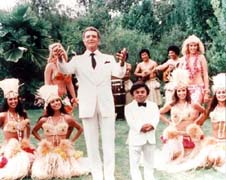 Fantasy Ireland is a long-running cultural trope in America and a few other places (including, at times, Ireland itself). In the old days, it was a bucolic paradise, with a surfeit of pigs in the parlor and an absence of indoor plumbing, which Irish-Americans imagined they could visit in search of their roots. But its content has changed in recent years and it has popped up in various places this past week. Wil Wilkinson brought up Tom Friedman’s Fantasy Ireland, a neoliberal paradise of fast growth and low regulation, in conversation with Henry the other day.
[click to continue…]
by Scott McLemee on April 22, 2007
Over the years, my interest in the work of Cornelius Castoriadis has more than once led to a moment of conversational awkwardness, when it turned out that the other party had been quietly distracted by the effort to figure out what the anti-totalitarian left had to do with taking peyote.
With time I have learned to detect the signs of struggle early, and so make haste to point out that I don’t mean Carlos Castaneda, whose tales of cosmic shenanigans with Yaqui shaman Don Juan once played a big part in the counterculture.
[click to continue…]
by Chris Bertram on April 22, 2007
Just before Christmas, I picked up a copy of _Roseanna_, the first volume of Maj Sjowall and Per Wahloo’s Martin Beck series. I’ve just finished the final volume _The Terrorists_. Having read the first, I had to read them all. Since the reprint schedule wasn’t going to get me them all quickly enough, I scoured Hay-on-Wye for volumes and then the internet. In the 1960s and 1970s Sjowall and Wahloo, husband and wife, collaborated on the sequence of ten detective stories set (mainly) in Sweden. Though we at CT sometimes Scandinavia as some kind of benign alternative to North American capitalism, the far-leftish Sjowall and Wahloo had a much more negative take. The Swedish welfare state that appears in the novels is a grotesque fraud perpetrated on the working class and they use the device of detective fiction to show a reality of desperation, poverty, isolation, alienation, exploitation, and criminality. But the novels are hardly exercises in _agitprop_ . If they were, they’d be a pretty poor read. Instead, their brutally cynical vision of Swedish society simply tinges the whole and emerges through the facts and the occasional acid comment.
[click to continue…]
by Kieran Healy on April 22, 2007
In-N-Out is opening a franchise in Tucson soon, not too far from where I live. This may well pose problems for my, uh, ruthless nutrition and fitness regime. I’m not a connoisseur of American fast food, but In-N-Out is pretty damn tasty. Sonic is apparently also worth a bypass. I mean detour. Two locations recently opened in Tucson, but I’ve never eaten there. I think the last really good fast food chain I ate at was a while ago in Auckland, where I got to try the frighteningly large burgers and dangerously tasty kumara fries at Burgerfuel, on Ponsonby Road.
by Scott McLemee on April 21, 2007