
Posts by author:
Chris Bertram
This is more of a bleg than a post, I’m looking for contradiction. One of the often-claimed worries about immigration is of cultural loss, that the incomers will overwhelm the natives who will then lose the distinctive identity that they value. Supposedly, open borders would lead to the erosion of difference, people would lose their countries, and be bereft. But thinking about it, I’m struggling to think of *any* cases of cultural extinction due to the kind of immigration that results from individuals and families simply choosing to move to another country for a better or different life. Open borders within Europe haven’t caused the Germans and French to disappear. Open borders within the UK (and with Ireland) haven’t led to the demise of the Scots, the English, the Welsh or the Irish. And such immigrants as have come, have just turned into regular folks with slightly unusual names or atypical appearance within a generation. Not that there haven’t been historical cases of some peoples chasing out or killing other peoples, of course there have. But all the instances — at least all the modern ones — I can think of are *state-sponsored projects* of colonialism, genocide, forced relocation and the like. In the absence of deliberate state action and political mobilization, peoples of ethnic, cultural, religious, or linguistic distinctiveness seem to be pretty robust entities. Though Henry Sidgwick and Michael Walzer seemed to think they needed borders and border control to preserve themselves, mostly they don’t.

(for a much better photograph of a similar subject in a nearby location look [at this picture by Harry Gruyaert](http://theonlinephotographer.typepad.com/the_online_photographer/2015/10/random-excellence-harry-gruyaert.html) via the Online Photographer, and then buy his book!)

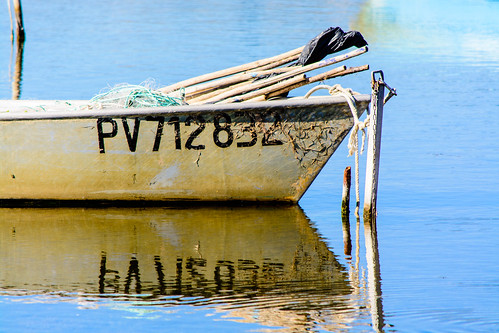
I spent a good chunk of yesterday reading the second half of Lynsey Addario’s [*It’s What I Do: A Photographer’s Life of Love and War*](http://itswhatidobook.com/). I’d been reading it a few pages at a time for the previous week, but then I just got carried away and had to read right to the end. As CT readers know, I’m keenly interested in photography, but it is also the case that reading accounts from war photographers (and seeing their pictures) has changed the way I think about war and conflict.
After September 11th 2001, the blogosphere erupted into being a thing, and several hundred part-time pundits spent a good period of their time arguing with one another about Afghanistan, Iraq, the Islamic world, military tactics and a thousand other things they knew virtually nothing about. Some of them are typing still. I penned what I now regard as an unfortunate essay on just war theory and Afghanistan, unfortunate because there I was applying abstract principles to conflicts where I hadn’t a clue about the human reality. I hope I’d be more careful and less reductive today, and that’s partly as a result of people like the photographer Don McCullin, and his autobiography *Unreasonable Behaviour*. I’d heard of Addario’s book a few months ago, but then I saw some of her pictures at a festival of documentary photography in Perpignan, France, and decided I had to read it.
[click to continue…]
If you want to understand what’s going on in the world of migration, one thing you need to do is to read [Hein de Haas’s blog](http://heindehaas.blogspot.co.uk/). His [latest post](http://heindehaas.blogspot.co.uk/2015/09/dont-blame-smugglers-real-migration.html?m=0) is a sharp corrective to the people who believe that the smugglers are to blame, that inward migration threatens cost the taxpayers on wealthy nations billions, that the solution to the desperate people from the Middle East or Central America is to build bigger and higher fences and to militarize our borders. As he argues, increased border security simply generates a market for the services of smugglers to evade the new measures, and pushes desperate people to seek even more dangerous routes. This, in turn, leads politicians to pledge more border security, leading the cycle to repeat itself.
Who profits from this? Not migrants or refugees, certainly. The smugglers, a little. And the big contractors and militarized agencies who “defend” the borders, run the detention centres and other facilities a lot. And the people who are paying for all this financially are the citzens of wealthy nations who then get a “solution” that makes the problem worse.
We urgently need to explore alternatives, such as flying refugees to Europe, as [Alexander Betts argued in the New York Times](http://www.nytimes.com/2015/09/25/opinion/let-refugees-fly-to-europe.html?_r=0) the other day.
I’ve been invited to give a TED-style talk tonight on whether there’s a right to free movement. Given the format, I don’t have a text and I’ll be speaking to a series of slides. But here are the basic points I’ll be making, for better or worse. (There’s no great claim to originality here, and my final slide will tell people to read Carens. Lots of undotted “i”s and uncrossed “t”s too.)
At the present time, they key norm governing the international migration regime is that states have a discretionary right to allow or not allow non-members onto their territory and to grant such members rights of residence, or not. The global refugee and asylum regime is a partial exception to this rule, but only a partial one because states have voluntarily agreed to be bound by the provisions of the Convention and could, if they chose, renounce it.
Clearly, most politicians and most voters, at least in rich countries, believe the norm is justified, with a lot of public debate focusing on whether the refugee regime is too permissive. Any party that tried to run on a policy favouring more open borders would get slaughtered at the polls, because more people think that democratic electorates have the right to exclude. But just because most people believe something, doesn’t make it true. And past consensuses on slavery, women’s suffrage and against gay marriage now look like the moral abominations they are.
But border and citizenship regimes have a *prima facie* case to answer because of the fatefulness of citizenship for life chances and the way in which they coerce people. Whilst some people are lucky enough to be born in, say, Belgium, others have the comparative misfortune to end us as citizens of Burundi or Bolivia. Some people get the valuable citizenships of states with wealth and which respect human rights; others end up with North Korea or Eritrea.
Over at the Monkey Cage, our very own Henry Farrell [sets out how Peter Mair’s brilliant *Ruling the Void*](http://www.washingtonpost.com/blogs/monkey-cage/wp/2015/09/14/this-book-explains-why-jeremy-corbyn-now-leads-labour-its-author-died-in-2011/) helps explain Corbyn’s recent triumph. A shout-out too for my friend [Martin O’Neill’s treatment of Corbyn’s victory at Al Jazeera](http://america.aljazeera.com/opinions/2015/9/the-unexpected-rise-of-jeremy-corbyn.html).
Driving though France to catch a cross-channel ferry is an odd situation in which to try to follow the UK news. Back in 1997 we tuned into British radio and heard outraged callers demanding to know why the BBC had been insensitive enough to run a documentary on the land-speed record after Diana died in a car crash. That was weird, but not so weird as being on a ship where we seemed to be the only people not worshipping in front of enormous TV screens installed for the funeral. We were coming back to a country that was a bit different to the one we had left three weeks before. Eighteen years later we managed to pick up decent reception for radio 5 just before the Labour leadership result was announced, but every bridge and power-line we passed under resulted in a whoosh of deep-bass interference, so that key bits of information were lost and we had to infer them from later commentary. And then the only programme on the ferry was rolling BBC News, a succession of talking heads and policy wonks on College Green, telling the public what to think about events which had revealed just what an important section of the public thinks about people like them.
BBC journalists, newspaper columnists and professional politicians all seemed to be carrying on with zombie incantations of what they take to be the the eternal truth of British politics, as decreed by the prophet Tony: tack to the centre. This hardly seems adequate to what has happened. Jeremy Corbyn, the most awkward of the awkward squad, previously barely a household name in his own house, has thrashed the professional elite of one of Britain’s two main political parties, gaining nearly 60 per cent of the vote against candidates with ministerial experience and considerable public reputations. The estimable Flying Rodent [deployed the following well-judged sporting analogy](http://flyingrodent.blogspot.co.uk/2015/09/just-any-kind-of-sign.html):
> In football terms, this is like East Fife beating Celtic 13-0 at Parkhead – one of those things that should just never, ever happen.
> To stretch the analogy, I can tell you now that if a bottom-tier team dealt out that kind of drubbing to the richest club in the country, nobody would put it down to East Fife’s sudden samba football. The headlines wouldn’t read “Fifers Fantastic”.
> They’d say – “Woeful Celtic hammered”, “Shambolic Celts stuffed” and, most importantly, “Fans demand immediate resignation and suicide of everyone associated with this mortifying catastrophe”.
But the media friends of the androids who Corbyn defeated thought the important thing to say was that the he had no future, rather than querying the performance of their preferred candidates.
[click to continue…]
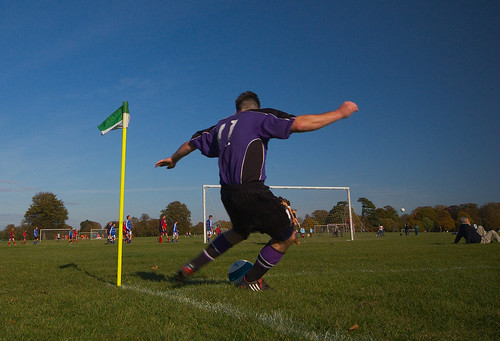
Apologies for the hiatus in Sunday photoblogging. It turned out that getting the embedding code from Flickr whilst travelling with an iPad was more challenging than I imagined it would be. Here’s a picture from a few years ago. Most sports photography is with long-lenses (300mm or so), this was an attempt to capture the action by getting up really close with a wide-angle lense. It succeeded enough for a student newspaper to steal the image, anyway.

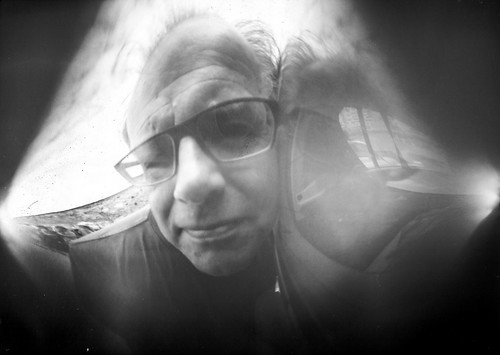
I’m lucky enough to live reasonably close to [Lacock Abbey](http://www.nationaltrust.org.uk/lacock/things-to-see-and-do/fox-talbot-museum/), home of the co-inventor of modern photography, [William Henry Fox Talbot](https://en.wikipedia.org/wiki/Henry_Fox_Talbot). Last year, during a visit, we found that Justin Quinnell was running a pinhole photography workshop that involved making cameras out of old beer cans (and taking pictures with them). We also made beer can cameras using fogged photographic paper to take six-month exposures, though sadly my camera failed to survive its time on the Bristol philosophy department roof. There’s lots of interest on [Justin’s site](http://www.pinholephotography.org/). Here’s [Justin’s YouTube instructions](https://www.youtube.com/watch?v=Hp-JMGQUAMA) for how to make your own, delivered in his unique pedagogical style. A lot of fun, for children of all ages!