From the category archives:

Books

Tentacle-porn

by Henry Farrell on February 6, 2008

There are some books that mankind was never supposed to read. From a review by Pete Rawlik in the most recent issue of the _New York Review of Science-Fiction._

Over the years, H.P. Lovecraft’s Cthulhu mythos has been melded with a multitude of other genres by a bevy [sic, even though the article then goes on to list eight writers] of authors … Marion Zimmer Bradley and Esther Friesner have adeptly created Cthulhu romances …

The mind squirbles. But not as much as it does at the revelation (which I saw somewhere on the Internets in the last few weeks, meant to blog, and forgot about) that Henry James and H.G. Wells once seriously discussed collaborating on a novel set on the Red Planet. “A Princess Casamassima of Mars” or somesuch. There is that famous James story about the popular author and the literary one who swap places, which I’ve always presumed (without ever bothering to look it up) is based on the James-Wells relationship. Finally, changing the subject back to Lovecraft, “Ross Douthat”:http://rossdouthat.theatlantic.com/archives/2008/01/hope_for_the_hobbit.php argues that it’s a good thing that Guillermo del Toro is being signed up to do _The Hobbit_, as he, like Peter Jackson, understands how to make digital special effects seem tactile and organic. I’m not entirely sure that this is true of Jackson – while Gollum was awesome, some other bits of digital wizardry in the LOTR trilogy seemed pretty lame; the movie’s Balrog was yer standard roaring demon, instead of Tolkien’s own evocative if difficult-to-film shadow among flames, and the skeleton-ghosts in the Paths of the Dead looked as though they had staggered off the leftovers shelf of Pirates of the Caribbean. However, it’s certainly true of del Toro – _Hellboy_, in addition to being a criminally underrated popcorn movie has the best pastiche-Lovecraft sfx that I’ve seen to date – the squamousness of the tentacle-things is _sans-pareil._

“Atlas Shrugged” Kicks the Ass of “Fight Club”

by Scott McLemee on January 30, 2008

The website Books That Make You Dumb seems designed to bring out the scolds among us. The methodology is dubious (use Facebook to determine the ten most popular books among students at various colleges and universities, then organize this data according to average SAT scores for each institution) and there is no reason to suppose the books cause stupidity, rather than serving to diagnoise a preexisting condition.

The creator of the site, Virgil Griffith, acknowledges the problems. “I’m aware correlation [does not equal] causation,” he says. “The results are awesome regardless of causality. You can stop sending me email about this distinction. Thanks.”

Gripe if you must, but diverting the chart certainly is. The Book of Mormon falls right in the middle. There is probably a Mitt Romney joke to be plucked from this, like over-ripe and low-hanging fruit. Verily I say unto you, have a look. (via Librarian.net)

Liberal Fascism: Wings Over the World Edition

by John Holbo on January 24, 2008

I know, I know. But I’m going to talk about it anyway. Here he is, today:

I tried to explain, for those whose feelings were so hurt they didn’t even crack the spine, that the title Liberal Fascism comes from a speech delivered by H. G. Wells, one of the most important and influential progressive and socialist intellectuals of the 20th century. He wanted to re-brand liberalism as “liberal fascism” and even “enlightened Nazism.” He believed these terms best described his own political views — views that deeply informed American progressivism and New Deal liberalism.

I happen to know a thing or two about this, through research on Wells’ work on his cinematic (Wells scripted, Korda produced, Menzies directed) good-bad boondoggle, the 1936 SF film, Things To Come [wikipedia].
I’ve posted about the film before on CT here. I wrote a really fun post about it at the Valve: how H.G. Wells prevented steampunk. [click to continue…]

A Goldberg conjecture

by Henry Farrell on January 19, 2008

So I did a “bloggingheads”:http://www.bloggingheads.tv/diavlogs/8080 a few days ago with Dan Drezner, where we discussed the Jonah Goldberg liberofascism book, and whether or not it was fair to dismiss it without having read it (my answer was emphatically yes: when the dude stops “pretending to do research”:http://delong.typepad.com/sdj/2005/10/off_in_bizarrow.html perhaps I’ll start pretending to take him seriously; then again, given his past form, my limited time resources etc, perhaps not). But in retrospect, maybe this was the wrong question to debate. I’m intrigued by the question of precisely why Goldberg apparently expects this book to be given sober consideration as an important intellectual contribution to debate between the left and the right etc. [click to continue…]

Dockers and Detectives

by Chris Bertram on January 14, 2008

A bit of random surfing just took me over to “Ken Worpole’s site”:http://www.worpole.net/ , where I was very pleased to learn that his wonderful book of essays “Dockers and Detectives”:http://www.inpressbooks.co.uk/dockers_and_detectives_warpole_ken_i019459.aspx has been republished by Five Leaves Publications (Verso did the first edition, back in 1983). _Dockers and Detectives_ is one of those rare books that not only entertains and informs you, but also opens up new paths of literary discovery. I think that I’d probably have got round to Dashiell Hammett and James M. Cain without Worpole, but not as quickly and without seeing their influence on French existentialism. I’m not so sure I would have discovered Alexander Baron’s _From the City, From the Plough_ or Stuart Hood’s wartime memoir _Pebbles From My Skull_, though. Worpole discusses both in his chapter on the popular literature of the Second World War, along with other works such as Rex Warner’s dystopian _The Aerodrome_. Recommended.

Flashman

by Henry Farrell on January 7, 2008

Via Neil Gaiman, I see that “George MacDonald Fraser”:http://journal.neilgaiman.com/2008/01/mostly-mailbag.html, author of the Flashman novels, has died.

I don’t think I’ve got stick for liking Kipling’s work for a good twenty years now, and the people I got stick from back then hadn’t read Kipling — they just knew he was a Bad Thing. … Having said that, I also find the “Good old Flashman, what a great and lovable fellow he was,” tone of some of the obituaries and blogs faintly perplexing. For me, the joy of Flashman as a character is that he wasn’t a great fellow at all: he was a monster and a coward, shifty, untrustworthy, a bully and a toady and dangerous to boot. … I like the early books best, in which he does a lot of running away. In the later books, people expect him to act heroically, and, often to avoid losing face, he actually does, which I found a bit of a disappointment. It’s more fun when events conspire to make his attempts to do something petty and self-serving, or at least his attempts to save his skin or get laid, appear to be heroic.

Gaiman however doesn’t make explicit quite how much of a monster Flashman is. In the first of the books, Flashman gets turned down by a dancing girl called Narreeman. When he has the chance later, he rapes her in a quite matter-of-fact way, showing no particular compunctions or mixed feelings; he has his chance to get her alone, and he takes it. As Gaiman suggests, the later entries in the series soften Flashman’s character considerably. They depict him as a bully, a liar and a shit, but a conventional bully, liar and shit. The (I would imagine mostly male) readers of the book can enjoy his bad behaviour in these later books without having to think about it, or themselves, too much. But the rape scene in the first book breaks that illusion, making clear what the modern reader might prefer to forget; that men like Flashman in the nineteenth century wouldn’t have had many qualms at all about raping ‘native’ women.

As a result, the Flashman books have always creeped me out, even though I can recognize that they’re very well written. The author expects you to enjoy Flashman’s caddishness and identify with it, while quietly making it obvious that Flashman isn’t so much charmingly self-centered as he is an amoral and vicious thug. Which probably means that they’re better books in a sense (as Gaiman says, you learn things from books that present worldviews you disagree with, or even abominate), but also spoils the ‘fun,’ at least for me.

“Heil Myself!” (and other rude Goldberg devices)

by John Holbo on January 2, 2008

Jonah Goldberg’s forthcoming Liberal Fascism. Ahem. [click to continue…]

Naughty and Nice

by John Holbo on December 25, 2007

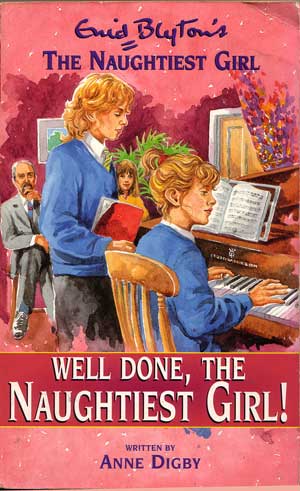
Belle found this one in her stocking this morning. I think Santa selected wisely.

naught1.jpg

Russell says all names are really just disguised descriptions. So why shouldn’t that be a perfectly grammatical title? We haven’t read it yet, but the series sounds intriguing: [click to continue…]

Best of 2007 – a personal choice

by Chris Bertram on December 20, 2007

I guess it would be fun to have a best-of-2007 thread. The trouble is, of course, that it turns out when you look closely that many of the things that you thought came out in 2007 actually came out earlier. But I’m going to ignore that, if paperback came out in 2007 (for example) that’s good enough for me. So here goes – an entirely perverse personal selection (nominate your own in any category you like in comments).

Film: Das Leben der Anderen. Florian Henckel von Donnersmarck’s portrait of East Germany under the thumb of the Stasi. Not released in the US and the UK until 2007, so it counts.

Novel: David Peace, The Damned United. (Paperback in 2007). No doubt utterly incomprehensible to anyone who wasn’t around in England at the time, this is a novelised day-by-day account of Brian Clough’s short tenure at Leeds United, as seen from inside Clough’s brandy-sodden head. Utterly brilliant.

Biography: “The Man Who Went into the West: The Life of R.S.Thomas”:http://www.amazon.co.uk/gp/product/1845132505?ie=UTF8&tag=junius-21&link_code=as3&camp=2506&creative=9298&creativeASIN=1845132505 , by Byron Rogers. I blogged about it “here”:https://crookedtimber.org/2007/09/03/the-man-who-went-into-the-west/ .

Team: “Bristol RFC”:http://www.bristolrugby.co.uk/index.php , the relegation favourites who ended up in the Guinness Premiership play-offs. (OK, so I’m biased.)

CD: “Gram Parsons Archive vol. 1”:http://www.amazon.com/gp/redirect.html?ie=UTF8&location=http%3A%2F%2Fwww.amazon.com%2FGram-Parsons-Archive-Vol-1%2Fdp%2FB000W1V8DU%3Fie%3DUTF8%26s%3Dmusic%26qid%3D1198179063%26sr%3D1-1&tag=junius-20&linkCode=ur2&camp=1789&creative=9325 . Two CD’s of Flying Burrito Brothers performances from 1969 that have been sitting in the Grateful Dead archive ever since. Great performances and unmissable, if you like that kind of thing (which I do).

Blog: “The Encyclopedia of Decency”:http://decentpedia.blogspot.com/, or Decentpedia. Whilst some of us had wasted hours of our time in serious engagement with the “decent left”, Malky Muscular, the Decentpedia’s proprietor, managed to deflate them with highly effective ridicule.

Blog post: Any one of Errol Morris’s “discussions”:http://morris.blogs.nytimes.com/2007/09/25/which-came-first-the-chicken-or-the-egg-part-one/ of photographic authenticity at “Zoom”:http://morris.blogs.nytimes.com/ .

Time-sink of the year: “Facebook”:http://www.face.book.com .

Project of the year: Project 365, over at “Flickr”:http://www.flickr.com , into which Eszter inveigled me, and which gave me a lot of fun.

I’d love to be able to nominate a philosophical paper or book of the year, but I can’t think of anything that’s really knocked me out.

Fascism, Fascism, Fascism

by Kieran Healy on December 17, 2007

Via Fascist Sadly, No!, a fascist look inside fascist Jonah Goldberg’s fascist forthcoming fascist book. Fascist.

The fascist jacket copy suggests that “The quintessential liberal fascist isn’t an SS storm trooper; it is a female grade-school teacher with an education degree from Brown or Swarthmore.” I, for one, welcome our Fascist Swarthmore Obergruppenführer.

Enid Blyton, Genius

by Harry on December 14, 2007

Engels takes the first wicket, Felix Gilman mops up.

Rawls as Archaeologist

by Harry on December 12, 2007

This link will work for a very short time, I presume, but it’s curious to note that Samuel Freeman’s book on Rawls is currently ranked #9 in Amazon’s bestsellers list for titles in Archaeology. Why?

Northern Lights, the Intercision

by Maria on December 7, 2007

Last weekend I went to a preview of The Golden Compass, the New Line film of Philip Pullman’s Northern Lights, fully prepared to love it. The trailers were terrific, and the casting of Nicole Kidman and Daniel Craig was inspired. I’d heard Pullman’s insistence that cutting out all references to the Magisterium as a religious authority didn’t matter, because the Magisterium represented totalitarianism in all its forms. I didn’t buy it, but thought the film could still be worthwhile. Oh dear.
[click to continue…]

Framing Theory’s Empire

by John Holbo on December 6, 2007

[X-posted at the Valve]

I’ve got a book out! Framing Theory’s Empire [amazon]; or support your local independent publisher by buying direct. You can buy the paperback or download the entire book as a free PDF from the Parlor Press site. UPDATE: and it’s been marked down! Now Parlor direct is cheaper than Amazon. $17.60 vs. $22! A bargain! I’m still waiting for my paper copy to show. (Any of you contributors out there gotten yours yet?) I think the cover is rather handsome. But, then: a father should love his child. The lovely Belle Waring and I designed it together.
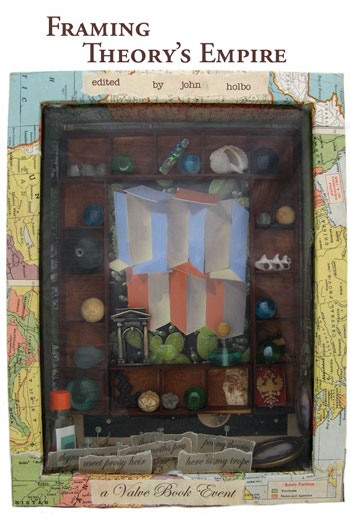
framing.jpg

A book, eh? See here! What’s all this about? [click to continue…]

The Invisible Hand

by Kieran Healy on December 5, 2007

Behind the veil at the Google Book Scanning Facility.