We spent a few fun hours at the Paris Photo exhibition at the Grand Palais on Saturday. The first time I’d been. Lots to see and lots to like, but also quite a lot to dislike. My attention was caught by a copy of Kertesz’s Chez Mondrian, which is one of my favourite photos of all time (#2 after Cartier-Bresson’s Madrid) on the stall of Bruce Silverstein, the New York dealers. I sauntered up to the assistant and asked how much it was going for, knowing already that it would be beyond my budget: “1.2 million” she said. I’m not clear whether that was dollars or euros, but it doesn’t matter much. It was a print made for an exhibition in 1927, and as such, unique, though it looks like most other renderings of Chez Mondrian.
There is something, to my mind rather off about the enormous sums being paid for photographs. After all, with the exception of daguerreotypes and similar they are actually produced for reproduction and largely only exist in the form of copies of themselves (the negative being rarely for sale). Some of what was on sale for large amounts were shots of really poor and suffering people taken by photographers acting from moral or political motives: all grist to the mill of the gallerists.
Having looked around several stalls containing vintage photography, I asked one assistant why I had not seen a single autochrome. Apparently they have very little commercial value because of doubts about the long-term stability of the originals. I still think it anomalous there aren’t any, I said, pointing out that we were in Paris, where the Albert Kahn Museum (perpetually fermé pour travaux) has perhaps the world’s largest collection. Alas, she had never heard of Albert Kahn.
(For myself, I bought and was bought, some books by Harry Gruyaert, a Belgian colourist at Magnum whom I really rate very highly.)
Happy Hari Raya Haji/Eid al-Adha to all our Muslim readers! I live very near a huge mosque, and all the parking in the opposite lot is taken up, and all the street signs are full of locked bicycles, and the sidewalk is bordered with scores of scooters and motorcycles, and you can hear the call to prayer for a change. Normally Singapore more or less mutes it in the name of religious harmony–that is to say they forbid loudspeakers so the muezzin is singing alone, and so desperately quiet over the traffic noise and the inevitable jackhammering going on in Singapore at all times. The Indian ceremonies in which someone is blowing on a conch is frankly louder, and don’t get me started on drumming in Chinese temples or lion dances at CNY. I feel as if the men with the white caps that indicate they have been on the hajj have a little swagger today. Today on my hike I noticed the other men have generally worn embroidered and beaded black caps to keep up appearances. For those of you who don’t know, the feast celebrates both the ending of the hajj and the willingness of the prophet Ibrahim to sacrifice his son Ismail. Ibrahim and Ismail are said to have made the Kaaba later at the source of the miraculous spring which appeared when the earth was struck by the angel Jibra’il (or alternately much earlier where Hagar collapsed in prayer after wandering, in the hopes of saving her child from death from lack of water). It’s called the Zamzam Well, which is literally the coolest name ever. The day includes the sacrifice of a big valuable animal which is divided for a ritual feast, in commemoration of the ram substituted for Ismail. Lots of the many Singaporean Muslims with family in Malaysia travel there for the feast, where the cows or sheep or goats are more easily available (though of course they are shipped into mosques here.) People raise funds for charity also. Anyway, happy day!
I just finished Richard Rothstein’s brilliant — and far from uplifting — book The Color of Law. It’s been getting a lotoffavorablepress, and rightly so.
The book accepts (for the sake of argument, maybe — Rothstein is always parsimonious in his arguments) the principle that Chief Justice Roberts puts forward when he says that if residential segregation ‘is a product not of state action but of private choices, it does not have constitutional implications’. It is devoted to showing that, contrary to the prevailing myth that residential segregation (between whites and African Americans) is a product of a private choices it is, in fact, a product of government policies, all the way from the Federal level to the most local level, and this is true in the North as well as the South. Housing segregation in the US is de jure, not de facto. And… it shows just that. He makes his case in careful, meticulous detail, but in unfussy and inviting prose, packed with illuminating stories that illustrate the central claims.
Here are some of the basic mechanisms through which government in some cases reinforced and in other created housing segregation:
Last night I watched Citizen Jane, a recent biopic about Jane Jacobs and her long fight against Robert Moses’s plans for New York. Of course, Jacobs was largely correct: Moses’s grand utopian schemes wrecked the ecologies of street and community and eventually produced neighbourhoods worse than the ones they replaced, whilst failing to solve even the problems, like traffic congestion, they seemed best suited to. But being already familiar with the substance of the dispute, and with Jacobs’s great work, *The Death and Life of Great American Cities*, what struck me most forcefully was the rhetoric. On the one hand, there were the self-proclaimed “experts”, on the other, ordinary people with their lived experience, sceptical about whether the “experts” had their best interests at heart (or if they did, whether they shared the same conception of their interests). A great irony of the Jacobs case is that though she was right about Moses and his plans, the net result of her activism has not been, in the end, to preserve those neighbourhoods for the kinds of people who lived there then, but rather to give them an afterlife to be enjoyed by the people who can now afford to live in them.
There’s nothing like a few unexpected days at home to allow you to discover new things, and the great find of the past few days — thanks to a tweet from Fernando Sdrigotti @f_sd — has been to watch (via Youtube, start [here](https://www.youtube.com/watch?v=vpijOSSlZCI) five programmes in all) some BBC documentaries about Albert Kahn and his Archives of the Planet, now preserved at the [Musée Albert Kahn](http://albert-kahn.hauts-de-seine.fr/) outside Paris. Born in Alsace, Kahn was displaced by the Prussian seizure of the territory in 1871 and became immensely rich though banking and investing in diamonds. But he was also an idealist, convinced that if the various tribes of humanity only knew one another better they would empathize more and would be less likely to go to war. In pursuit of this hope, and taking advantage of the Lumière Brothers’ [Autochrome](https://en.wikipedia.org/wiki/Autochrome_Lumi%C3%A8re) colour process, he sent teams of photographers to all parts of the globe and, before the First World War, caught many forms of life on the edge of being swept away by globalisation, war and revolution. (There’s quite a good selection [here](http://www.afar.com/magazine/a-trip-through-time) but google away.) Pictures taken around the Balkans, for example, depict the immense variety of different cultures living side-by-side at the time and then later we see the sad stream of refugees from the second Balkan War as they head from Salonika towards Turkey. Kahn’s operative document rural life in Galway, harsh penal regimes in Mongolia, elite life in Japan and a tranquil Rio de Janeiro with little traffic and few people.
Kahn’s hope for a peaceful world was lost in 1914, but we owe to his project many images of wartime France, particularly the life of ordinary people behind the lines. Postwar, Kahn was a great supporter of the League of Nations and, again, his operatives were on hand to document many of the upheavals of the inter-war years, such as the burning of Smyrna in 1922 (as Izmir, the city is once again crowded with refugees today) and the abortive attempt to found the Rhenish Republic in 1923. Many of the photographs are included in a book by David Okuefuna, *The Wonderful World of Albert Kahn: Colour Photographs from a Lost Age* (BBC Books, 2008). Sadly, Kahn was ruined by the Great Depression and died in Paris shorly after the Germans invaded in 1940. He seems little-known today, but there’s a lot of material out there that’s worth your time.
Epic Rap Battles of History can be uneven but is, at times, amazing. My favorite is MLK vs. Gandhi with Key and Peele. Eastern philosophers vs. western philosophers is awesome– it deviates from the usual “who won, who’s next” close, ending instead with “what is winning?” Ten points to Ravenclaw. And “you don’t want to stand in the path of Laozi today; move, bitch, get out the way” is inspired. However, some effort should have been made to pronounce the Chinese philosophers’ names. Any effort, smdh. Finally, the philosophers on each side end up turning on one another, exactly as Schopenhauer would have it:
On the other hand, hardly has any system of philosophy come into the world when it has already begun to contemplate the destruction of all its brothers, like an Asiatic sultan when he ascends to the throne. For just as there can be only one queen in a beehive, so can only one philosophy be the order of the day. Thus systems are by nature as unsociable as spiders, each of which sits alone in its web and sees how many flies will allow themselves to be caught therein, but approaches another spider merely in order to fight with it. Thus whereas the works of poets pasture peacefully side by side, those of philosophy are born beasts of prey, and even in their destructive impulse are like scorpions, spiders, and the larvae of some insects and are turned primarily against their own species. They appear in the world like men clad in armour from the seed of the dragon’s teeth of Jason’s and til now have, like these, mutually exterminated each other. This struggle has already lasted for more than two thousand years; will there ever result from it a final victory and lasting peace?
Aaaaaanyway my actual plan was to post this Epic Rap Battle of History: Thomas Jefferson vs. Frederick Douglass.
The Library of Congress Flickr photostream is a steady source of curious gems. Today, for example: what kind of belt/waistcoat is that boater hat guy on the left sporting?
I finished Elena Ferrante’s Neapolitan quartet yesterday. I know there’s been a lot of hype about these novels, but it is entirely justified. Actually, I write “these novels” but this is actually just one long novel, distributed across four printed volumes. For those who don’t know, it concerns the relationship between two women, Elena (or Lenu or Lenuccia) – the narrator – and Lila (or Lina) from childhood to early old age, and their mutual relationship to “the neighbourhood”, a working-class district of Naples and the many other families who live there. It is a difficult friendship, infected with rivalry, jealousy and resentment from the start. Lila is both intelligent and impulsive, spiky and demanding, capable of both extraordinary determination and of self-neglect and remains forever tied to the district; Lenu eventually enjoys worldly success and social evelation, but, in her own mind, is forever in the shadow of her “brilliant friend”. [click to continue…]
I’m sure I’m not the only person who’s been thinking about the words Thucydides assigns to the Athenians in the Melian dialogue
The strong do as they will and the weak suffer what they must
And I knew the immediate context. Militarily powerful Athenians demanded that the inhabitants of neutral Melos surrender their city and pay tribute. When the Melians refused, Athens invaded, slaughtered the men and enslaved the women and children.
I didn’t however, have any broader context in which to place this episode, even though the information is readily available on Wikipedia for example, which is my source here (apologies in advance to any actual experts for inaccuracies). The story begins with the formation of the Delian League, an expression of Greek unity in the war against Persia. The Athenians used the League to supplant Sparta as the hegemon of Greece, and then to oppress the other members, leading to a series of attempted defections. In Thucydides words
Of all the causes of defection, that connected with arrears of tribute and vessels, and with failure of service, was the chief; for the Athenians were very severe and exacting, and made themselves offensive by applying the screw of necessity
Eventually, this policy led to the outbreak of war with the Spartan-led Pelopennesian League (this war was Thucydides’ subject). The attack on Melos took place during a brief period of peace about half way through the war. The war ended with Athens being utterly defeated. Only the mercy of the Spartans prevented the Athenians sharing the fate they had meted out to the Melians a decade earlier, as Sparta’s allies demanded.
Rather than extract analogies to current events, I’d like to observe that the historical setting suggests a very different reading of the dialogue to that commonly seen today. In most of the contemporary discussions I’ve read, the Athenian side of the dialogue is presented as embodying the remorseless logic of power politics. But in the light of the outcome (well known to his intended readers), it seems to me Thucydides is better read as showing the Athenians as subject to the kind of hubris that demands, and inevitably receives, punishment. By contrast, while the Melians made a bad bet in resisting, their arguments are entirely sound, and should have been convincing to a rational hegemon.
Those whom the gods wish to destroy, they first make mad.
This will be the final installment in my ‘were the Nazis right-wing and, if so, why were they socialists?’ series (part 1, part 2).
This final post will consist mostly of a long passage from a chapter titled, ‘The Conservative Dilemma’, from Conservative Revolution In The Wiemar Republic, by Roger Woods. But I’ll frame it with a few general thoughts.
Before we get to the passage, the thing you should know is that ‘Conservative Revolution’ is not a tendentious title – some sinister liberal attempt to slap ‘conservative’ onto a bunch of Nazis (who were radicals, not conservatives!) Or if it is semantically tendentious, it isn’t the author’s fault, just because it seems like an flagrant oxymoron. German nationalists, from 1918 on, used the phrase ‘die Konservative Revolution‘. It was the proper, often self-applied name of a literary/intellectual movement.
I had been planning to write this post in part about the killing of Freddie Gray in Baltimore before rioting broke out there. My mom was in Baltimore on Monday, actually, at Johns Hopkins; I talked to her and my sister and aunt in the morning. Goddamn. Then I thought I would post about a number of killings of unarmed black citizens by police and this one case in particular was so messed up that my post got too long, so I’ll leave it here for the moment. On Monday the 20th, Chicago police officer Dante Servin was found not guilty of all charges in a directed verdict from a bench trial for the fatal shooting of 22-year old Rekia Boyd. He was charged with involuntary manslaughter, reckless discharge of a firearm, and reckless conduct after shooting two people, one fatally, on March 21 of 2012. Servin lives near a park where people often gather at night and hang out. He had called in a noise complaint to 911 and then went out in his car (passing by on his way from getting food in one account, though this wasn’t clear, since most other articles discuss him putting his trash out (which involves one’s car in Chicago?!). They were right behind his house, it seems, and it’s a pity that, as lead detective on the case Officer Ed Heerdt said, Servin did have cameras mounted on his home but “he told me the system was inoperable and I was satisfied with that.” [So you didn’t check, then, or anything? Ah.] He took with him an unregistered 9mm handgun, and drove by slowly telling people to keep it down.
A bystander, Antonio Cross, who was on the phone with his cousin, says that he thought Servin was trying to buy drugs and said “f$%k you.” The cousin confirms this. Then Servin, thinking the phone in Cross’s hand was a gun, pulled out his weapon and fired over his shoulder into a group of people, shooting Cross in the hand and Rekia Boyd in the head. By this description people mean, I take it, that Servin was sitting in the car with the window down, drew the gun and fired over his left shoulder, turning around in the seat. He claimed via lawyers to have felt something “touch the back of his head”–i.e. his contention is that Cross put the phone there pretending it was a gun, just to scare him. Maybe that’s his contention? He also claimed (via others) that Cross merely “waved” the phone in such a way as to make it look like a menacing gun. The defence also, separately and quite at cross-purposes, argued that Cross’s cousin thought he heard 8-12 shots, while Servin only shot five times–so they muttered darkly about an undiscovered gun. (I think it is otiose for me to say no gun other than Servin’s was ever recovered at the scene.) The thing is, there sort of would have been shells, too, and places that got hit by bullets, and stuff like that. And if there had in fact been a gun barrel touching Servin’s head and then the gun were fired the results would have been noticeable. Well, when I say the defence said this and the defence said that, they didn’t have to work too hard, because this was a directed verdict from a bench trial. The judge (no jury) just stopped it right there after the witnesses had testified, said not guilty, and sent Officer Servin (yeah, he’s been a cop this whole time) home a free man. Why wasn’t it a jury trial? Apparently the accused can choose a trial before a judge. And what a prince of a guy Judge Porter is, because this is a totally reasonable thing to say to a grieving family: [click to continue…]
Sister Rosetta Tharpe! I think I’ve already made a whole post telling you to listen to more Sister Rosetta Tharpe before, but that doesn’t matter! Because the defect of her recorded sessions is that the guitar is mixed down way low and you can’t hear her rock out on the guitar. But I found these live sessions that just…
You weren’t expecting that old lady to play that solo were you? She has a goddamn (sorry Sister) whammy bar on that thing!
What about this? And, goddamn, not sorry, did they not let any black people even come to this concert? That’s stone cold, fellow white people. Stone. Cold.
”
This is from when she was younger.
The version of this song I know says “when you see a man jump from church to church/you know the conversion don’t amount to much,” and I have uncharitably said this about Rod Dreher.
Sister Rosetta Tharpe’s frequent performance of all these songs in nightclubs were obviously ironic and different…
This short BBC documentary about her and her influence is interesting (just 15 minutes).
UPDATE: OK you can click through and there is a whole hour of BBC documentary. I haven’t watched it. Also, she didn’t sing straight gospel in nightclubs, she sang other songs, but she also had ironic versions of the gospel songs like “This Train”, in which she sang no whiskey-drinkers or cigar-smokers would make the cut while in The Cotton Club!
In the old Blind School on Hardman Street, Liverpool, subsequently trade union offices and the home of the Picket (a music venue), there’s a cupola with a mural celebrating the workers’ movement. Sadly, the damp is getting to it. The mural was painted by artist Mick Jones, son of Jack Jones the trade union leader. Arthur Scargill leads Karl Marx and there is much other detail of interest. The owner of the nearby Hope Street Hotel owns the building now and has plans for to turn it into a gastropub, so let’s hope it gets restored rather than destroyed. (There are move shots of the mural in the adjacent sections of my Flickr stream.)
 . It’s been getting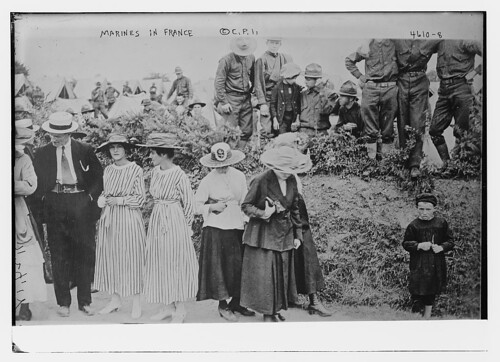
 , by Roger Woods. But I’ll frame it with a few general thoughts.