From the category archives:

US Politics

Insider Knowledge

by Henry Farrell on October 30, 2012

“Paul Krugman”:http://krugman.blogs.nytimes.com/2012/10/30/scoop-dupes/ writes about journalists’ obsession with the quest for insider knowledge.

bq. A lot of political journalism, and even reporting on policy issues, is dominated by the search for the “secret sauce”, as Martin puts it: the insider who knows What’s Really Going On. Background interviews with top officials are regarded as gold, and the desire to get those interviews often induces reporters to spin on demand. But such inside scoops are rarely — I won’t say never, but rarely — worth a thing. My experience has been that careful analysis of publicly available information almost always trumps the insider approach.

I’ve meant to blog for ages about a similar illusion – the remarkably widespread belief that policy forums in DC (think tanks like the Council on Foreign Relations) provide insiders with a lot of information that is unavailable to outsiders. As a political science professor here, it’s not hard to get to go to all sorts of off-the-record discussions on foreign policy questions; indeed, the more vexing problem is refusing invitations so that you can get your work done, without annoying people. However, I’ve almost never learned any _new_ information about questions that interest me from these kinds of events. Sometimes, people are slightly less discreet than they are in public. But only sometimes, and usually not very much. Likely, there are more important events and workshops that I’m not invited to (after all, from the point of view of the organizers of such events, I’m usually a warm body with vaguely relevant sounding professional qualifications; good to swell a progress, but not much else), but I suspect that there aren’t very many of them that aren’t mostly vaguely disappointing in this sense.

This actually isn’t surprising, when you think about it. Most of the people who work on foreign affairs in Washington DC and who make up the potential audience for such events, are generalists, because they have a variety of briefs. They’re not necessarily looking for exciting new information – they’re looking for digestible summaries of issues that they vaguely know are important, but don’t have time to form educated opinions on themselves. And, even more importantly, they’re looking for opportunities to stay in the loop by talking to other people in the same world about who has gotten which new job, who is on the way up, and who is on the way down. This is the insider information that actually _counts_ for the people going to these events – and it’s at best of anthropological interest to the rest of us. These meetings and briefings serve much the same professional role as do the annual meetings of academic associations, where most of the people attending are sort-of-interested in going to a few panels, but definitely-very-interested in catching up on the latest disciplinary gossip. Going to the former serves as a necessary justification for finding out about the latter.

Which is a longwinded way of agreeing with Krugman – most of the time, you can learn as much or more from intelligently consuming publicly available information as you can from attending purportedly insider briefings. And, as a secondary matter, if you graze free-range from a variety of sources, rather than re-masticating a pre-chewed monocrop diet of selected facts and opinion, you are likely to end up with a _less biased_ understanding. Communities of generalists relying on a very limited set of information sources are peculiarly vulnerable to self-reinforcing illusion. I wasn’t in DC during the run-up to the Iraq war, but from what I’ve been able to piece together in the aftermath, the reasons for the apparent near-unanimity among foreign policy specialists that going into Iraq was a good idea was a combination of bad sources (reliance on people like Ken Pollack, who had a patina of apparent credibility), careerism (the general sense that you would do your career no favors by publicly dissenting from senior Republicans and Democrats), and substantial dollops of intellectual (and indeed non-intellectual, more or less flat-out) dishonesty.
On the Bretton Woods transcripts

by Eric on October 26, 2012

In the New York Times today you can read about the newly available transcripts from the Bretton Woods conference of 1944, as edited by Kurt Schuler and Andrew Rosenberg. I have a few things to say about them in the NYT – and why not a few more here?

Historians of Bretton Woods might well have said, eh, a transcript – no big deal; what happened at the conference was largely theater, and the real business was done before and afterward. There is some truth in this – and the transcript amusingly shows that – but it also shows some of the ways in which it is not true. [click to continue…]

On the forgetting of Franklin Roosevelt

by Eric on October 18, 2012

Greetings all, and thanks for welcoming me back on a longer-term basis.

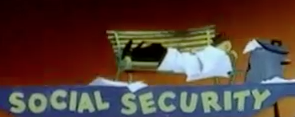
Recently a few high-profile commenters have rediscovered Franklin Roosevelt’s relevance. First The Daily Show and then The New Yorker marveled at the aptness of Roosevelt’s cheerful scorn for those who say they will preserve Social Security (and Medicare, one might now add) while simultaneously promising to cut taxes.

It was a position Roosevelt was accustomed to ridiculing, as in this 1944 campaign film (directed by Chuck Jones!) depicting the Republican provision for Social Security:

Screen Shot 2012 10 17 at 9 07 29 AM [click to continue…]

Not Doing It Right

by John Holbo on October 18, 2012

I’m increasingly concerned that a critical concern troll gap is opening up between liberals and conservatives. Liberals, due to our honorable tradition of not being able to take our own side in an argument, have a healthy aptitude for it. We love to talk up, in a ‘more in sorrow than in anger’ sort of way, the good sort of conservatism we’d like to have, if only we could. But conservatives don’t really have a go-to fantasy of the ‘good’ liberal who needs to be rescued from the ‘bad’ liberal. This may be because conservative rhetoric – the rhetoric of reaction – is so dominated by slippery slope arguments. The bad thing about liberalism is its bad spirit, causing it to be the case that apparently moderate policies are, in effect, creeping Jacobinism, due to soul-destroying nihilism or resentment, what have you, that lurks behind. If the spirit of liberalism – as opposed to its letter – is the essential problem, per the slippery slope style, you can’t switch gears smoothly, suddenly coming over all concerned that the spirit of liberalism is in danger of slipping. After all, how much worse could it get than communism and fascism? Where is there for liberalism to slip to but up? [click to continue…]

Philosophical Conservatism and Operational Liberalism

by John Holbo on October 15, 2012

Kevin Drum noticed the same bit of this Ezra Klein piece that I did:

At this point, Romney and Obama are running almost perfectly opposite campaigns. Romney can tell you exactly what he wants to do, but barely a word about how he’ll do it. Obama can’t describe what he wants to achieve, but he can tell you everything about how he’ll get it done. It’s a campaign without real policies against a campaign lacking a clear vision.

Klein asks: when did Obama lose ‘the vision thing’? He thinks Obama had it in 2008, but it’s worth considering the counter-hypothesis that it was lost long before. Free and Cantril documented loss of liberal mojo in their 1967 book, based on survey data from the 1964 election. ‘Americans are philosophical conservatives but operational liberals.’ If that’s how it goes in 2012, that just goes to show how it goes, for the past half century. [click to continue…]

Andrew Sullivan writes. “When you see an unexpected and sharply upward trend in inequality and want to accelerate it some more, you have ceased to be a conservative.”

As Sullivan goes on to confess, there was a time when he himself saw such an inequality trend, and cheered it on. He now wants to say this was ‘complacency’. But I don’t think he would go so far as to say that he has only in the recent past converted to conservatism, having only since 2007 or so shed a view that previously disqualified him from holding that position. So why should Erick Erickson, say, be disqualified from being a conservative? [click to continue…]

Who Remembers Clinton Rossiter?

by John Holbo on September 29, 2012

When I was in Texas I met Carl T. Bogus, law prof. and author of Buckley: William F. Buckley Jr. and the Rise of American Conservatism [amazon]. He and I turned out to have something in common: affection for Clinton Rossiter’s forgotten Conservatism in America: The Thankless Persuasion [amazon]. I was trying to baffle someone else at the conference, saying ‘Look, the thing you think conservatism should be is the thing the conservatives made a point of writing off in the 1950’s. You’re a neo-Rossiterian.’ Carl’s ears pricked up. We hit it right off.

When I got home I bought and read Bogus’s Buckley book. I liked it, and it filled in some blanks for me, history-wise. Going back and reading the reviews, I see TNR’s reviewer thought Bogus didn’t much improve on John Judis’ earlier Buckley book. I can’t say. Haven’t read it. (But Judis is a good writer so probably his book is good.) But the reviewer does grant that one area in which Bogus really distinguishes himself is in handling the dead and forgotten ‘new conservatives’ – Rossiter, Viereck and Nisbet, in particular. (Kirk was another, but not one who has been forgotten.) [click to continue…]

On Not Being Obliged to Vote Democrat

by Henry Farrell on September 27, 2012

Since someone mentioned that they couldn’t find it in comments, and since it’s obviously relevant, mutatis mutandis to arguments below, it is probably no harm to link again prominently to dsquared’s classic post about how you actually aren’t obliged to vote Democrat, strong lesser-of-two-evils arguments are intellectually incoherent etc. Nut graf:

> The argument I want to establish here is that the decision about whether or not to vote Demcrat (versus the alternative of abstaining or voting for a minor party) is a serious one, which is up to the conscience of the individual voter to make, and which deserves respect from other people whether they agree with it or not. Obviously in making that argument, I’m going to have to venture into a number of unpalatable home truths about the Democrats as they are currently organised (abstract: ineffectual, cowardly, surprisingly warlike, soft-right, generally an obstacle to the development of social democratic politics), but let’s get this clear right up front – voting Democrat might often be the right thing to do in any given case, depending on local conditions; it might even usually be the right thing to do. What I’m not going to accept, however, is that it is always or definitionally the right thing to do.

Is It Moral for Lefties to Vote for Obama?

by Henry Farrell on September 26, 2012

[Conor Friedersdorf](http://www.theatlantic.com/politics/archive/2012/09/why-i-refuse-to-vote-for-barack-obama/262861/) (if Lot were to look for One Honest Conservative Commentator to save the tribe from divine wrath, he’d likely have to lump for Friedersdorf), [says no](http://www.theatlantic.com/politics/archive/2012/09/why-i-refuse-to-vote-for-barack-obama/262861/).

> Obama has done things that, while not comparable to a historic evil like chattel slavery, go far beyond my moral comfort zone. … Obama terrorizes innocent Pakistanis on an almost daily basis. The drone war he is waging in North Waziristan isn’t “precise” or “surgical” as he would have Americans believe. It kills hundreds of innocents, including children. And for thousands of more innocents who live in the targeted communities, the drone war makes their lives into a nightmare worthy of dystopian novels. … Obama established one of the most reckless precedents imaginable: that any president can secretly order and oversee the extrajudicial killing of American citizens. Obama’s kill list transgresses against the Constitution as egregiously as anything George W. Bush ever did. It is as radical an invocation of executive power as anything Dick Cheney championed. The fact that the Democrats rebelled against those men before enthusiastically supporting Obama is hackery every bit as blatant and shameful as anything any talk radio host has done. … Contrary to _his own previously stated understanding_ of what the Constitution and the War Powers Resolution demand, President Obama committed U.S. forces to war in Libya without Congressional approval, despite the lack of anything like an imminent threat to national security.

The last of these seems weaker to me than the first two (I was, and still am, against the Libya intervention, but don’t think that the War Powers Resolution question is a moral one). But the first two are pretty damn awful. On key foreign policy and human rights issues, Obama hasn’t been a disappointment. He’s been a disaster. You can make a good case, obviously, that his main opponent, Mitt Romney, would be even worse. But it isn’t at all clear that the consequences of _voting_ [^voting] for Romney over the longer term, would be any worse than the consequences of voting for the guy who was supposed to be better on these issues, and was not. Indeed, the unwillingness of American left-liberals to criticize the opprobrious foreign policy of a Democratic president (and the consequent lack of real public debate over this policy, since most of the right tacitly agrees with the bad stuff) weighs the balance in favor of voting against Democrats who you know are going to sell out. Personally, I’m on the fence, if only because the current Republican party is so extraordinarily horrible. But I think that there is a very strong case to be made for not voting for Obama, and I wish that there were more publicly prominent lefties making it.

[^voting]: Abstracting away the question of whether individual votes have any consequences.

A quick update on the white working class

by John Q on September 25, 2012

As I mentioned a little while ago, if “working class” is defined in terms of income (the same is true, I think, for self-description) rather than the lack of a college education, the “white working class” in the US is about evenly divided between Democrats and Republicans. Lots of commenters made the point that this split varies sharply by region, and this has been confirmed by Kevin Drum and John Sides who cite recent research from the Public Religion and Research Institute. Using the “non-college” definition, they point out that the Repubs have overwhelming majority support from white working class voters in the South (as they do from white Southerners more generally), but that for the rest of the country, “working class” whites divide evenly between the parties.

Unfortunately, neither the PRRI report nor the data I received from Andrew Gelman seems to give a breakdown by region and income, but the data I presented showed overwhelming Repub support among high-income non-college whites, who are not concentrated in the South. It follows, I think, the the Dems are winning a clear, though not overwhelming, majority of low-income non-Southern white voters. That’s the same pattern observed with labour/social democratic parties elsewhere.

In other words, if it weren’t for the South, the US would be a lot more similar, in this as in other ways to other developed countries. Conversely, from the Southern perspective, large parts of the US are, indeed, more like Europe than like the America they know and love.

47 per cent true

by John Q on September 20, 2012

As Chris says in comments here, Romney’s main hope of getting away with his claim that 47 per cent of the US population are non-taxpaying moochers is the expectation that very few people will actually regard themselves as part of that 47 per cent. The same calculation is made by those who have pushed this talking point for years such as well-known plagiarist Ben Domenech and general lowlife Erick Erickson. It’s unsurprising that they should think this. After all, they’ve been making this claim, in one form or another for years, going back to the WSJ’s attack on “lucky duckies” in 2002. The claim has been refuted time and again with the points that most of the 47 per cent are workers subject to payroll tax, or retired people, but this refutation hasn’t reached the Fox News audience, many of whom don’t realise they are the moochers being attacked here.

But I don’t think this will help Romney, and the reasons why reflect some important developments in relation to post-truth political discourse in the US.

[click to continue…]

Freeloaders are made of taxpayers!

by John Holbo on September 18, 2012

So I click over to the Corner to see how they are spinning Romney’s fresh troubles. I like John O’Sullivan’s moxie. Basically, Romney should say 1) he’s not backing off; 2) in saying 47% of Americans pay no income tax, thereby implying they are freeloaders, i.e. pay no taxes, he was just forgetting that up is up, not down. Could happen to anyone. “We pay so many taxes that we sometimes forget how many and how much, as I briefly did.” 3) – 8) are some suggestions about how to finesse 2). We need to lower taxes on these freeloaders! Freeloaders are made of taxpayers!

But I think the really important step is probably 9). I can’t imagine why O’Sullivan didn’t give this step its own number. So far as I can tell, it’s absolutely crucial to the whole scheme not coming down around Romney’s ears. “Romney should then leave without taking questions.”

It almost seems unnecessary, but Freeloadergate opens the way for attack ads suggesting Romney is gearing up to expand the War On Women into a three-front war against Women, Children and the Elderly. (It’s like the Romney campaign is turning into one big parody inversion of the protocols for abandoning ship.) Just do a montage of pictures of smiling children – at play, in school, with their families – and nice retirees – in their homes, pictures of their younger, working selves around them – with a brutal ‘FREELOADER’ stamped across each face. And the audio of Romney over it all.

The wages of talking such nonsense really ought to be getting blasted with ads that take the nonsense at face value. Let Romney clean up the mess.

Economists are Hobbesians

by Henry Farrell on September 12, 2012

Brad DeLong has a “post”:http://delong.typepad.com/sdj/2012/09/brad-delong-resmackdown-watch-cosma-shalizi-argues-that-brad-delong-is-an-atypical-economist.html#more defending his claim that the actually existing microfoundations of economics are based around Lockean theories of exchange. A detailed point-by-point response below the fold [also: “Cosma Shalizi”:http://cscs.umich.edu/~crshalizi/weblog/942.html ].

[click to continue…]

The white working class

by John Q on September 10, 2012

For quite a while now (pre-dating Obama, but more frequently since he was elected), I’ve been reading about the Democrats’ troubles with “the white working class”. In some ways, this is unsurprising. In every country with which I’m familiar, a substantial proportion of the working class votes for the more conservative/rightwing party. And, even compared to the most wishy-washy of social democratic and labor parties elsewhere, the Dems aren’t exactly fervent champions of the worker. Still, the Repubs are even worse, so it seemed surprising to read that they regard the white working class as their base. Other things I read (sorry can’t find links now) made things even more puzzling. On the one hand, in the US as elsewhere, higher incomes are correlated with voting for the conservative/rightwing party, which seems to cut against the thesis. On the other hand, I’ve read that the average income of the US working class is the same as that of the population as a whole, which goes against the whole idea of “working class” as I understand it.

All became clear(or, at least, clearer) when I discovered that US political discussion uses two very different (though correlated) concepts of “working class”. The first is the more or less standard one – people who depend on wage labor (normally in manual or low-status service occupations) for their income. The second, specific to the US, and standard in most political polling, is “people without a 4-year college degree”, a class which includes such horny-handed sons and daughters of toil as Bill Gates and Paris Hilton. More prosaically, it includes lots of small business owners, and (since college graduation rates were rising until relative recently), over-represents the old.

Data on US voting patterns is surprisingly scarce, but Andrew Gelman has a big data set confirming the point that Republican voting rises with income. Andrew kindly sent me the data, which classifies voters by education (5 levels), income (5 categories) and race/ethnicity(4), for a total of 100 categories, and gives, for each group the proportion voting Republican. I’ve used this to look at an income-based definition of working class, encompassing everyone with an income less than $40 000. I’m not sure of the exact definition of this variable, but it seems pretty clear that people with income at this level are unlikely to be living on income from capital or a high-status job. To focus on the claim about the white working class, I’ve divided the 100 categories into four roughly equal-sized groups: working class whites (income less than 40K), middle/high income whites with and without college degrees, and all non-whites. Then I’ve looked at how many votes the Republicans got from each group in 2008.

As the pie chart below illustrates, the biggest group in the Republican voting base, and the group with which they do best is that of middle/high income whites without college degrees (the percentage after the group name gives the Republican share of the vote for that group). There’s nothing surprising in this, since all three variables are correlated with Republican voting. It’s the practice of calling this group “working class” that causes the confusion.

Disaggregating, the extreme case is that of high-school educated whites with incomes over $150K, 81.7 per cent of whom supported the Republicans in 2008. They’re a small group of course, but not negligible at about 1 per cent of the sample (155 out of 19170).

The two remaining groups of white voters are split pretty evenly between Reps and Dems, while, as is well known, non-white voters strongly favor the Dems.

The Republican voting base
(percentages after each group give proportion of that group voting R).

[click to continue…]

The grandfather clause (repost)

by John Q on August 11, 2012

With the announcement of the Romney-Ryan ticket, I decided to repost this piece on the most striking (to me) aspect of Ryan’s plans, namely the exemption of those currently over 55 (or maybe those who were over 55 in 2010 or 2011, when the plan was first announced. If everything goes to plan for the Repubs, Ryan would be the presumptive candidate after Romney’s second term in 2020. Coincidentally or not, that’s just about the point when the exemption runs out. People retiring after that will have spent a decade or more paying taxes to support benefits for those grandfathered in, but won’t be eligible themselves.
[click to continue…]