My travelogue continues … By the way, check out friend-o-the-blog Sam Bikinoraion‘s blog – he is also going round the world this year, and seems to be visiting a load of my favourite places, which I didn’t fancy taking the kids to. This episode takes me through Greece, and is posted a bit in arrears, as I headed off to the desert after the events described herein …
Not surprisingly, the US Supreme Court’s non-decision on equal marriage has caused plenty of debate, including John H’s smackdown of NR’s Matthew Franck.
The discussion got me thinking about the broader problem of legal reasoning, at least in its originalist and textualist forms, and also in precedent-based applications of common law. The assumption in all of these approaches is that by examining (according to some system of rules) what was legislated or decided in the past, lawyers and judges can determine the law as it applies to the case at hand. There are all sorts of well-known difficulties here, such as how words written a century ago should apply to technologies and social structures that did not exist at the time. And it often happens that these approaches produce results that seem unacceptable to most people but for which a legislative or constitutional fix is impossible for some reason.
It’s always seemed to me, though, that there is a much bigger problem with this approach, namely the implicit assumption that “the law” actually exists. That is, it is assumed that, if the appropriate procedure is used to interpret the inherited text, and applied to the problem at hand, it will produce a determinate answer. But why should this be true? The same law might contain contradictory clauses, supported by contradictory arguments, voted in by different majorities, and understood at the time of its passage in contradictory ways. Most notably, the same constitution might grant universal freedoms in one place, while recognising slavery in another.
At a minimum, such contradictions mean that there is no determinate law on the particular points of difference. But the problem is worse than this. The law rarely prescribes an exact answer in a specific case. The standard view of legal reasoning is the principles can be extracted from case law, then applied to new cases. But contradictory laws and contradictory cases produce contradictory principles. The ultimate stopping point is the paradox of entailment: a contradiction implies anything and everything.
I don’t have a fully worked out answer to this problem but I think it underlies a lot of the disquiet so many people feel about legal reasoning (apart from the ordinary disappointment when the answer it produces isn’t the one we want).
{ 104 comments }
Matthew Franck advances a number of arguments for thinking the Supreme Court taking a pass on gay marriage is similar to the Dred Scott decision. I think he missed one that is at least as good as several of the ones he offers. [click to continue…]
{ 288 comments }
When a militarily powerful country tries to govern the affairs of millions of people on the other side of the planet, we shouldn’t be surprised that chaos results …
That’s of the grab from my latest piece in Inside Story, commenting on the utter incoherence of US (and therefore Australian) policy in the Middle East. An extended version:
How could it be otherwise? A rich and militarily powerful country has taken it upon itself to govern the affairs of millions of people on the other side of the planet, of whom it knows nothing. Its emissaries routinely elevate particular individuals, ethnic groups, religious sects and political parties as favourites, then just as quickly dump them in favour of new friends. Its tools vary randomly from overwhelming force to plaintive exhortation, with no clear or consistent rationale.
The key observation is that, with the exception of slavish obedience to the whims of the Netanyahu government, the US has switched sides on almost every conflict in the Middle East in the space of a couple of years.
My policy recommendation to the US is
an announcement that, from now on, the people of the Middle East would be left to sort out their problems for themselves. In particular, it would be useful to state that the United States has no strategic concern with Middle Eastern oil, and that energy policy is a matter for individual countries to determine according to their own priorities.
Inside Story doesn’t appear to take comments so read there (lots of other interesting stuff) and comment here.
{ 220 comments }
… so begins this comment on a recent thread. I don’t have to read any further to know that the subsequent comment will be both hostile and silly.[^1]
My surname is mis-spelt fairly often, reasonably enough in the case of people who’ve only heard it and have to guess at the unstressed vowel. But it happens surprisingly often when all that is needed is to transcribe the text in front of them.
Likewise, I occasionally get people addressing me as “Mr” because they feel the need for a title and choose the default.
Neither, by themselves guarantees hostility and stupidity. But in ten years of blogging, I’ve never seen an exception to the rule that together, they imply exactly that.
Is this just me? Do other bloggers and commenters find that particular forms of address predict the content of comments? And, if so, which ones?
{ 87 comments }
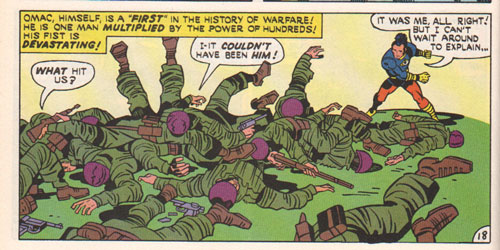
A couple weeks back the estate of Jack Kirby reached a settlement with Marvel, the day before the Supremes were set to take the case. This was a surprise, as the Kirbys were 0-2 in the courts, to that point. I hadn’t paid attention but I figured their case was weak, although they had my sympathy. I had read stuff like this from early NY Times articles:
WHEN the Walt Disney Company agreed in August to pay $4 billion to acquire Marvel Entertainment, the comic book publisher and movie studio, it snared a company with a library that includes some of the world’s best-known superheroes, including Spider-Man, the X-Men, the Incredible Hulk and the Fantastic Four.
The heirs of Jack Kirby, the legendary artist who co-created numerous Marvel mainstays, were also intrigued by the deal. Mr. Kirby’s children had long harbored resentments about Marvel, believing they had been denied a share of the lush profits rolling out of the company’s superheroes franchises.
Marvel made out like bandits, treating Kirby badly. But that’s not a legal argument.
What made Marvel blink at the last minute? The terms of the settlement can’t be revealed, so it’s hard to say.
{ 22 comments }
Since I blogged about Arendt and Eichmann on Erev Rosh Hashanah, I figured I’d do the same on Erev Yom Kippur.
Actually, there’s a reason I’ve been thinking about the Arendt/Eichmann controversy of late: it’s heating up again. This time, prompted by the publication in English of Bettina Stangneth’s Eichmann Before Jerusalem. I’ve been reading the book, which offers a full-scale reconsideration not only of Eichmann but of how Eichmann presented himself at court in Jerusalem. In the background, inevitably, is Arendt’s Eichmann in Jerusalem.
Stagneth’s is an uneven book, which starts out with great promise (its opening set piece is almost worthy of Arendt), but performs the nearly magical feat of being both tendentious, maniacally repeating its argument over and over again, and wayward; it’s both polemical and dilatory.
One potentially fascinating angle of the book, which I haven’t seen Stangneth develop, at least not yet, is why Arendt wasn’t more interested in Eichmann’s performance at Jerusalem as a performance. Arendt, after all, had an especially theatrical conception of politics, understanding all that we do in the public sphere as a kind of performance, a mask we wear, a role we inhabit. And no one reading those opening pages of Eichmann in Jerusalem could fail to see just how theatrical is her sense of the “show trial” in Jerusalem. And yet Arendt refuses to apply those insights to Eichmann himself. Rather than see him as performing a part (Stangneth does a good job of showing that that is exactly what Eichmann was doing at Jerusalem), Arendt sees Eichmann as being subsumed by, or subsuming himself in, his role. That is, in part, his blankness, his banality, for Arendt. It’s understandable that Arendt would resist seeing Eichmann in Jerusalem as a performance: that is, after all, the point of her book. Even so, it’s a fascinating wrinkle in the story, one that I hope Stangneth will pursue at some point in the book.
Back to the Arendt/Eichmann wars. They seem to flare up every decade or so. What’s truly astonishing is that the wars continue today, more than a half-century after the publication of Eichmann in Jerusalem. With the exception of Darwin’s On the Origin of the Species, what book has managed, 50 years later, to stir up so much wrath and rage? With books like the Bible or Capital, it’s more understandable: they, after all, are immediately linked to a political or religious movement. But Eichmann in Jerusalem is not.
Or perhaps it is… [click to continue…]
{ 53 comments }
This, from Ars Technica, is pretty extraordinary:
bq. In the early 2000s, William “Trip” Hawkins—founder of video game publisher Electronic Arts—was living the good life. … Hawkins had a peculiar way of keeping his cash flow up; he wasn’t paying all the taxes connected to the proceeds of some of his stock sales. Instead, he participated in a tax sheltering setup designed to produce on-paper “monetary losses” to offset the gains. The scheme was all done through accounting firm KPMG, which used convoluted Swiss and Cayman Islands deals that eventually raised the eyebrows of Internal Revenue Service (IRS) tax auditors. The IRS and the California Franchise Tax Board eventually cried foul. In 2002, the IRS notified Hawkins’ lawyers that the tax shelters, accounting for about $60 million in claimed losses, wouldn’t be allowed for the tax years 1997 to 2000. This meant that Hawkins would be on the hook for millions in back taxes on all those EA stock profits. Still, Hawkins continued living a jet setter’s life until around the time he filed for bankruptcy protection in 2006. For instance, a government legal filing said that Hawkins’ private jet had cost $11.8 million in 2000 and had an “operating” cost of $1 million annually.
{ 32 comments }
When I was sixteen and seventeen I did my 5th Year of secondary school twice. Amidst grinds, tears and two to three hours of Honours Maths homework each night, I just could not make it past Christmas and still understand what was going on. (The obvious and practical response; take Ordinary Level Maths instead and accept that a career in Medicine was out, just didn’t seem to present itself.) For two years I hungrily repeated the exercises in the small part of the curriculum I understood, and threw myself with increasing desperation and diminishing returns at the rest. The last chapter I remember mastering was called something like ‘Sequences, Series and the Binomial Theorem’.
Happily, understanding – at least a little – the concept of geometric progressions has turned out to be one of the most useful and widely applicable bits of Maths I could have picked up. It crops up everywhere; understanding the spread and gravity of DDOS attacks, why mouse infestations need to be hit early, why skimming stones on water is so hard, and how a young woman settling for less money than a man at the beginning of her career may still be paying for it when she’s middle-aged.
The definition of a geometric series or progression is ‘whenever a term of a sequence is a constant multiple of the preceding term’. When that multiple is greater than one, the numbers will get very big, very fast. If, for example, the multiple is two, you’ve got ‘exponential growth’, a mathematical term of art that’s often used inaccurately elsewhere to describe rapid but not geometric increases. Real exponential growth tends to sound pretty grim when the term is correctly applied in epidemiology.
At dinner the other night, I learnt that the rate of increase of cases of Ebola in certain African countries has been modeled as a geometric progression for weeks, if not months.* Since at least August, the number of new Ebola infections has started to double every month. Common sense dictates that the more people infected, the more people who will be infected. Mathematics predicts chillingly just how bad it will be. The battle to stop the spread of this disease reaching the threshold where it is now running like wildfire has already been lost. [click to continue…]
{ 107 comments }
Of the three Jews described by George Steiner as, in Corey’s summary, having formulated a great and demanding ethics/politics, Jesus is to me the most interesting.[^1] That thought struck me while reading Jerry Cohen’s Self-ownership, freedom and equality, a Marxist response to Nozick. As Cohen observes early on, Marxists seem to have a lot more difficulty responding to Nozick than do (US) liberals or social democrats. That’s because the notion of self-ownership central to Nozick’s argument is closely allied to the Marxian idea that capitalism inherently involves exploitation (that is, extraction of surplus value from labor). Nozick’s claim was that the same is true of taxation, or any kind of claim on private property imposed by the state.
I’ll come back to self-ownership in a little while. The more interesting point, to me, is that Nozick’s argument was refuted in advance by Jesus when he was asked by Pharisees (arbiters of the law laid down by Moses) whether it was lawful for Jews to pay taxes to the Romans. This was, of course, a trap, since he could be arrested for saying No and discredited for saying Yes. Jesus showed them a coin with the emperor’s head on the obverse and said “Render unto Caesar the things that are Caesar’s; and unto God the things that are God’s”. And “when they had heard these words, they marvelled, and left him, and went their way.”
Jesus’ point is just as valid if the coin is replaced by paper currency bearing the picture of a president, or rent from a land title issued by a state, or a dividend coupon from a corporation established under state law. All of these things were initially obtained from states under conditions that (in most cases, explicitly) involved the obligation to pay taxes as determined by the legal processes of those states. Someone who takes Caesar’s coin and then repudiates the associated obligation to pay taxes is, quite simply, a thief (of course, theft implies property, and vice versa).
{ 206 comments }
I hesitate to post this little item because it involves praise of me (with a term, as you may recall, that I really don’t like), but…John’s complaining that we’re not posting enough, and I think the topic in this item might be of interest to readers.
The context is that my friend, Peter von Ziegesar, who’s a filmmaker and author (of an affecting memoir about his brother that you really should read), was interviewed by PEN America and was asked, “While the notion of the public intellectual has fallen out of fashion, do you believe writers have a collective purpose? How about artists? Is it a shared purpose?”
In his response, Peter says in part:
Typically in the past the public intellectual, on the model of Susan Sontag, for example, or Norman Mailer, or Gore Vidal, lived in New York and published in esoteric journals, such as The New York Review of Books, or The Nation, and occasionally appeared on the Tonight Show. A friend of mine, Corey Robin, a professor at Brooklyn College who has written several books and fits the role of public intellectual perfectly, in my opinion, told me recently that he originally moved to New York City hoping to discover just such a vibrant pool of committed intellectuals to join and was disappointed when he couldn’t find it. It wasn’t until he started blogging and created his own website that he found that group of individuals he’d been looking for—on the Internet.
Curious what other people’s experiences are, if they feel the same way…
{ 47 comments }
Since we’re on the topic of appalling and bizarre things said by rightwingers, here’s my entry, from this morning’s inbox, with the headline above. It’s from the Foundation for Government Accountability, a Florida thinktank closely linked to ALEC (it also has some overlap with Cato and the State Policy Network).
The “argument” is that the expansion gives health care to poor people “many of whom (35 percent) with a record of run-ins with the criminal justice system”. This is illustrated with a “light-hearted” YouTube cartoon of convicts (riding in Cadillacs, naturally) pushing old ladies out of the line to get into the luxurious health care club that is Medicaid.
Given the catchy use of percentages (the 35 per cent figure is applicable to any assistance given to the poor), we can expect to see this one resurface in the Repub memepond on a regular basis. Paging Mitt Romney.
{ 17 comments }
Crooked Timber seems to be suffering from a deficit of posts. I blame excess of virtue on my part. I was going to post about that Kevin Williamson piece that has set everyone off. I noticed it before it was a thing! And now it’s gone viral. And he’s followed up with a Twitter thing about hanging women who get abortions. Lovely.
Here’s the thing. 1) He’s trolling. 2) On or about Monday afternoon I realized this specific style of trolling bothers me a bit less than it did a couple years back.
Possible explanations: [click to continue…]
{ 540 comments }