by Doug Muir on August 7, 2026
So there was a modest puff of articles last month about astronomers discovering “the edge of the galaxy”. They were referencing this recent paper, which… doesn’t really say that. But it’s an interesting paper anyway, so let’s discuss.
As we all learned back in school, our Sun is one star in the Milky Way galaxy, which is a flat spiral containing several hundred billion stars. And spiral galaxies don’t exactly have an “edge”. We can’t see the details of the Milky Way, because we’re inside it. But we have excellent photographs of thousands of other spiral galaxies, and they mostly sort of gradually blur off into intergalactic space.

So if you travelled outwards from Earth, away from the center of the Milky Way, there wouldn’t be any sudden cutoff where stars just stopped. Stars would gradually get further and further apart. At some point, there wouldn’t be any stars anywhere near you.
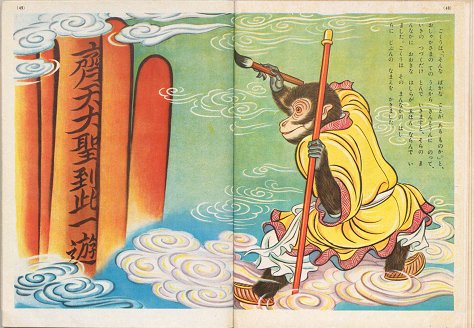
But there wouldn’t be any “edge” as such. No glowing purple force field —

— or golden pillars or anything.
What the paper actually found was the edge of the star-forming region of the galaxy. And that’s a different kind of interesting.
[click to continue…]
by Doug Muir on July 10, 2026
by Doug Muir on June 19, 2026
I was doing a deep dive into early Canadian history, because reasons, and found a couple of fun stories to share. Because hey — this Sunday is National Indigenous Peoples Day!
The Bad Overwinter
So a recurring thing in early Canadian history was the Bad Overwinter. A group of Europeans — usually French — would show up in Canada with a shipload of trade goods. They would hang out with the Indians for a bit, and then would decide to leave some guys behind over the winter. Maybe they wanted to have a permanent trading post, maybe they were trying to start a colony, whatever.
So they’d leave, say, twenty guys on Sable Island or the Avalon Peninsula or on the upper St. Lawrence River with some building materials and tools and food, and in late September they would sail back to France.
And then the following June they would come back and they’d find a handful of emaciated, utterly traumatized survivors. (Who might get a little shifty when asked what happened to the bodies of the other guys.)
This happened literally like a dozen times.
by Doug Muir on May 18, 2026
Mostly I leave Sunday photography to our colleague, the estimable Chris Bertram. Still, this Sunday I was walking the dog in the hills above my town. (“My town” being a modest community of a couple of thousand people in the rolling countryside of northern Bavaria.)

[copyright me, yesterday]
And by the side of a grassy meadow, I stopped to photograph this pretty little yellow flower:

[they look so innocent]
A moment with the app revealed that this was Ranuncula bulbus, the Bulbous Buttercup. There are a bunch of species in the genus Ranuncula, which is another way of saying there are a lot of different kinds of buttercup. That’s because buttercups appear to be a recent evolutionary radiation, and a pretty successful one.
But when I did a quick search on these little guys? I found they used to have another name. The Bulbous Buttercup was once known as Saint Anthony’s Turnip.
Saint… what?
[click to continue…]
by Doug Muir on April 28, 2026
That’s the actual name of the paper. Isn’t that great?
Here’s a prologue: a post I wrote a while back about the Portuguese Man-o’-War. (It’s kind of long — I was new to CT back then, and still figuring stuff out).
To summarize: the Portuguese Man-o’-War is a large jellyfish-type creature. And when I say “large”, I mean they can grow as big as a large cat, with stinging tentacles dangling for many meters beneath and around them. They’re carnivores, feeding on fish and small invertebrates. Their stings paralyze prey, which is then drawn upward into the main body, digested, and eaten. (In that order.)
In the post I mention that they have a parasitic fish that afflicts them, but I don’t talk about any of their other relationships. So now I’m going to talk about an organism that interacts with the Man-o’-War in a different way: a predator.
Specifically Glaucus Atlanticus, the Blue Dragon Sea Slug.

[yes, they really look like this.]
Also known as the Sea Swallow, or the Blue Angel, or… man, just look at that. Isn’t that just ridiculously gorgeous?
Well, these guys(1) look this way for reasons. Let’s discuss. [click to continue…]
by Doug Muir on April 20, 2026
I said a while back that nobody’s going to Mars any time soon. Which is true. But that doesn’t mean Mars isn’t interesting! Mars is very interesting.

So today’s paper is about Mars. Okay, it’s about a moon of Mars.
TLDR: one of Mars’ moons may periodically tear itself apart, turn into a system of rings around the planet, and then put itself back together.
[click to continue…]
by Doug Muir on April 15, 2026
Do you know Baba Yetu?
Take three minutes and listen to this performance of Baba Yetu. (Our ancient blogging platform doesn’t like embedded video, so you’ll have to click through to YouTube. Go ahead and click, nothing bad will happen.)
Some notes:
[click to continue…]
by Doug Muir on April 14, 2026
Before I depart this world, I would like to visit St. Giles’ Cathedral in Edinburgh, Scotland, and see the Jenny Geddes memorial.
I’m told it’s open to the public.

Why? What’s interesting about a stool?
Well, it’s probably impossible to point to a single moment, or a single object, and say “The Enlightenment began here.”. But if you were absolutely forced to choose one moment and one object? One pebble that started the avalanche?
Then Jenny Geddes’ legendary stool, flying through the air on a hot summer Sunday in 1637, wouldn’t be a bad choice.
[click to continue…]
by Doug Muir on March 14, 2026
Third and last part of an article discussing Imperia, the large concrete statue of a semi-fictional medieval sex worker. Part 1 is here and Part 2 is here.
A Clandestine Erection
Imperia went up in April 1993, and I won’t even try to explain the insane backstory.
Short version: some people in Constance wanted a cool statue to add luster to the waterfront. Most of them were thinking of something like a Statue of Liberty. A minority, however, had a more subversive idea. And those guys picked Peter Lenk, a sculptor with a reputation. But when the City Council of this fairly conservative small German city saw the plans… you can probably guess how that went over. There was, let us say, some pushback.
But Lenk and his allies went ahead and put up Imperia anyway. The statue was prefabricated and shipped to the harbor in pieces. Most of the construction happened in a single night, between midnight and dawn.
So Constance woke up to Imperia, and… honestly, it wasn’t love at first sight. “Bemusement” was one common reaction. “Disgust” and “outrage” were up there too.
Part of it was, of course, that she’s a gigantic sex worker. Another part is that she was satirizing something that happened almost six hundred years previous, which even in Germany is not exactly front page news. And of course, there were her let’s say attributes,

[there are a lot of photos of her from this angle for some reason]
plus the fact that she was holding a naked Pope in one hand. Constance is a pretty Catholic town, and the whole “naked Pope” thing didn’t really go over well.
[click to continue…]
by Doug Muir on February 24, 2026
Some Americans have been talking about our shared European culture lately! As CT’s resident American-in-Europe, I feel I must respond. So, here’s a European culture story. (This is Part 2, You can find Part 1 here.)
Okay, so Imperia! Big concrete statue on the shore of Lake Constance. Medieval sex worker. 9 meters tall, weighs 18 tons, rotates once every four minutes. Here she is again:

Let’s look at some details.
[click to continue…]
by Doug Muir on February 21, 2026
Just north of the Alps, on the border between Germany and Switzerland, lies beautiful Lake Constance. And on the northwest shore of the lake is the lovely small city of Constance, Germany.
Constance is well worth a visit. A lot of German cities have rather bland or unattractive centers, thanks to the American and British air forces. But Constance escaped these attentions entirely, because the Allies didn’t want to risk any bombs landing in neutral Switzerland. So Constance has an unusually intact Old Town with lots of interesting old buildings, some going right back to medieval times.
Constance also has this:
:quality(80)/images.vogel.de/vogelonline/bdb/1272600/1272674/original.jpg)
A nine meter tall, 18 ton statue of a medieval sex worker. She’s down at the harbor, on the lake. She rotates once every four minutes. Her name is Imperia.
You may reasonably ask, what? And part of the answer is, she’s memorializing the Council of Constance, the great political-religious council that happened here 600-some years ago, from 1414 to 1417. And you may ask again, what?
I’ll try to explain.
[click to continue…]
by Doug Muir on February 11, 2026
Now this Seth… did leave children behind him who imitated his virtues…. They also were the inventors of that peculiar sort of wisdom which is concerned with the heavenly bodies, and their order.
And that their inventions might not be lost before they were sufficiently known, upon Adam’s prediction that the world was to be destroyed at one time by the force of fire, and at another time by the violence and quantity of water, they made two pillars; the one of brick, the other of stone: they inscribed their discoveries on them both, that in case the pillar of brick should be destroyed by the flood, the pillar of stone might remain, and exhibit those discoveries to mankind; and also inform them that there was another pillar of brick erected by them. Now this remains in the land of Siriad to this day.
— Antiquities of the Jews, Flavius Josephus, Book 1, Chapter 2, 68-71
So first, a brief digression on Flavius Josephus.
The Turncoat
Ah, Flavius Josephus. Born Joseph ben Matthias, a Jew in Judea, he was a general during the Jewish Revolt against the Romans. But then he switched sides and joined the Romans. He then caught the attention of the Roman general with a flattering prophecy that the general would one day become Emperor. (Which eventually happened. Emperor Vespasian, 69-79 AD.)

[this guy]
So Josephus became part of the Imperial staff. He changed his name — “Flavius” was the family name of the new Emperor — and led efforts to get other Jews to switch sides. (Mostly unsuccessful efforts. Like, when he approached the walls of besieged Jerusalem, his attempts at persuasion were met with “howls of execration or derision, and sometimes showers of stones.”) After the war was over, with several hundred thousand dead and Judea in ruins, Josephus ditched his Jewish wife and children, followed the new Emperor back to Rome, and wrote a best-selling history. His Jewish War lays great emphasis on the wisdom, strategic brilliance, and noble character of the new Emperor; the invincible might, glory, and greatness of Rome; and Josephus’ own cleverness and correct choices(1). While Judea was crushed under the Roman yoke, Josephus became wealthy and influential, picked up a trophy wife and a villa, and eventually retired to a life of ease.
(1) To be fair, he may have solved the first Josephus Problem. It’s a rare case where mathematical insight was actually life-saving! Well, life-saving for Josephus anyway.
It might be possible to view Josephus as a pragmatic survivor who just joined the winning side. But if you actually read his memoirs, Josephus’ character comes across pretty clearly, and he’s just so immensely pleased with himself.
Anyway:
[click to continue…]
by Doug Muir on February 3, 2026
Healthy babies, to be specific. Because worldwide, infant and child mortality has fallen greatly; and is still falling; and will almost certainly continue to fall.
In premodern societies, meaning pretty much the entire world before 1820 or so, between a fifth and a quarter of all kids died before their first birthday. Then, of the survivors, roughly about another fifth-to-a-quarter died before their fifth birthday. Then, of those survivors, about 10% died before their 20th birthday. If you do the math, that means that every baby had roughly a coin-flip chance of living to adulthood. The exact numbers varied by place, time, and circumstances. But worldwide, that was the general state of affairs.

Today, worldwide about 96% of babies survive their first birthday. Of all babies born worldwide, about 90% live to reach age 20.
That’s a worldwide average. In developed countries, those numbers are “over 99%” and “around 99%”. In the most dangerous, backwards and unhappy corners of the world the numbers are much lower, but they’re still high by historical standards. A baby born in Afghanistan or Niger or the Democratic Republic of the Congo today, in 2026? Has better odds than a baby born in the England of George III and Pitt the Elder.
Nigeria today has an infant mortality rate about what the US had in 1946, when the Baby Boom got started. The Boom peaked around 1952. The infant mortality then (a bit over 3%) is about what you find in current-day Bangladesh. Pretty much the entire human race today faces a lower rate of infant mortality than that faced by our parents and grandparents.
This doesn’t get much discussed, perhaps because it’s a “what about all the planes that land safely” kind of story. Also, when one discusses long-term positive trends, academic friends may become restive and start murmuring about teleological errors and Whig History.
But I think it’s really interesting. That’s partly because it really is very good news, but also — putting my nerd hat on — because this almost certainly represents a permanent and irreversible change in the human condition.
[click to continue…]
by Doug Muir on January 26, 2026
So the Trump administration has just pulled the US out of the World Health Organization, WHO.
WHO is the biggest and most important international health organization. It’s an arm of the United Nations. It’s been around since 1948. Almost every country in the world is a member.
Most people have only the vaguest idea of what WHO is or what it does. Teal deer, they do a lot of different stuff, most of it pretty good. They were crucial to eliminating smallpox a while back. They come up with cool ideas like a list of essential medicines and health care products that are cheap and easy to produce, along with easy how-to guides on producing them. They do all sorts of research, especially on public health. They were deeply involved in controlling Ebola. (You haven’t heard much about Ebola lately, right? Thank USAID and WHO.)
To be fair, WHO also has some significant negatives. It’s part of the UN system, so it skews slow and inefficient. WHO leadership did not handle COVID well… I mean, they really did not handle COVID well. They made bad, dumb choices based on not offending (some) member countries, and then they doubled down. It wasn’t great.
But anyway! I have one personal story about WHO, from my time in development, below the cut.
[click to continue…]
by Doug Muir on January 24, 2026
This was triggered by a post over at our long-term friendly-rival blog, LGM. That post, in turn, was triggered by something stupid that Robert F. Kennedy Jr. said recently.
What Kennedy said: he thinks his distinctive hoarse, raspy voice is “spasmodic dysphonia”, which he suspects may have been caused by taking flu vaccines for years. Because dysphonia is a KNOWN side effect of these dangerous vaccines! So he stopped getting flu shots back in 2005.
Blogger Shakezula quite correctly deconstructs this nonsense (only one flu shot lists dysphonia as a possible side effect, and that one wasn’t available until after 2005; if dysphonia is a side effect, it’s ridiculously rare, and nobody seems to have ever encountered it). But then they make a wrong turn: they suggest that maybe RFK’s weird voice is genetic, because his sister also has a kinda weird voice.
No. No no no.
[click to continue…]