
Posts by author:
Chris Bertram
Sometimes you are reading a novel and it is so extraordinary that you think, is this the best thing I have ever read? For me, that feeling probably comes on about once a year, so there are quite a lot of books that have evoked it. Still, that they do says something, and the latest to have sparked it is Anna Burns’s Milkman, the Booker Prize winner from 2018.
Milkman is, all at once, a tremendous linguistic performance, a triumph of phenomenology, am insightful account of sexual harrassment, a meditation on gossip and what it can do, a picture of the absurdities of enforced communitarian conformity, and a clear-eyed portrayal of what it is to live under the occupation of a foreign army and the domination of the necessary resisters to that army who are, at the same time, friends and family, sometime idealists but sometimes gangsters, bullies and killers.
Anna Burns’s sentences, the stream of consciousness of her 18-year-old narrator, loop back on themselves with further thoughts and reconsiderations. The voice is a combination of personal idiosyncracy and northern Irish English, i.e. comprehensible to speakers of other versions of English but sometimes odd or disconcerting. You can’t skim and get the plot. You have to hold on, read each sentence, and sometime start it again.
[click to continue…]
Back from 2007

I have a [new piece up at the LRB blog on the UK’s post-Brexit immigration plans](https://www.lrb.co.uk/blog/2020/february/who-will-pick-the-turnips). I argue that at the core of the plans is an intention to treat EU migrants and others as a vulnerable and exploitable workforce and that the logic of denying a long-term working visa route to the low paid leads to three possibilities: either the businesses that rely upon them will go bust, technology will substitute for labour, or the UK will have to start denying education to young Britons so that they become willing to be the underpaid workforce that picks turnips and cleans the elderly in social care.
A brief plug for an important new (and affordable) book: every home should have one! David Owen has long been know for his thoughtful contribution to philosophical debates around migration, and now he has published a brilliant short book, [*What Do We Owe to Refugees?*](https://politybooks.com/bookdetail/?isbn=9781509539734&subject_id=2) in the same excellent *Political Theory Today* series from Polity that my own book appears in. David’s book is highly readable and gives a solid introduction to the main controversy that runs through modern debates on refugeehood, namely, whether we should adopt a “humanitarian” or a “political” conception of refugees and what we owe to them.
A humanitarian conception of refugees focuses attention on them as needy persons forcibly displaced through no fault of their own. They may be fleeing persecution, or war, or natural disaster or environmental collapse, and the duties that we have to them flow from our common humanity. It is their neediness and not the specific cause of their neediness that is the most important factor. A political conception, by contrast, sees refugees as victims of a special wrong, the denial of political status, of effective citizenship through persecution by the very state whose obligation it is to include them as citizens and to guarantee and respect their rights. Refugeehood as conceived of by the political conception is an internationally-recognized political substitute for the membership that has been unjustly denied by a person’s persecutors.
[click to continue…]
A bit of a collector’s item this (taken in 2016). In Ireland there are many British postboxes with the sovereign’s initials that have been overpainted in green by the Irish government since independence. This one, on the Falls Road in Belfast could not be of a type that would appear in the Republic of Ireland because the monarch in question, Elizabeth II, came to the throne after Irish independence, but has been overpainted by Irish republicans in Northern Ireland. In the event of a united Ireland, we could expect official overpainting.
Posted after a bit of twitter discussion with Declan Gaffney and Joel Walmsley yesterday. Joel has [a blog on Irish postboxes](http://irishpostboxes.blogspot.com/).

The UK Home Office [has just proceeded with a deportation flight to Jamaica](https://www.bbc.co.uk/news/uk-51456387). On the flight are “foreign national offenders” convicted of serious crimes. On the flight are also people who have been in the UK from an early age (2 or 3), and people who were convicted of one-time drug-dealing offences, for example. The courts have stopped the removal of a few people who had been denied access to legal support. Naturally, the Home Office and Conservative politicians foreground the “foreign” aspect and the presence of “serious criminals” to perform being tough to the public and their base whilst refusing to discuss the “individual cases” that don’t fit with their propaganda. Labour politicians and others have demanded to know why the flight went ahead when we are still awaiting the results of an inquiry into the Windrush scandal (which included unjust deportations) and in defiance of recommendations that people who came to the UK as small children should not be deported to places where they know no-one. Defending the government’s conduct in the House of Commons, the new immigration minister, Kevin Foster made a comparison between black immigrants (such as midwives) who make a contribution and criminals, thereby suggesting a standard of deservingness that communities of immigrant origin have to meet. And with some justice, the Tories can say that this deportation regime has its basis in laws passed by New Labour in 2007, a point highlighted in [Maya Goodfellow’s excellent book, Hostile Environment](https://www.versobooks.com/books/3064-hostile-environment).
The case raises many issues, but I’d like to foreground three. The first is the willingness of the government to stigmatize as “foreign criminals” people who are anything but foreign, who have been socialized as British, who have nothing and nobody in the country of the nominal nationality. This is because British nationality law puts registration as British beyond the financial grasp of many low-income families or imposes a “bad character” test on children as young as 10 to prevent them from registering. The second is that this shows that the Windrush “moment” is over. Despite having cried some crocodile tears over a scandal that saw some people deported and others lose their homes, jobs and be denied medical care, the government has done nothing to prevent such things from happening in the future and most of the victims have not even been compensated. In fact, the British government remains determined to make it as hard as possible for people at the sharp end of its immigration and nationality regimes to assert and defend their rights, leaving them at the mercy of government officials. The third is that this may be electorally popular, which raises questions for the left: how do we fight injustice in a democracy when deliberate cruelty and injustice come with political benefits?
Surprised I hadn’t used this one for Sunday photoblogging before. Taken with a Fuji X100s which I later sold and then somewhat regretted selling. Now I see that that camera has a new generation, the X100v, and I’m tempted, though the price is forbidding for a fixed-lens camera.

Another shot from the same walk. This time I have boosted the saturation a bit.


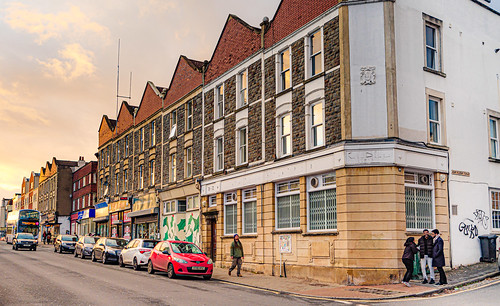
Sometimes, it is just the camera you have on you. In this case, an iPhone.


In the wake of our disastrous election result, Geoff Robinson on twitter (@GeoffPolHist) linked to this piece I wrote in April 2013 and which I’d forgotten about. I see John Quiggin is recycling too, so that seems to be way of things round here today.
The 1970s have been in my mind over the past few days, not only for the obvious reason, but also because I visited the Glam exhibition at Tate Liverpool last weekend. Not only were the seventies the final decade of an electrical-chemical epoch that stretched back to the late nineteenth-century, they were also the time when the sexual and political experimentation of the 1960s and a sense of being part of a cosmopolitan world order became something for the masses, for the working class, and when the old social order started to dissolve. In the experience of many people, the sixties happened in the seventies, as it were.
But my main thoughts, concerning Britain at any rate, have been about social division, and about some oddly paradoxical features of British life before Thatcher. There’s a very real sense in which postwar British society was very sharply divided. On the one hand, it was possible to be born in an NHS hospital, to grow up on a council estate, to attend a state school, to work in a nationalised industry and, eventually (people hoped), to retire on a decent state pension, living entirely within a socialised system co-managed by the state and a powerful Labour movement. On the other, there were people who shared the experience of the NHS but with whom the commonality stopped there: they were privately educated, lived in an owner-occupied house and worked in the private sector. These were two alternate moral universes governed by their own sets of assumptions and inhabited by people with quite different outlooks. Both were powerful disciplinary orders. The working class society had one set of assumptions – welfarist, communitarian, but strongly gendered and somewhat intolerant of sexual “deviance”; middle-class society had another, expressed at public (that is, private) schools through institutions like compulsory Anglican chapel. Inside the private-sector world, at least, there was a powerful sense of resentment towards Labour, expressed in slogans about “managers right to manage” and so on that later found expression in some of the sadism of the Thatcher era towards the working-class communities that were being destroyed. Present too, at least in the more paranoid ramblings of those who contemplated coups against Labour, was the idea that that the parallel socialised order represented a kind of incipient Soviet alternative-in-waiting that might one day swallow them up.
[click to continue…]