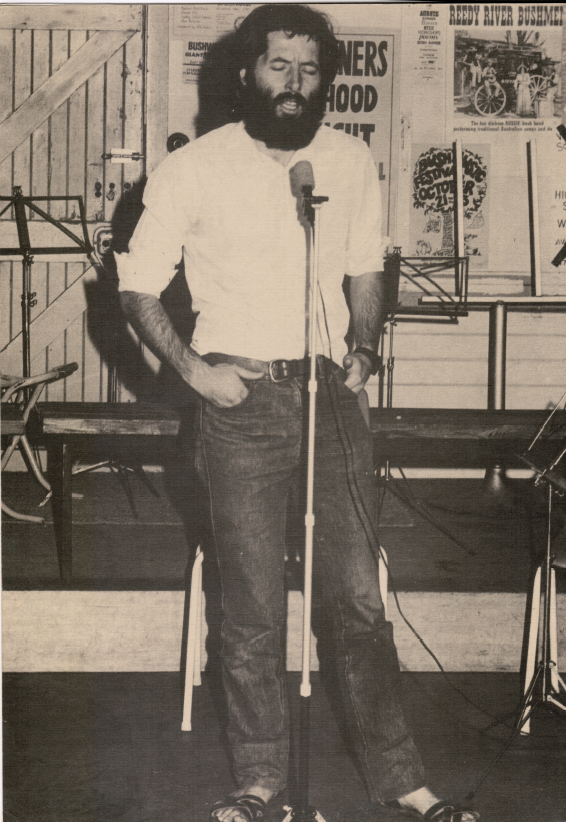
Back in the 1980s, I was (among other things) a writer and singer of satirical folk songs. Going to the National Folk Festival in Canberra at Easter, I caught up with old friends and was reminded that I had produced a book of my songs. Returning home, I dug out a copy, and decided to scan it. You can download the result here (big file)
From the category archives:
Academia
What does it mean to be an academic in different parts of the world? What comes along as the same job description – a bundle of teaching, research, and impact tasks – varies enormously from place to place. Not only the financial conditions of universities differ, but also the social standing of researchers. This is probably what one needs to expect in a world shaped by inequalities along so many lines – geopolitical power, financial resources, cultural influence, race, gender etc. But arguably, there are additional problems within academia. For example, certain academic centers, typically situated in the Global North, dominate the discourse in whole fields, and the opportunities to gain international visibility are distributed very unevenly across countries.
Last summer, I had written on this lack of Global Science Equity. It is problematic for at least two reasons. The first is moral: some of the global inequities are so stark that they stand in blatant contrast to the meritocratic rhetoric still widely used within academia. When being situated in favorable circumstances gets framed as “talent” or “excellence,” and being from a disadvantaged country as “lacking quality,” this is an unjust distortion of the facts, which leads to misguided distributions of respect and recognition across academics worldwide.* The second is epistemic: academic research works best if diverse perspectives and approaches are taken into account, not if there are steep status hierarchies and historically grown centres of gravity that determine what research gets done and under which paradigms.
Among other things, the unlamented former autocrat Viktor Orban was one of the leading proponents of pro-natalist policies, and more open than most about the racist underpinnings of his view. However, like others who have tried to raise birth rates, he wasn’t particularly successful. To understand why not, it’s useful to consider the question: how many babies do we want. In particular, since their choices are the relevant ones, how many babies do young women want?
The news from Hungary’s election is so good that I need to write about it, even if not all the implications are clear yet, and even in a disorganised and way, repeating lots of what others are saying.
Although the polls predicted Orban’s defeat, nothing I read foreshadowed the scale of the victory – a two-thirds majority which will allow the reversal of all of Orban’s constitutional changes. Some credit for this must go to JD Vance. The spectacle of a US vice-president appearing in Europe to complain about foreign influence must have been too absurd for voters to accept. Putin’s unsubtle interference allowed Peter Magyar to remind Hungarians of Russia’s previous crimes against Hungary.
[click to continue…]

The New South Wales gold rush began more than 400 million years ago.
A journalist from the Wall Street Journal wrote to me a week ago to ask what the numbers that I use in the opening pages of my book Limitarianism would look like today. In particular, she asked whether I could calculate for her the “lifetime equivalent hourly income” of Elon Musk’s current assets today.
Short answer: today that number is 5 million dollars per hour.
[click to continue…]
(A piece I wrote for the Guardian)
A couple of weeks ago, just before my 70th birthday, I completed the Mooloolaba standard distance triathlon (1,500m swim, 40km cycle, 10km run). There was nothing exceptional about my performance, placing 1,509 out of 1,730 overall and 14th out of 18 in my 65-69 age category.
But not that long ago, it would have been exceptional. Until about 1980, competitive sport for those over 70 was restricted largely to golf and lawn bowls. Until the 1990s, there wasn’t even a category for 70-year-olds in most competitive triathlons. The small number of competitors over 65 were lumped into a single category. The first 70-year-olds recorded as completing the demanding Kona Ironman event in Hawaii (3.8km swim, 180km ride, 42.2km run), to which I still aspire, were Hiromu Inada (male) and Ethel Autorino (female) in the year 2000.
What’s true of triathlons is true of endurance sports in general. Older athletes seem to be becoming more numerous, and also quite a bit faster, across a wide range of sports.
[click to continue…]
As I approach formal retirement from my academic job, I’m still thinking about ideas in my main theoretical field of decision theory. But I’ve largely lost interest in publishing journal articles, leaving the chore of dealing with Manuscript Central and other robotic systems to my younger co-authors in the case of joint work, and not submitting many of my own. I’ve also gone retro on reviewing. If I’m invited to review a paper, I write back to the editor and offer to do the job as long as they send me the manuscript directly.
That distance from the process provides me with a somewhat different perspective on how Large Language Models (LLMs) are changing things. The rise of LLMs combined with the growth of the global university sector and the dominance of a “publish or perish”[1] has inevitably produced a flood of AI-generated slop which threatens to overwhelm the whole journal process, especially when AI is also being used to generate referee reports.
But will it always be slop? I’ve been trying out various LLMs, including OpenAI Deep Research and, more recently, its French competitor Mistral. I recently used DR to write a piece in the format of a journal article, though I have no plans to submit it anywhere.
[click to continue…]

Jürgen Habermas has died, at the age of 96, and traditional and social media are full of obituaries and memories. For outsiders, it is maybe hard to gauge the omnipresence of his name in West Germany,* but his influence on democratic theory more broadly speaking is well-known. When I entered university, people would mention it in the same in way in which Kant or Hegel were mentioned (full disclosure: I saw him a few times in person, but with no chance to have a conversation beyond small talk). I remember – as a young philosophy student, a clueless outsider of the system of academic philosophy – perceiving a kind of tension between what his texts said, namely that only the “forceless force of the better argument” should prevail, and the kind of cult status that many younger people ascribed to him.

It’s the 15th anniversary of the Fukushima nuclear disaster, and any lessons from that event seem to have been forgotten by most. Political leaders of all stripes, from centre-left to far right have been keen to promote nuclear power as at least a partial solution to the problem of replacing coal and gas. The peak of enthusiasm was reached at COP 28 when Joe Biden, Emmanuel Macron and Rishi Sunak signed a pledge to triple nuclear power generation by 2050.
I have to admit that I am not at all sure of the date of International Women’s Day. It seemed to be every day of the past week or so. Which perhaps ought to be the case every damn week.
So it seems timely to tell you about the current issue (Volume 35) of Women’s History Review, edited by me and Claire EF Wright, who based at the University of Technology Sydney. Claire was recently listed as Australia’s leading economic historian – which is especially impressive because she might also be the youngest (not to mention one of the most female). This was about citations. Just in case your mind leapt to the anti-DEI propaganda flooding the world right now.
We called the issue ‘Cheap Labour’, which describes on one level the price of women’s work, producing the gender pay gap (relatedly, I learned at work this week that even in fields where almost all workers are still women, there is still a gender pay gap in favour of men).
But we were not just wanting to repeat the well-known inequitable pay system. We wanted to use this special issue to think about women’s place in the history of capitalism. ‘Cheap labour’ refers to the kind of cheapness described by Raj Patel and Jason W Moore in A History of the World in Seven Cheap Things. They show that way that surges in profitability have been driven by exploiting something that is (usually but not always temporarily) crazy cheap. For the capitalist, anyway: the cost of fossil fuels, time caring for family and stolen land is borne by someone – and, ultimately, everyone.
