From the category archives:

Books

In-Jokes

by Kieran Healy on March 14, 2008

Matt Yglesias’s book Heads in the Sand: How the Republicans Screw Up Foreign Policy and Foreign Policy Screws Up the Democrats is nearing publication, providing further evidence that very long subtitles beginning with “How …” or “Why …”, and which explain the main thesis of the book, are now completely entrenched in the U.S. publishing industry. It’s the 21st century equivalent of the 19th century “Being a …” subtitle.

Anyway, the blurbs are up and the best one is from Ezra Klein, who wins the inaugural CT American Blurbonomics: How to Praise your Friends while Surreptitiously Taking the Piss out of your Enemies award. Klein says Heads in the Sand is “A very serious, thoughtful argument that has never been made in such detail or with such care.”

Free everything??

by Henry Farrell on March 12, 2008

My previous post has attracted some comments about the academic publishing model, why it is that academics submit to commercial journals that make (in many cases very substantial) profits from publishing their pieces and so on. This broad set of issues has been debated here and on other sites over the last few years. I’d like to throw out a more focused question, aimed primarily at the academics among our readers (although other commenters should feel free to chime in, as always). Starting from the assumption that most of you submit most or all of your work to traditional journals: what would it take for you to switch to publishing through other means (specifically, free-access online paper repositories)???

My own switching requirements (which I imagine are shared by some but not all of you) would be twofold. First – that any alternative means of dissemination provide some sort of credentialling that is acceptable for purposes of internal review. While most of us do our research because we are interested in our topics and think that they are independently worthwhile, we also do it because we would like to keep our jobs (some might also or instead want to find better jobs elsewhere). Second – that the alternative mechanism provide some analogue to the kinds of focused criticism that we get (when we are lucky) from anonymous reviewers. This not only allows for gatekeeping and quality control on the aggregate level, but also typically leads to pretty substantial improvements in individual papers when the reviewers are on target. Obviously, some bad goes along with this system (the implicit incentives of journal publication make academics less likely to take risks and write on out-in-left-field topics than they might in an ideal world), but it’s hard to see how getting rid of it altogether would be a good thing.

If there were a system that provided these two desiderata for social scientists, I’d jump ship in a heartbeat – on every other reasonable criterion I can think of (perhaps there are some that I am missing) open systems are likely to beat closed ones. Obviously there are some very important economic issues too – arXiv, which is the closest analogue to such a system that I can think of, costs a fair bit of money to keep going. But it seems to me that the basic question of what we should want (or, more precisely, what we would absolutely need; wants are potentially infinite) in such a system should be asked before we ask how it should be funded. So what are the benefits and problems of such a system from your perspective, and what would it take to get you to jump over?

No. Nothing to do with Spitzer. I’ve been reading some of the works of 18th Century right-wing blogger German counter-Enlightenment intellectual Justus Möser. (Wikipedia.) [click to continue…]

Aspirational taste

by Henry Farrell on March 5, 2008

“Scott”:http://www.insidehighered.com/views/2008/02/27/mclemee had a delightful column over at _IHE_ last week, demonstrating to tyroes like “Matt Seligman”:http://time-blog.com/nerd_world/2008/02/matt_selmans_unabridged_rules.html and “Ezra Klein”:http://www.prospect.org/csnc/blogs/ezraklein_archive?month=02&year=2008&base_name=bookshelves how you _really_ show off your bookish erudition to the world (by affecting, of course not to be at all interested in what the world thinks of your erudition; see further “Chris”:https://crookedtimber.org/2005/07/11/the-ironic-gnome-rule/ on the cultural politics of ironic gnomes) .
[click to continue…]

Principles (and Practices) of Economics

by Henry Farrell on March 4, 2008

Since I’ve already been giving grief to prominent economists today, I might as well annoy one of our regular commenters (whom I actually quite like) still further, by linking to this “Harvard Crimson article”:http://www.thecrimson.com/article.aspx?ref=522288 on the political economy of the textbook market (many thanks to the correspondent who sent it to me).

Since N. Gregory Mankiw returned to Harvard to teach the College’s introductory economics class, 2,278 students have filled his weekly lectures, many picking up the former Bush advisor’s best-selling textbook, “Principle of Economics” along the way. So, what has professor of economics Mankiw done with those profits? “I don’t talk about personal finances,” Mankiw said, adding that he has never considered giving the proceeds to charity. … With textbook prices sky high, some professors feel an obligation to donate the proceeds they receive by assigning their own textbooks for their classes. Kenneth A. Shepsle, the professor of government who teaches Social Analysis 46: “Thinking About Politics,” allows students to e-mail suggestions for where the charity money should go. … Similarly, the professor who introduces thousands of Harvard undergraduates to what is just finds it unjust to profit from textbook sales.

… Like many introductory textbooks, Mankiw’s book has seen frequent republication. Retailing for $175 on Amazon.com, “Principles of Economics” has come out in four editions since its first publication in 1998. Economics chair James K. Stock is known for complaining in class about this practice, although not about “Principles of Economics” in particular. “New editions are to a considerable extent simply another tool used by publishers and textbook authors to maintain their revenue stream, that is, to keep up prices,” Stock wrote in an e-mailed statement. He said that while he requires his own book for his class, he encourages students to buy older editions and international copies, and said one student bought a Korean copy for 15 percent of the domestic list price. “Some new editions really do make substantial intellectual improvements, but I would suggest that is the exception not the rule,” Stock said. … Mankiw asserts that “Principles of Economics” has been the bible of Harvard economics concentrators since before he took over “Economics 10.” … “The textbook chose the professor, the professor didn’t choose the textbook,” Mankiw said.

If he’s being quoted accurately, Mankiw seems unduly defensive. If I were him, I’d take a much more pro-active stance. I’d claim that I was teaching my students a valuable practical lesson in economics, by illustrating how regulatory power (the power to assign mandatory textbooks for a required credit class, and to smother secondary markets by frequently printing and requiring new editions) can lead to rent-seeking and the creation of effective monopolies. Indeed, I would use graphs and basic math in both book and classroom to illustrate this, so that students would be left in no doubt whatsoever about what was happening. This would really bring the arguments of public choice home to them in a forceful and direct way, teaching them a lesson that they would remember for a very long time.

The alternative – that a benevolent and all-seeing regulator named Gregory Mankiw has chosen the _very best_ textbook available for the students, and that any rents flowing from the $175 cover price were completely irrelevant to his decision making process – seems to be closer to Mankiw’s preferred explanation, and I see no reason whatsoever to doubt his sincerity (really – I’m not being sarcastic here, even if, like Stock, I generally consider the frequently updated textbook game to be a very fishy business). But it’s a claim that’s surely rather hard to reconcile with the usual political lessons we’re expected to draw from econ 10, econ 101 and their cousins.

Hamlet without the Prince

by John Q on February 26, 2008

In the February edition of Prospect, William Skidelsky has a piece on the decline of book reviewing. As is standard for any adverse trend in the early 21st century, blogs get a fair bit of the blame. The write-off (lede for US readers) says

the authority of critics is being undermined by a raucous blogging culture and an increasingly commercial publishing industry

and the conclusion is

blogging is best suited to instant reaction; it thus has an edge when it comes to disseminating gossip and news. Good criticism requires lengthy reflection and slow maturation. The blogosphere does not provide the optimal conditions for its flourishing.

As a slow, mature critic, I’m sure Skidelsky is well placed to make authoritative judgements of this kind, based on the kind of lengthy reflection unknown to gossipy bloggers. Still, it would help us instant-reaction types to follow him if he had, you know, cited some actual blogs, perhaps even some that run book reviews.

Targeted Marketing

by Kieran Healy on February 25, 2008

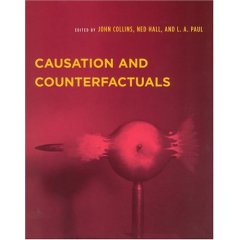
Amazon just suggested I should buy Causation and Counterfactuals edited by Collins, Hall and Paul. Maybe this means the Amazon recommendation engine is broadening its scope, and we’ll soon see suggestions like, “People who bought this book also married …”

Stem Cell Century

by John Q on February 24, 2008

Research on human stem cells has been at the centre of one the more ferocious science policy debates in the US, only partially cooled off by recent claims that the necessary cultures can be generated from samples taking from adults, rather than from human embryos destroyed in the process.


“Stem Cell Century: Law and Policy for a Breakthrough Technology”

by Russell Korobkin (with a joint chapter on patents by Stephen Munzer) is a useful guide to the way the debate evolved in the US. There doesn’t seem to have been anything like the same controversy in Australia, although there has been at least one notable example of what might be called common or garden scientific misconduct.

Perhaps because the US stem cell debate is a bit remote for me, I found more interest in the chapters showing how commercial interests in research collided with general scientific ideals of free communications and with donors’ anger when they found that their donated (or appropriated) body tissue had been used to make highly profitable products.Kieran


wrote the book on the latter topic

.

Much of the debate about the relationship between donors and researchers on these issues has been cast in the framework of “informed consent”, which I think is not very helpful here. Neither I think is a focus on property rights over body parts. The real issue is how to finance the provision of public goods like medical research, characterized by highly uncertain returns.

I’ve looked at how to pay for medical research before and generally reached the conclusion that patents are not the best way to go, a view that is strengthened by a reading of Stem Cell Century. Looking at the conflicts discussed here, it seems that they might be less severe if successful research were rewarded by prizes, including ex gratia payments to crucial participants such as tissue donors.

Fo Shizzle’ My Nietsizzle On Morality

by John Holbo on February 21, 2008

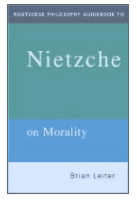
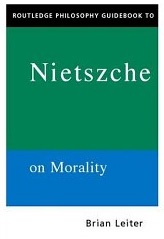
Just to be clear: I have the highest respect for Brian Leiter’s scholarship and have personally ordered a copy. That said – and while we are on the subject of strange covers showing up on Amazon – there is a problem. I can’t help but feel Routledge must be somehow responsible.

Let’s assume for the sake of argument that we witness the first stage of the process here [Powell’s Books]:

powellsniet.jpg

At this point, someone leaned over someone’s shoulder: ‘Dude, it should have, like, an S in it.’

Thus, the happy final product displayed on the Amazon page

amazniet.jpg

My colleage, Axel G., noticed it. (Don’t know whether he cares for getting credit, but now he has it.)

The Future of Reputation

by Henry Farrell on February 20, 2008

My GWU law school colleague Dan Solove has persuaded Yale University Press to let him put his new book, _The Future of Reputation_ “online under a non-commercial CC license”:http://www.concurringopinions.com/archives/2008/02/the_future_of_r_3.html. Good stuff: I hope to be reviewing the book here at CT one of these days soon as well as John McGowan’s _ American Liberalism: An Interpretation for Our Time_ (which I am half way through – it’s very good) and a fantasy blockbuster that Matt Lister has sent me, but tenure stuff has seriously cut into my writing-longish-essays time (normal service will be resumed shortly).

Ornamentation Recapitulates Phylogenet – oh ferget it

by John Holbo on February 20, 2008

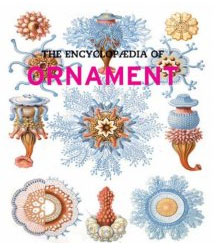
This is rather odd.

ornament.jpg

Pepin books has a forthcoming title, Encyclopedia of Ornament [amazon]. Which, frankly, is just the sort of thing I might buy. Pepin books – all those Agile Rabbit titles, maybe you’ve seen them – are great, if you like that sort of thing.

But, as I am very prepared to notice, that cover is just plate 17 of Haeckel’s Kunstformen der Natur, with the title on top. I wonder whether this is some sort of joke. Maybe, since the book isn’t out until June, they decided to have some fun, putting a dummy graphic up. It is pretty funny to have a bunch of ornamental-looking things, none of which are actually ornaments, most of which are carnivorous colony life-forms.

Say what you will about Stalin … he was no Babbitt.

by John Holbo on February 19, 2008

I’ll state my question first: to what extent did people believe, in the 30’s and early 40’s, that capitalism was doomed? [click to continue…]

From a recent Sotheby’s catalogue:

LOT 4141

MIDDLETON, CHRISTOPHER.

A REJOINDER TO MR. DOBB’S REPLY TO CAPTAIN MIDDLETON; IN WHICH IS EXPOS’D, BOTH HIS WILFUL AND REAL IGNORANCE OF TIDES; &C. HIS JESUITICAL PREVARICATIONS, EVASIONS, FALSITIES, AND FALSE REASONING; HIS AVOIDING TAKING NOTICE OF FACTS, FORMERLY DETECTED AND CHARGED UPON HIM AS INVENTIONS OF HIS OR HIS WITNESSES; THE CHARACTER OF THE LATTER, AND THE PRESENT VIEWS OF THE FORMER, WHICH GAVE RISE TO THE PRESENT DISPUTE. IN A WORD, AN UNPARALELLED DISINGENUITY, AND (TO MAKE USE OF A VERODOBBSICAL FLOWER OF RHETORIC) A GLARING IMPUDENCE, ARE SET IN A FAIR LIGHT. LONDON: M. COOPER, G. BRETT, R. AMEY, 1745

Estimate
2,000—3,000 GBP

Who is the Potter, pray, and who the Pot?

by Henry Farrell on February 11, 2008

The “New York Times”:http://www.nytimes.com/2008/02/09/business/09nocera.html?_r=2&oref=slogin has an interesting piece on the efforts of J.K.Rowling to stop a Harry Potter lexicon from being published, on the grounds that it ‘hijacks’ Rowlings’ name and work.

So long as the Lexicon was a free Web site, Ms. Rowling looked kindly upon it. But when Mr. Vander Ark tried to publish part of the Lexicon in book form — and (shudder!) to make a profit — Ms. Rowling put her foot down. She claims that she wants to publish her own encyclopedia someday and donate the proceeds to charity — and a competing book by Mr. Vander Ark would hurt the prospects for her own work. But more than that, she is essentially claiming that the decision to publish — or even to allow — a Harry Potter encyclopedia is hers alone, since after all, the characters in her books came out of her head. They are her intellectual property. And in her view, no one else can use them without her permission.

“There have been a huge number of companion books that have been published,” Mr. Blair said. “Ninety-nine percent have come to speak to us. In every case they have made changes to ensure compliance. They fall in line.” But, he added: “These guys refused to contact us. They refused to answer any questions. They refused to show us any details.” _They fall in line._ There, in that one sentence, lies the reason Mr. Falzone and his colleagues have agreed to help represent RDR Books. And it’s why Mr. Lessig decided to start the Fair Use Project in the first place.

[click to continue…]

Grab the nearest book

by Eszter Hargittai on February 11, 2008

As far as I know, no one has tagged me with this blog meme, but I’m still going to participate as it looks fun.

Instructions:
1. Grab the nearest book (that is at least 123 pages long).
2. Open to p. 123.
3. Go down to the 5th sentence.
4. Type in the following 3 sentences.
5. Tag five people.

Nearest book as I sit at my coffee table at home: The Chocolate Connoisseur by Chloé Doutre-Roussel. Page 123 is in the middle of Chapter 6 on The Cream of the Crop under the Reading the Ingredients List subheading. Here we go:

There are several grades of chocolate, and these figures show the European Union and US regulations for standard (S) as well as fine (F) chocolate.

* Dark chocolate (S) must contain at least 35% dry cocoa solids (but 15% for “sweet chocolate” in the US), while dark chocolate (F) must contain at least 43%.
* Milk chocolate (S) must contain at least 25% dry cocoa solids (but 20% in the UK, and 10% in the US), while fine milk chocolate must contain at least 30%.

The fun continues in the 4th sentence so allow me to add that: “Bars such as Cadbury Dairy Milk, Galaxy or Hershey must be labelled ‘family milk chocolate’ in the EU, as they don’t contain enough chocolate to count as chocolate under these rules!”

So yes, it’s worth noting that chocolate is not immune to policy considerations. It may sound silly, but it’s obviously a huge industry and what gets to be labelled chocolate does have regulations attached to it, ones that vary from one country to the next. There are also lobbying efforst involved. I don’t follow this area closely, but when a related news story pops up, I do find it intriguing to check out.

Since I wasn’t tagged for this meme, I guess I don’t have to tag anyone else either although I invite people to grab the nearest book and post the specified three sentences here or on their own blogs.