by Ingrid Robeyns on August 31, 2026
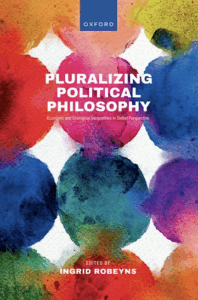 A couple of years ago, I edited a volume on pluralizing political philosophy, in particular in relation to economic and ecological inequalities. It was put together under the Covid-pandemic, so we had to swap the authors-conference for online meetings, with the authors spread out from China to Argentina. Sometimes the people in the most unfavorable timezones joined us literally in the middle of the night. I have always been very grateful to the contributors for running the extra mile under those circumstances, and some of the contributors gave the book what I am suspecting have been their darlings – papers on which they either had been working for a long time, or else papers that contained really original ideas. The book also includes a separate part with discussions of the main papers.
Against that background, I felt a little sad that (to the extent that I have been able to find out) the book hasn’t been picked up much. The first and so far only book review (in the Erasmus Journal of Economics and Philosophy) came out last week. But now one of the contributors, Krushil Watene, wrote to say that she has been teaching a course on the book, which is wonderful. If her students read this, they are very welcome to let us know their comments and impressions of the various chapters, including whether they think the book works for teaching (my assumption has been that it should be really useful for teaching, since it basically has all these different perspectives and arguments on why to pluralize political philosophy and how to do so, also if one is still on square one. But, as always, the proof of the pudding is in the eating.) And the book can still be downloaded for free.
by Ingrid Robeyns on April 9, 2026
A journalist from the Wall Street Journal wrote to me a week ago to ask what the numbers that I use in the opening pages of my book Limitarianism would look like today. In particular, she asked whether I could calculate for her the “lifetime equivalent hourly income” of Elon Musk’s current assets today.
Short answer: today that number is 5 million dollars per hour.
[click to continue…]
by Ingrid Robeyns on January 8, 2026
I’ve been asked by a couple of friends, who have signed contracts to write nonfiction trade books, whether I have any advice on how to make sure the book gets written. I think in general non-fiction trade writing is quite a different challenge from academic writing, which I discussed here in 2022, when I was working on Limitarianism. But how does one actually make sure the writing gets done, especially if one has a job (academic or otherwise) that already consumes more than 40 hours a week and is prone to procrastination?
Here are some lessons I learnt while working on my book from the Fall of 2022 till the Summer of 2023.
First, yes, one needs dedicated time set apart. I was on leave when I wrote my book (which, under the Dutch system, is actually just holidays one has saved up for many years, but that’s a discussion for another day). I cannot imagine how I would have written the book otherwise, in such a short timeframe. To make things worse, the interest of publishers was so great (with the translation rights for half a dozen languages already sold before I started to work on the book full-time), that I felt daunted. And then, for the first time in my life, I had writer’s block. I was scared I had entered a world (–it’s an industry, really–) where I wasn’t sure I could deliver, and I was freezing. [click to continue…]
by Ingrid Robeyns on November 17, 2025
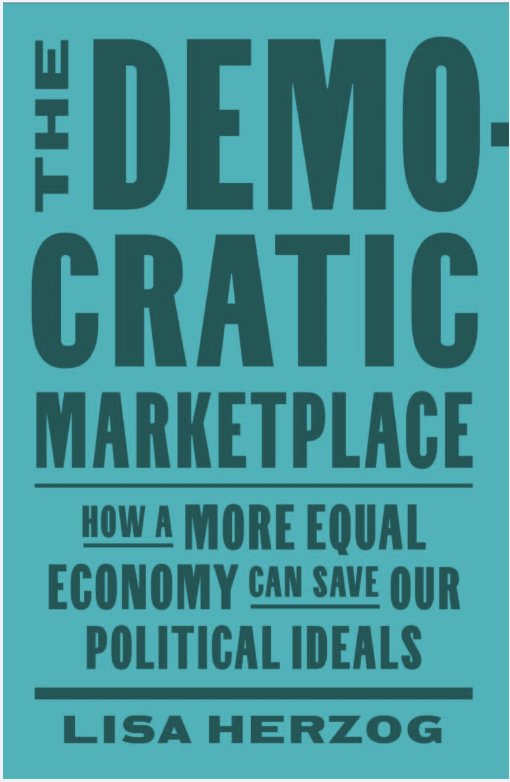
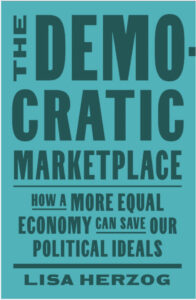 If you want to know more about how the current form of capitalism is undermining (a thick conception of) democracy, and what can be done about this, then you should read Lisa Herzog’s latest book The Democratic Marketplace. The book is written for a broad audience, and I suspect that anyone who regularly reads this blog will enjoy Lisa’s book and learn something new; and it will also provoke debate and discussion on important questions regarding the state of our economic system, our democracies, and how these two are related.
Lisa argues that genuine democracy (which is much more demanding than merely elections/counting votes) requires that democratic values be embedded in all public spheres of life. And therefore we should democratize the economy. This requires, among other things, workplace democracy, reducing economic inequality, shifting our focus from economic growth to the functions of the economy, and adopting a different policy of time that allows citizens to do the much-needed democratic work.
This Thursday 20 November, between 14:00 and 16:00 hours CET, the Visions for the Future Project is organizing an online discussion of Lisa’s book. Julie Rose and Tom Parr will kick off with comments. The online book workshop will take place via MS Teams. To get the link (which you will get within the next working day after registering), you can register via the link on the bottom of the event’s announcement page. Enjoy the reading, and enjoy becoming inspired to take (more) civic action by reading (and discussing) Lisa’s book!
by Ingrid Robeyns on November 10, 2025
With another COP starting today, and the question of climate change having played no role at all in the Dutch elections recently, and, well, for a zillion different reasons – it seems like a good time to ask the question: what books can help to make people move on this topic? (or if you think books are the wrong medium, and we should only look at TikToks or cinema movies or Netflix series, I’d love to hear arguments for that view too).
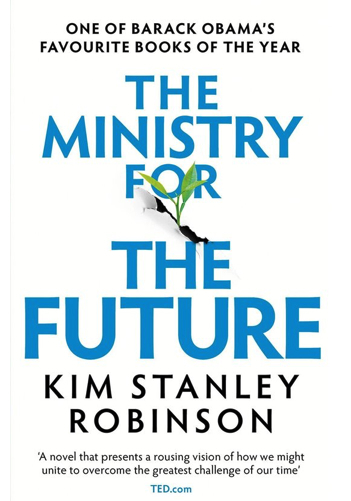
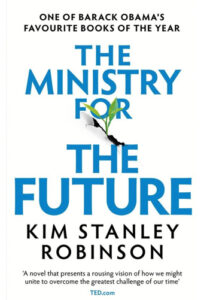 To me, the most magnificent fiction book on climate change is Kim Stanley Robinson’s The Ministry for the Future. It is phenomenal. I hadn’t read it yet when Henry organised a seminar on the book here at Crooked Timber, but I can only say: do read it. Admittedly, the book is very long – and this might be asking too much of many people, given the very many other demands on our lives. But there’s an easy solution: listen to it. This book is perfect as an audiobook. You listen while walking, and you’ll gradually get through the entire book while enjoying your daily walk. Given the many different voices in the book, it might even be better as an audio-book than to read it from paper/screen.
But since The Ministry for the Future already was discussed at length here, let me focus on two other books that might help to centre our awareness and political debates on climate change: Eleanor Catton’s Birnam Wood and Kimberly Nicholas’s Under the Sky We Make. The first is fiction, the second is non-fiction for citizens. Attention: one spoiler about Birnam Wood under the fold. [click to continue…]
by Ingrid Robeyns on September 22, 2025
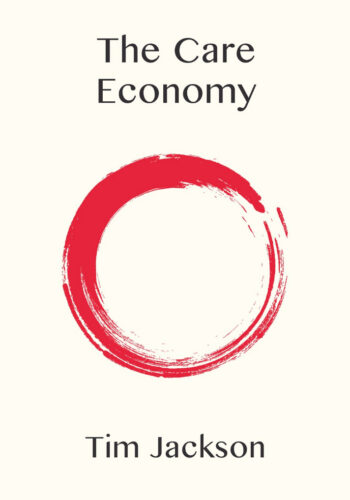
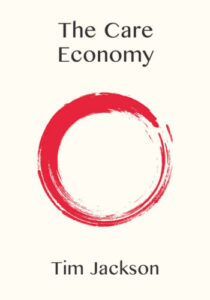 I’m in the midst of doing research, teaching, and outreach activities on a set of questions around economic growth and its relationship to what we value. My research team has Tim Jackson visiting tomorrow, who will give a talk on postgrowth economics and also talk a bit about his new book, The Care Economy. The main claim of that book is that the economy should not be about welfare understood as GDP per capital, with the corresponding economic policy goal being economic growth. Rather, the economy should be about people’s health (using the WHO definition, which I interpret as ‘well-being’), and hence economic policy should be about what we do to preserve and improve our health, which is care – care for ourselves, for others, for the planet including its ecosystems that allows us to live well.
Now, contrast this with the first “mission” taken from the election manifesto of the Dutch VVD, which is the Dutch right-wing party, which sees itself as the defender of classical liberal values, democracy, rule of law and so forth. (note aside: many critical commentators see the VVD increasingly as a populist extreme-right party, but I won’t look into that yawning gap now).
The first mission of the VVD is: Radical Economic Growth. [click to continue…]
by Ingrid Robeyns on May 12, 2025
Over the last years, I have edited a volume of papers on the question how to make analytical political philosophy more inclusive, with a particular focus on the debates on economic and ecological inequalities. The starting point was the observation that analytical political philosophy has for a long time been criticised for marginalizing (to a greater or lesser extent) certain voices and perspectives. Some of these voices and perspectives are internal critics of the liberal tradition – think of the feminist critiques or the critiques by care ethicists. But there have also been external perspectives that have been largely ignored, in particular perspectives from outside the western traditions. While there are well-developed specialist literatures on all of these traditions, they tend to be studied mainly by specialists. Non-western political philosophy and the internal critiques of liberal political philosophy are still too often overlooked in the field. My own estimation is that things are getting better – but very slowly, and hence I wanted to edit a book to make another small contribution to these collective effects to make political philosophy more pluralistic. [click to continue…]
by Doug Muir on March 17, 2025
Here are two groups of Western philosophers. We’ll call them Group A and Group B. Here’s Group A:
Plato, Epicurus, Plotinus, Aquinas, Duns Scotus, Francis Bacon, Hobbes, Locke, Spinoza, Newton, Leibniz, David Hume, Herbert Spencer, John Stuart Mill, Schopenhauer, Kant, Kierkegaard, Nietzsche, Wittgenstein, Jean-Paul Sartre, Kurt Gödel, Karl Popper, Jeremy Bentham, Alan Turing, Saul Kripke.
And here’s Group B:
Aristotle, Socrates, Descartes, Bishop George Berkeley, Rousseau, Heidegger, Hegel, Marx, Frege, Bertrand Russell, John Dewey, Albert Camus, Frantz Fanon, John Rawls, Willard Quine.
Okay, so: what distinguishes these two groups?
Answer under the cut, but… stare at those two lists. Take a moment; give it a try. Do you see it?
Hints: It’s something pretty straightforward. Frege is an edge case. And while Rousseau is formally part of Group B, he really belongs with Group A.
If you have a guess, put it in a comment, then come and look. [click to continue…]
by Lisa Herzog on January 31, 2025
(Hi all, wonderful to become part of this great blog! But now, directly on to some content!)
Imagine that you have a toothache, and a visit at the dentist reveals that a major operation is needed. You phone your health insurance. You listen to the voice of the chatbot, press the buttons to go through the menu. And then you hear: “We have evaluated your profile based on the data you have agreed to share with us. Your dental health behavior scores 6 out of 10. The suggested treatment plan therefore requires a co-payment of [insert some large sum of money here].”
This may sound like science fiction. But many other insurances, e.g. car insurances, already build on automated data being shared with them. If they were allowed, health insurers would certainly like to access our data as well – not only those from smart toothbrushes, but also credit card data, behavioral data (e.g. from step counting apps), or genetic data. If they were allowed to use them, they could move towards segmented insurance plans for specific target groups. As two commentators, on whose research I come back below, recently wrote about health insurance: “Today, public plans and nondiscrimination clauses, not lack of information, are what stands between integration and segmentation.”
If, like me, you’re interested in the relation between knowledge and institutional design, insurance is a fascinating topic. The basic idea of insurance is centuries old – here is a brief summary (skip a few paragraphs if you know this stuff). Because we cannot know what might happen to us in the future, but we can know that on an aggregate level, things will happen to people, it can make sense to enter an insurance contract, creating a pool that a group jointly contributes to. Those for whom the risks in question materialize get support from the pool. Those for whom it does not materialize may go through life without receiving any money, but they still know that they could get support if something happened to them. As such, insurance combines solidarity within a group with individual pre-caution.
[click to continue…]
by Henry Farrell on September 8, 2024
[Commercial announcement: My and Abraham Newman’s book, Underground Empire: How America Weaponized the World Economy is still available for $2.99 on Amazon Kindle. Also, it is about to come out in paperback in the UK and US. We now return you to your scheduled programming. Also: this post was first published at Programmable Mutter].
After nuzzling up against a fishing trawler’s trolling line – a fairly obvious effort by Janan Ganesh to get outrage-clicks – I’m swallowing the bait. But I have an excuse! I’ve been planning to write this post for months anyway, and Ganesh is just serving up the occasion.
Ganesh argues that we should read highbrow books and lowbrow books, but not, under any circumstances, middle-brow ones.
It is rude to name names. But if we imagine a writer called something like Elena Murakami or Patrick O’ Le Carré, someone whose prose is neither the most expeditious nor all that deep, who doesn’t trade in incident-driven high jinks or profound digression, someone who is challenging enough, doesn’t the reader lose twice over?
[click to continue…]
by Belle Waring on July 27, 2024
Do you all experience flow? Or rather, as I think everyone does at times, do you experience it often? Obviously I have written plenty of words in my life, but this is not generally something you experience when writing blog posts unless you are maybe excoriating someone in an unnecessarily profane way that is–fundamentally–unfair. Like, I hear from other people that this is a thing that might happen, I personally would never stoop to such levels, not even if I were blogging about J.D. Vance.
So, painting something, not a wall, that lets you achieve flow. Maybe even a wall, truly! I paint things with tiny details, sometimes setting the stork scissors to gnaw at the smallest sable brush till only a few hairs remain, fit for the fishscale mail on a lead orc figurine. Not lately, though. No, because I have been WRITING whole-ass NOVELS. Now, you will hear of my speed and think, huh, those must all suck because that is some Danielle Steele shit and first of all, how dare you. How dare you! Danielle Fernandes Dominique Schuelein-Steel has written 190 books, have you? Separately, her books do actually suck.
[click to continue…]
by Chris Bertram on April 17, 2024
I’m sure Crooked Timber readers would been keen to learn of exciting new books out just now from Daniel Davies and Kieran Healy. Marion Fourcade and Kieran Healy have published The Ordinal Society , arguing that “argue that technologies of information management, fueled by the abundance of personal data and the infrastructure of the internet, transform how we relate to ourselves and to each other through the market, the public sphere, and the state.” There’s a great review of the book by Diane Coyle at her blog. Dan has produced The Unaccountability Machine, drawing on the cybernetics of Stafford Beer to show how governments and corporations evade responsibility and how we might do better. Felix Martin has reviewed it for the Financial Times. And in other writings, Maria has a cracking piece with Robin Berjon on “rewilding the internet”, that draws on the work of James C. Scott, Elinor Ostrom and ecologists to think about how we might reclaim the internet from the tech oligopoly that has turned it into a small number of gated ad-mills.
by Ingrid Robeyns on April 13, 2024
Since my book Limitarianism: The Case Against Extreme Wealth came out, first in Dutch at the end of November, and then in the US and in the UK a few weeks later, I’ve given more than 60 media interviews and talks. Among them was a long interview in The Observer, a summary of the argument in The Nation and an OpEd in the LA Times, and interviews for the Brian Lehrer Show, Sean Illing’s podcast The Grey Area at VOX, The Majority Report with Sam Seder, Stuff – Tova’s political podcast in New Zealand, and many more. Recently I started giving interviews to German and Austrian journalists (and the first one got published here), as the German translation will be out in less than 2 weeks from now.
Bruno Giussani, curator of TED Countdown, wrote about my book “It’s curious how a book that should have unleashed a furious debate since it was published two months ago has gone almost unnoticed.” Personally, I am not at all unhappy with the interest by the media. The Atlantic recently published a book review that captures very well ‘the spirit’ of the book – that is, as I think it should be read (and that is: not as a policy to be implemented tomorrow, although there is a set of less radical policies that we should fight for today). Still, Giussani’s comment does contain some truth, because most interviews and bookreviews have been published in progressive outlets. The non-progressive mainstream media prefer to ignore the book, except in the Netherlands and Flanders where almost all quality newspapers published long interviews with me, including the business newspapers. There are a few exceptions, such as a dismissive bookreview in The Economist, which was not particularly impressive, as I will argue in my next blogpost. [click to continue…]
by Henry Farrell on April 12, 2024
Last year, I received an email asking if I would write an introductory essay for the Tor Essentials reissue of Kim Stanley Robinson’s novel Icehenge. It took me approximately thirty seconds to convince myself that this was not some kind of hallucination, and another three or four to type YES! OF COURSE!!! and hit reply. It was the most delightful email I’d gotten in years. Stan is now a friend, but the request had its origins in a conversation years before I’d met him. At least a decade ago, Patrick Nielsen Hayden and I were chatting about his books, and I said that Icehenge was both (a) his best novel in my opinion, and (b) criminally under-appreciated. Patrick, who recently stepped down as editor-in-chief at Tor, somehow remembered this, and asked me to pick up on the notion many years later. So how could I do anything but seize the chance?
The book is out in June, and I’ll have more to say then. When I was writing the introduction, I talked to Stan about how he had come to write Icehenge, and what it had meant to him as a writer. There was a lot about modernism! When the British Science Fiction Association’s journal, Vector put out a call for submissions on SF and modernism, I made inquiries, and they said they’d love to publish the conversation. A cleaned up version is available in the new issue (which has a ton of other great content). It’s published under Creative Commons, as is pretty well everything that Vector publishes, so I’m republishing it here. I simply can’t say how happy I am about all of this, and how much I’m looking forward to the book itself – out in just a couple of months.
There are some spoilers in the below – so if you prefer to wait for the book, wait for the book! [click to continue…]
by Ingrid Robeyns on January 16, 2024
 I should have posted this much earlier, but it just dawned on me that I should have invited all our NYC-based readers to the book launch of the US-edition of my book on Limitarianism. I guess my best and most truthful excuse is that I’ve been too busy with media requests since the Dutch version of my book came out at the end of November. Especially in Belgium, where I was on the main talkshow on TV, the idea that we should limit how much personal wealth each of us can have, has led to a lot of debate (in fact, the same talkshow scheduled limitarianism again as a topic for debate among some politicians the next day, as apparently they had seldomly received so many reactions but also questions from their viewers). There are a few interviews lined up with American and international media – I’ll post links to some of it in due course for anyone interested. [click to continue…]
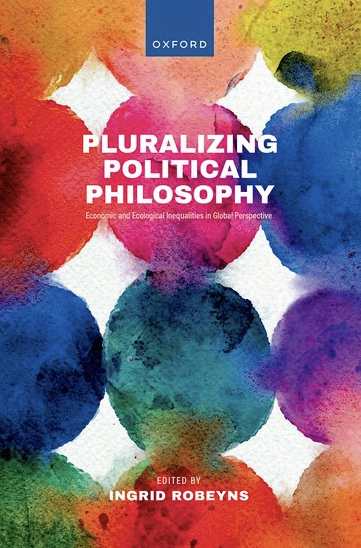 A couple of years ago, I edited a volume on pluralizing political philosophy, in particular in relation to economic and ecological inequalities. It was put together under the Covid-pandemic, so we had to swap the authors-conference for online meetings, with the authors spread out from China to Argentina. Sometimes the people in the most unfavorable timezones joined us literally in the middle of the night. I have always been very grateful to the contributors for running the extra mile under those circumstances, and some of the contributors gave the book what I am suspecting have been their darlings – papers on which they either had been working for a long time, or else papers that contained really original ideas. The book also includes a separate part with discussions of the main papers.