I just finished reading Chandran Kukathas’s book on immigration, Immigration and Freedom, (Princeton: 2021) and I recommend it strongly. In some respects it is a quirky book and Kukathas is coming from an intellectual home that most of the left-leaning readers of Crooked Timber are not friendly to. Hayek gets a lot of mentions, and I’m guessing that many with social democratic or Rawlsian sympathies won’t share Kukathas’s scepticism about the bounded state being a locus of political community and justice (though cf James C. Scott). Kukathas’s basic argument, though developed in detail over many pages, is that to control immigration, states need to monitor and control migrants. But in order to do this, states also need to monitor and control their own citizens. Because one thing human beings are prone to do is to associate with other human beings, independently of their immigration status. People love, befriend, work with, create with, employ others and some of those people are immigrants. So to stop immigrants from doing the things the state doesn’t want them to do, the state also has to monitor its citizens who want to do those things with them and if necessary to pass laws preventing them from doing those things.
[click to continue…]
Posts by author:
Chris Bertram
Following some advice on Jamie Windsor’s excellent YouTube photography channel I decided to look through the last two years of my photos to see if there were some I’d neglected at the time but which would benefit from a second look. This is one that did, from Venice in summer 2019 before the world changed.

Last night’s sunset from Liverpool


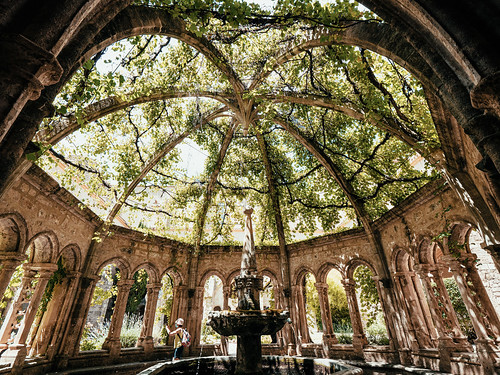
I’m in the UK now, having spent the last (lovely) six weeks in France, an EU member-state with a much more functional government than we have. When we left for France in mid-June, it was on the UK government’s “amber list” and had just started admitting visitors from the UK with proof of full vaccination and a negative COVID test. To get such a test in the UK we had to pay £80 to a private provider. We also had to pay for additional travel insurance to travel to a country that the UK’s Foreign and Commonwealth Office advises against travel to, the advice having rendered our existing travel insurance inapplicable. All went swimmingly on the journey out apart from a 30-second hiccup when a French border guard thought a different set of rules applied to us, requiring urgent reasons for travel, but a colleague set him right.
Our plan had been to stay in France until the UK government moved it to an easier category not requiring quarantine. But the opposite happened. Ostensibly because of a surge in the Beta variant in France, the UK moved the country to an enhanced “amber plus” category, requiring 10 day quarantine even for the fully vaccinated. This measure against France was quite inexplicable, since there were other European countries with higher incidences of Beta, and becauce the French cases were actually overwhelmingly on French islands in the Indian Ocean. Perhaps there were other, more political, reasons behind the change, or perhaps the British government is bad at geography but couldn’t lose face by backing down once the error had been pointed out? Who knows? Rumour has it that France will be taken out of “amber plus” this week, and that the fully-vaccinated will be allowed quarantine-free admission to the UK from France this week, as visitors from the US and most of the EU are. That’s no good to us. (And note this is at a moment when nearly all internal restrictions have been lifted in the UK.)
[click to continue…]
Bought at the market in Pézenas, France. I could hardly not take a photo of it, could I?

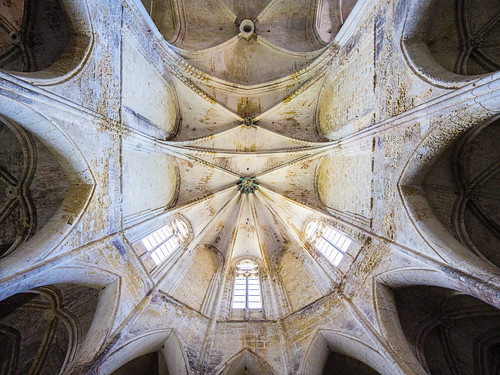
I didn’t post on Sunday. Although I’ve been taking lots of pictures, I’m separated from my preferred photo-editing software at the moment so a lot will have to wait. But yesterday I took this shot of the wonderful landscape of the Cirque de Mourèze in the Languedoc: wonderful columns of rock risking from a sandy floor. A cloudy day was not ideal for pictures, but it was better for walking there than fierce sunshine would have been.

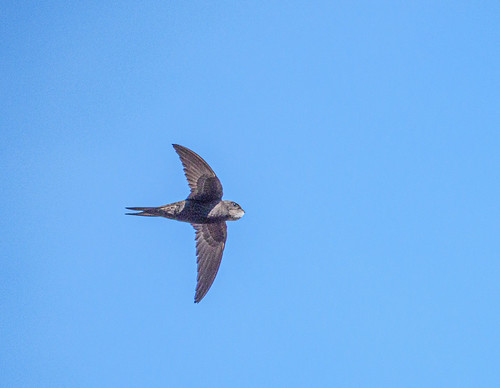
I have spent much of the week trying to photograph the swifts that screech around and above Pézenas (France) often reminding me of the attack sequence in 633 Squadron/Star Wars as they fly in groups through the canyons formed by the streets. It is very tricky, as the sort of shutter speed you need to freeze movement also reduces the depth of field and everything happens too fast for autofocus to lock on. So I’ve filled memory cards with large numbers of pictures of blue skies and blurry birds, with a very few acceptable shots. They really are extraordinary creatures and it lifts the heart to see them.


One of the lessons of Branko Milanovic’s work on global inequality has been the realization that location, and perhaps more pertinently, nationality, is a more important explanation of how well and badly off people are than class is. Citizens of wealthy countries enjoy a “citizenship premium” over the inhabitants of poor ones that exists because they have access to labour markets and welfare systems that their fellow humans largely do not. Of course, there’s a sense in which this global difference also represents a class difference, with many of the workers simply located elsewhere while the residual “proletarians” of the wealthy world enjoy a contradictory class location (to repurpose a term from Erik Olin Wright). While it might be that world GDP would increase dramatically if barriers to movement were removed, as some economists have claimed, the relative position of the rich world poor depends upon those barriers being in place. Or to put it another way, free movement could make many poor people much better off and might not make the rich world poor any worse off in absolute terms, but it would erode their relative advantage. And people, however misguidedly care about their relative advantage.
What kind of politics would we expect to have in rich countries in a world like ours, if people were fully cognizant of this citizenship premium? I suspect the answer is that we would expect to see stronger nationalist movements seeking to preserve the advantage of members of the national collective over outsiders and correspondingly weaker parties based on class disadvantage within those countries. Which is, in fact, the tendency we do see in many European countries where traditional social democracy is struggling badly at the moment. In those same countries we might also expect to see some voters who are unthreatened by freer movement, or by the rise of new powers in the world, being more open to a more cosmopolitan politics and more preoccupied by other issues such as climate change and the environment. And this is, in fact, what we do see.
