by Ingrid Robeyns on September 6, 2024
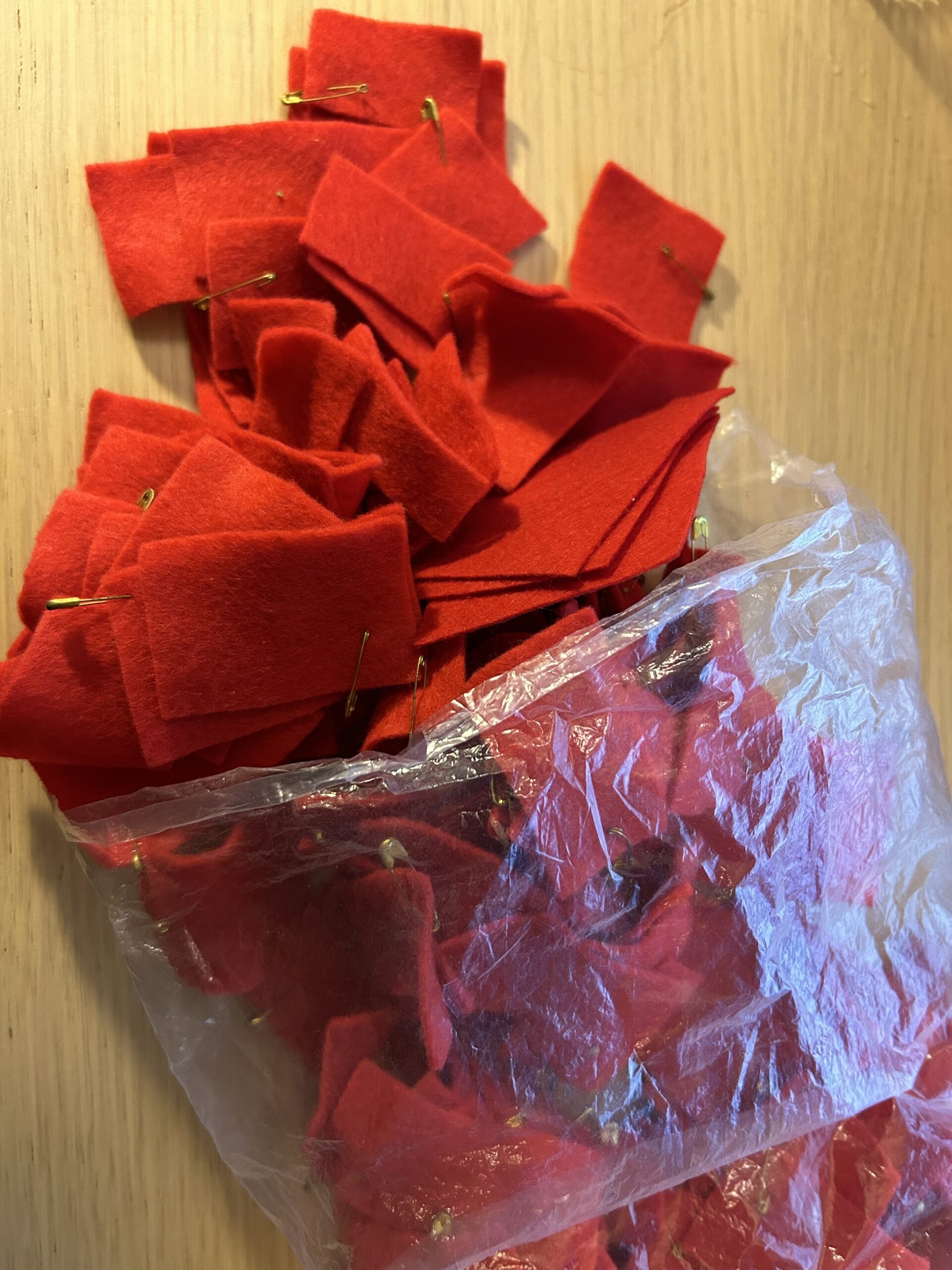
 In response to my previous post on the imminent threat to Dutch universities to have their budgets cut with up to 1 billion euros a year, I received a few emails from (mainly younger) staff to ask how they could contribute to the protests.
I will respond specifically for the current Dutch case, but I think we could learn from international experience here. So if you have additional thoughts on what university staff could do to make sure the material conditions in which they need to do their work are adequate (and for public universities this means not having their public budgets cut in a way that creates inadequate funding), then please do share your suggestions.
[click to continue…]
by Ingrid Robeyns on September 4, 2024
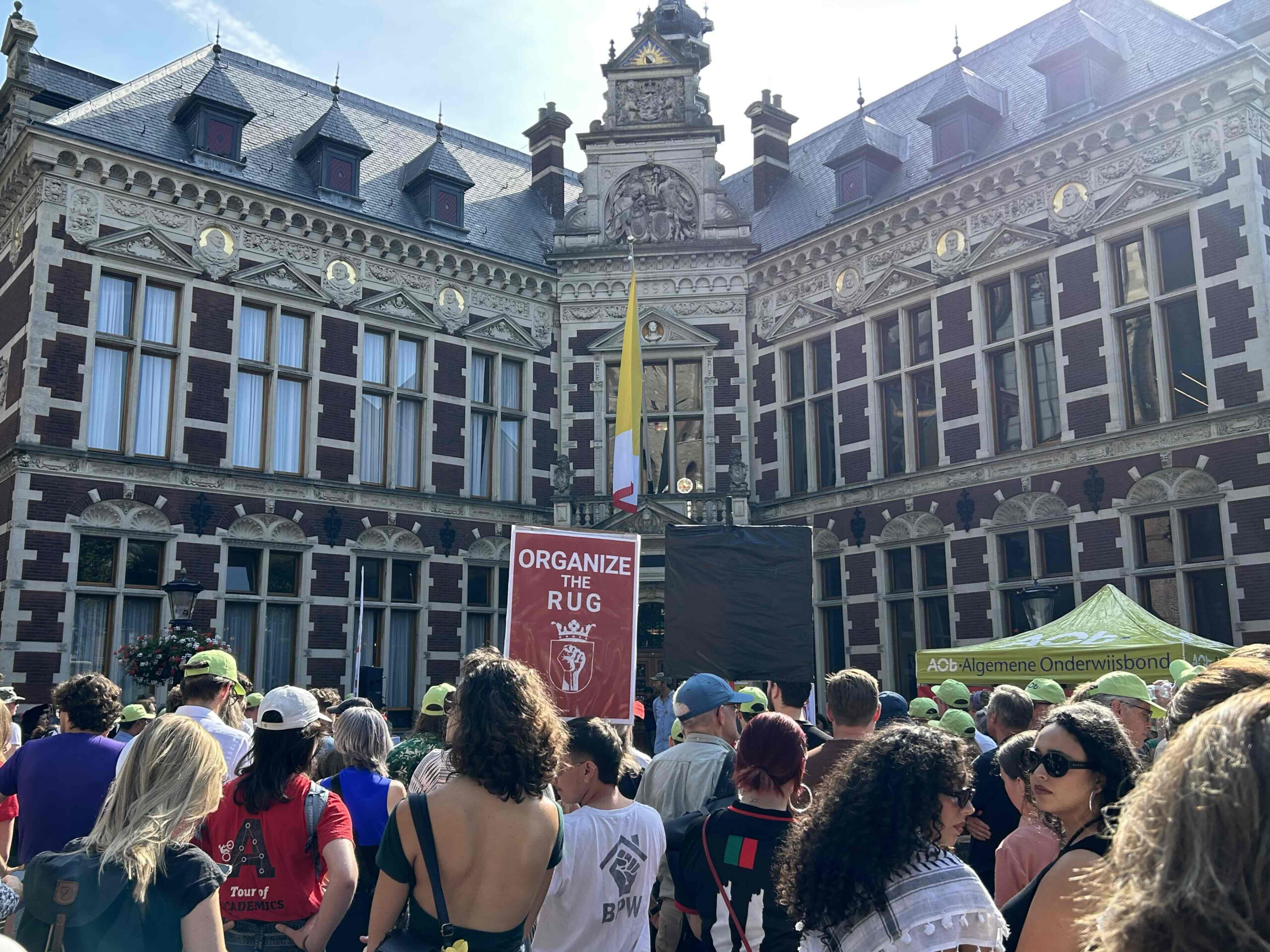
 On Monday, the first day of our academic year, I went to a demonstration. The reason for the demonstration are the announced budget cuts for higher education, which our new right/extreme-right government wants to implement. The figures aren’t set in stone yet, but the financial appendix that was presented when the new government took office suggests that there will be a direct cut to the budget of higher eduction of 150 million euros in 2025, and increasing up to almost 1 billion a few years later (I read somewhere that this is equivalent to the size of one Dutch public university). The cuts would come in different ways – some are reversals to budget-increases that were made by the previous Minister (the renowned scholar Robbert Dijkgraaf who left his prestigious job in Princeton to serve as our minister of education); there are also indirect cuts because the government plans to reduce the number of international students (which will lower revenues for universities); and general cuts to HE. The government will also lower the payment universities gets for a student that takes too long to finish their undergraduate degree, and then expects the students to pay much higher fees. Importantly, the previous government made a Bestuursakkoord (a sort of ten-year contract) with the public universities, which this new government now modifies significantly, without agreement from the universities.
There was a real sense of defeat among the participants at the demonstration that I talked to, which I also sense very strongly. Why? [click to continue…]
by Ingrid Robeyns on July 31, 2024
We just got home from a wonderful trip to Prague, Budapest, and Krakow. All three cities have a rich history of Jewish communities, and one can visit synagogues, musea, and Jewish cemeteries. We visited a number of them, including the very impressive Dohány Street Synagogue in Budapest, which was once the largest synagogue in the world (now still the largest in Europe).
To my surprise, Google maps blocks the online posting of reviews of several of those places. My reviews of the Dohány Street Synagogue in Budapest and of the Spanish Synagogue in Prague were published immediately (and there have been many other reviews of those two places published in the last week, including some negative). But my reviews of the Pinkas Synagogue in Prague, and of the 5th District Restaurant nearby, have not been put online.
When I submitted my reviews and they instantly got rejected, the explanation that Google (automatically) provides was the following: “This place is currently more likely to receive content that violates Google’s policies. To prevent this, Google has turned off posting.”
This explanation is problematic for two reasons. The first is that a few other reviews of those two places did get published over the last week; they were all five stars-reviews, which is the top rating on Google Map reviews. So clearly posting hasn’t been turned off for everyone, as some positive reviews got through. The second reason this stated policy is problematic is that I was troubled by both places, and was prevented from sharing with potential future visitors the reasons I was troubled. [click to continue…]
by Ingrid Robeyns on May 22, 2024
I believe that no-one deserves to be a billionaire. In the public realm, defenders of wealth concentration often come up with an example of a person who has created all their wealth themselves – the selfmade billionaire. They didn’t get their money from inheritance or some other form of luck, but from entrepreneurial instincts and efforts. At least, that’s how the argument goes.
The Dutch political philosopher Huub Brouwer and I hold that no-one deserves to be a billionaire (as I am sure many of you do too). And we were thinking that one way to make our (abstract, theoretical) arguments accessible to “Joe the plummer”, is to take an individual case of a selfmade billionaire, and delve into the details of their life story, and then apply the general arguments against the (lack of) deservingness of extreme wealth concentration to such a case study.
The question now is: who would make for the best casestudy – someone very rich (a billionaire or close by) who is perceived to be genuinely selfmade. Names that are often mentioned are JK Rowling, Bill Gates, Oprah Winfrey, and, more recently, Taylor Swift. Yet we’re probably running around in small circles, always mentioning the same (famous and visible) people.
Who do you think is the most selfmade billionaire?
by Ingrid Robeyns on April 13, 2024
Since my book Limitarianism: The Case Against Extreme Wealth came out, first in Dutch at the end of November, and then in the US and in the UK a few weeks later, I’ve given more than 60 media interviews and talks. Among them was a long interview in The Observer, a summary of the argument in The Nation and an OpEd in the LA Times, and interviews for the Brian Lehrer Show, Sean Illing’s podcast The Grey Area at VOX, The Majority Report with Sam Seder, Stuff – Tova’s political podcast in New Zealand, and many more. Recently I started giving interviews to German and Austrian journalists (and the first one got published here), as the German translation will be out in less than 2 weeks from now.
Bruno Giussani, curator of TED Countdown, wrote about my book “It’s curious how a book that should have unleashed a furious debate since it was published two months ago has gone almost unnoticed.” Personally, I am not at all unhappy with the interest by the media. The Atlantic recently published a book review that captures very well ‘the spirit’ of the book – that is, as I think it should be read (and that is: not as a policy to be implemented tomorrow, although there is a set of less radical policies that we should fight for today). Still, Giussani’s comment does contain some truth, because most interviews and bookreviews have been published in progressive outlets. The non-progressive mainstream media prefer to ignore the book, except in the Netherlands and Flanders where almost all quality newspapers published long interviews with me, including the business newspapers. There are a few exceptions, such as a dismissive bookreview in The Economist, which was not particularly impressive, as I will argue in my next blogpost. [click to continue…]
by Ingrid Robeyns on February 2, 2024
One source of the Global Academic Gap is that many universities and academic resources in the Global South are underresourced (sometimes massively so). If there is no money to pay for a generator to deal with electricity blackouts, or in case there is no money to hire scholars, then it’s hard to even start doing research. And if we want to strengthen entire fields in a resource-poor country, we will also need resources for people to build the academic networks that we take so much for granted in (most) of the Global North (even when acknowledging that within the Global North there are also significant inequalities in budgets).
About 9 or 10 years ago, my institute hosted a visiting researcher – Thierry Ngosso. Thierry is from Cameroon, but did his PhD in Louvain-la-Neuve and held post-doc positions in Harvard and Sankt Gallen. For years, he tiredlessly prepared the launch of the EthicsLab in Yaoundé, now 5 years ago. Many political philosophers and ethicists from the global North and Africa met there, and discussed ethical and philosophical questions for several days. And of course, over tea-breaks and meals, we also discussed the many challanges that building an EthicsLab in Cameroon entailed.
Thierry and his friends are putting together another conference, to mark the fifth aniversary of the EthicsLab, and to strenghten the activities and networks of the EthicsLab. But they need financial support – for the conference, and for the EthicsLab more generally. It would be very ironic that they would end up with a scenario whereby there would be many more well-funded scholars from the US and Europe than from neighbouring African countries at this conference, only because of the global maldistribution of money. That’s why Thierry and his friends have started a fundraiser for the EthicsLab.
I just donated, and feel it’s a privilege to be able to make a small contribution to this fantastic initiative. Please join me in making a donation, if you are so inclined. Thank you!
by Ingrid Robeyns on January 17, 2024
This is a post that will mainly be of interest to academic political philosophers, as it concerns what happened to The Journal of Political Philosophy, and I’m assuming readers know what happened to that journal recently (if you don’t, you can read first this, and then this piece on Daily Nous).
Earlier today I attended a meeting that Wiley organised at the Eastern Philosophical Association meeting, and want to share my impression as well as share the three conclusions that I draw from this session. [click to continue…]
by Ingrid Robeyns on January 16, 2024
 I should have posted this much earlier, but it just dawned on me that I should have invited all our NYC-based readers to the book launch of the US-edition of my book on Limitarianism. I guess my best and most truthful excuse is that I’ve been too busy with media requests since the Dutch version of my book came out at the end of November. Especially in Belgium, where I was on the main talkshow on TV, the idea that we should limit how much personal wealth each of us can have, has led to a lot of debate (in fact, the same talkshow scheduled limitarianism again as a topic for debate among some politicians the next day, as apparently they had seldomly received so many reactions but also questions from their viewers). There are a few interviews lined up with American and international media – I’ll post links to some of it in due course for anyone interested. [click to continue…]
by Ingrid Robeyns on January 1, 2024
Happy 2024 everyone! May there be no more wars, no more avoidable suffering, and justice for all. That’s a steep wish-list, but then I am one of those who thinks that giving up is not an option, and that [almost] everyone has opportunities to contribute to make us move into that direction.
In that spirit, I made three resolutions for 2024: one for myself, one for a specific very vulnerable person, and one political resolution, for society at large.
I can already hear the cynic laughing: New Year’s resolutions don’t work! Resolutions are for weak people who could have solved their problems long ago if they were a little more decisive. With New Year’s resolutions we only fool ourselves. The cynic pours himself another drink, and has a good laugh at those who make resolutions. [click to continue…]
by Ingrid Robeyns on December 23, 2023
 I was walking with my teenage son in a large shop the other day, and we passed by the children’s section. I saw a duvet cover that so much reminded me of Kretk – or, in English translation, the Little Mole. We were recalling which of the Kretk films that we saw we liked most – but basically, we liked almost all of them. Thinking of the Little Mole brought back happy memories.
Krtek is a series of animations that have been made by Zdenek Miler in the 1950s and 1960 in Czechoslovakia. It has a very interesting artistic signature: not only the pleasing and colourful visual arts, and the typical light, cheerful and romantic music that would come with it; lots of anti-modernist themes (such as in this one that I just found on YouTube where the little mole tries to stop the damage a bulldozer will do to its flowers); and, of course, animals that are all humanized, as they are in many movies for children. Not all animals are nice, by the way; one of my favourite Krtek movies is one where there are large animals (wolves?) who are a danger to the other animals, and by painting themselves and standing on each other’s shoulders (and thus pretending to be huge, much more dangerous monsters themselves), they are able to chase away the wolves. (NB – I have this from my memory from watching this a pretty long time ago, so not 100% reliable!).
With for many of our readers the holiday season before the door, I just wanted to share this with those of you who have never heard of the Little Mole. If you have small children, I bet they (and perhaps you too) might like to see some of it, tucked away under a blanket on the couch. Happy holidays!
by Ingrid Robeyns on October 21, 2023
In my academic job, I’ve just started a new 5-year project called ‘Visions for the future‘. In the first year of the project, I’ll tackle some methodological questions, including working out the discussion we had here some years ago on normative audits, and the question what ‘synthetic political philosophy’ is (on which Eric also has, and is further developing, views).
For the subsequent 3 years, I want to experiment with, and also develop the idea of ‘team philosophy’ (and I will hire three postdocs to be part of this). But what is ‘team philosophy’?
[click to continue…]
by Ingrid Robeyns on August 28, 2023
 Over the last year, I’ve been working on a trade book on limitarianism (USA, UK, NL), on an edited volume on pluralism in political philosophy by bringing various (including ‘non-western’) perspectives together around questions of economic and ecological inequalities (forthcoming with OUP but not quite there yet), and on an edited academic volume with political philosophy papers on limitarianism.
Perhaps not surprisingly, I strongly advice anyone not to follow that example: one book to work on is already more than enough to concentrate on. The circumstances that created this situation in which I found myself editing two books and writing a third one are probably rather rare – trying to deliver outcomes promised in a grant application against the background of a pandemic, combined with some significant professional disruptions beyond my control etc. But while I felt like a juggler for some time, the good news is that the first and the third are now done (though the trade book is not out in English before February 1st), and I’m happy to share with you the link to the open access, hence free to download, book with academic philosophical papers on limitarianism. It’s a combination of reprints and new material, and the essays generally assume some background knowledge in contemporary normative political philosophy. I’m hoping this will be interesting for students and scholars of the philosophy of distributive justice, and related areas. Also, the entire volume is currently being translated into Spanish, and will also be published Open Access before too long. The trade book – although very broadly on the same topic, is a very different beast, about which more some other time.
by Ingrid Robeyns on August 23, 2023
I’ve been thinking a lot lately about how society, and people in my profession (academics), think about activism. It seems to me that there is a widespread insufficient appreciation for the importance of activists in the world; often that attitude is even plainly dismissive. If this is true, then why is this the case, and why is this wrong?
First, I should clarify that I am only talking about activists for whom we have strong reasons to see the ultimate goal they strive for as justified, and the means they employ as reasonable. Hence, I’m only talking here about activists who fight against injustices, or want to make the world a better place. Now I realise this is a very tricky delineation, because in the world as it is, there will be people using activist means and tactics to advance immoral, or at least illegitimate goals, such as racists wanting to keep their settler-society predominantly White or Christian. And I also realise that even if we put those clear cases of activism for immoral causes aside, we will end up disagreeing about borderline cases, where multiple values and principles are at stake and people disagree whether the goals the activists are striving for is laudable or not (think of some cases where it might be seen that activists try to restrict the freedom of speech of those they accuse of using hate-speech). [click to continue…]
by Ingrid Robeyns on June 26, 2023
I’ve been largely absent here – wrapping up my editorial work on two academic volumes and the various rounds of edits on the popular book on limitarianism. I promise I’ll be back with substantive posts by late August (after resting and travelling). In the meantime, I thought I might share this 45 minutes podcast episode in which I give an overview of the capability approach. Jack Simpson conducted this interview with me quite a while ago, but it only got released last week (congratulations on getting your PhD-degree in the meantime, Jack!).
Jack not only asked me to explain some things, but also asked me several times for “my take on” strenghts/weaknesses/inspiring examples in this literature – which is fun to talk about, since these are the kind of things you never put in an academic article.
Available via Spotify, Apple Podcasts, via RSS, or one of the other platforms that airs this podcast.
Looking forward to the next episodes of Jack’s podcast The Capability Approach in Conversation.
by Ingrid Robeyns on March 29, 2023
Earlier this week, I was at a meeting to discuss the question whether my university should cut its ties with the fossil industry, or else impose additional conditions on working with partners from fossil industries. There was quite some agreement that the university should think hard about spelling out and endorsing a moral framework, and based on those values and moral principles work out what (if any) forms of collaboration would remain legitimate in the future. This led our vice-chancellor to ask the question what else such moral framework would imply for university staff. “Should we perhaps completely stop flying?”, he asked.
And then there is, once again, a very depressing IPCC report and we must radically change our modes of production and consumption if we want to leave our children (and our older selves) a planet that will remain safe for the human species. And it’s not just about the future, but about the present: urgent action is needed to lower the number of the deadly climate-related events that we have seen over the last years, from increases in wildfires to deadly floodings – that led poor people, who have made almost zero contribution to this problem, lose their livelihoods, and many simply died. So to me it seems obvious that what we change in response to climate change is a very urgent moral question.
Hence the question: Do academics fly too much? Should we simply stop flying at all?
[click to continue…]
 In response to my previous post on the imminent threat to Dutch universities to have their budgets cut with up to 1 billion euros a year, I received a few emails from (mainly younger) staff to ask how they could contribute to the protests.