From the category archives:

human rights

Some thoughts on charitable donations

by Ingrid Robeyns on December 29, 2025

I read a post on one of the social media platforms written by a professor who was sharing his experience with giving away ten percent of his income, after he signed the “Ten percent giving pledge” many years ago. In deciding what or whom to give to, those who take the ten-percent-pledge often follow the advice of Effective Altruism and typically end up making donations that aim to prevent malaria, deworm, or increase childhood vaccination rates, as well as give to animal welfare (which is a big topic among effective altruists).

It is truly admirable that someone consistently gives 10% or more of their income, especially given that most people don’t, and also given that this may, in absolute terms, be a sizeable sum (hence with a genuine opportunity cost). It is also good that people who give so generously write about it publicly. It could help shift social norms around giving. It may also help others who give generously but sometimes have doubts to feel that they belong to a broader community of those who give. It may inspire others to give more.

So I have only praise for giving so generously. But when it comes to choosing recipients, I make different choices. [click to continue…]

Rambouillet, part 1: The State of Play

by Doug Muir on September 26, 2025

A while back I wrote a series of posts about the 1998-9 Kosovo conflict.  If you’re interested, here they are:  Prelude to WarThe Serbian Ascendancy, Things Fall Apart, And So To War.  This post continues that story up to the unsuccessful Rambouillet peace conference of February-March 1999.

So by early 1999, the Serbian province of Kosovo was the scene of an ugly guerrilla war.  Civilian casualties were mounting rapidly.  There were bombings and curfews and disappearances.  Over 100,000 people were already refugees, and the situation was clearly going to get worse and not better. 

There was a concerted effort to solve the problem by holding a peace conference in the spring of 1999. This was the Rambouillet Conference, and its goal was to produce a peace agreement between Serbia and the Kosovo Albanians. It failed, leading directly and immediately to the Kosovo War.

Does an unsuccessful peace conference from the previous century hold any lessons?  Or is this purely of academic interest?  

[click to continue…]

Popes vs Philosophers: Whose Ethics of Immigration?

by Speranta Dumitru on April 26, 2025

Political philosophers are criticised for their idealism, but when it comes to immigration they try to be ‘realistic’. Their aspiration to ‘realism’ often leads to nationalism (which I have analysed elsewhere as an implicit but heavy bias), but I still don’t understand why they aspire to realism on this issue. Philosophers have neither voters to attract, like the politicians, nor believers to bring to church, like the Popes.

Why are Popes far more progressive than philosophers on the issue of migration?
[click to continue…]

One of the things that’s becoming clear is the determination of the Trump administration to divide humans living in the United States into two groups (to whom Wilhoit’s Law applies), citizens and immigrants. Actually it is a bit more complicated than that, because some of the legal citizens are, in reality, at best some sort of semi-citizen,1 but let’s keep things simple for now. What I want to focus on is how incompatible this is with the notion of a free society, indeed with a free society even as those on the political right have historically seen it.

The Trumpists think they have a discretionary right to deport immigrants for wrongthink and wrongspeech, for taking part in a pro-Palestine demonstration, but also for writing a newspaper article, making a social media post, sharing a social media post, even liking one. They think that such people have no right not to be snatched off the street by goon squads. And they think that when immigrants face deportation for wrongthink they should have no right to contest the decisions made about them. The US courts may yet disagree with the Trumpists about these matters, but we’ll see.

Immigrants are people. Sorry for insisting on a truism, but I say it not just to argue that they have rights as humans, but also to make a point about their behaviour. US citizens are people too. And as people do, individuals in these two groups will barter and truck, fuck, form romantic ties, break bread, get drunk together, study together, worship together, share and dispute ideals, like and dislike books, operas, tv shows. Et cetera. You can’t monitor and control the activities of the individuals in one of these groups without monitoring and controlling the activities of the people in the other group who are in millions of cases the counterparties to their transactions and attachments.2

One of the marks of a free society, at least as many liberals and conservatives have insisted, is that it is composed of smaller societies through which much of its life is conducted.3 Associations, clubs, universities, schools, families, and so forth. Those societies have a life of their own and the wider society of which they form a part loses its own freedom and vitality when the state subordinates their inner life to its own purposes. Not that all such regulation is bad: some is necessary for justice and equality and even child protection (cf Brighouse and Swift)4. But overdo it and you create not a free society but a totalitarian one. Though immigrants may not be full legal and political members of the big society, they are often full and equal participants in the smaller ones and, as such, they need to be able to argue, express, consent, dissent, voice and exit just as the other members do. The smaller societies can’t function properly if they are composed of some people with rights and some people without them. Every member needs to hear what other members say and when some people can’t express themselves for fear of the consequences that not only destroys the inner life of society but also leaves individuals open to blackmail and exploitation.

As the United States slides into totalitarianism, there’s not much that anyone can say in a blog post that will prevent the worst. But if it is, at least, to stand as a warning to other societies that want to retain such freedom as they have, then we had better notice that the casual assumption that a neat quasi-natural divide can be drawn between citizens and immigrants isn’t limited to the US, it is the routine unthinking blather of politicians in Europe and elswhere, and not just on the extreme right. And if and when the bad times come and the immigrants get targeted, that will harm not just the direct objects of xenophobic policies but also all of the individuals who live lives entwined with theirs, some of whom will doubtless find their own status reclassified.

  1. Elizabeth Cohen, Semi-Citizenship in Democratic Poltics (Cambridge 2014). 
  2. Here I am just channeling the arguments of Chandran Kukathas’s superb Immigration and Freedom (Princeton 2021), which everyone should read. 
  3. Can you get more conservative than Burke with his “little platoons”? See also Tocqueville, Durkheim, Hegel, etc. 
  4. Harry Brighouse and Adam Swift, Family Values (Princeton, 2016). 

No Other Land (filmreview)

by Ingrid Robeyns on February 28, 2025

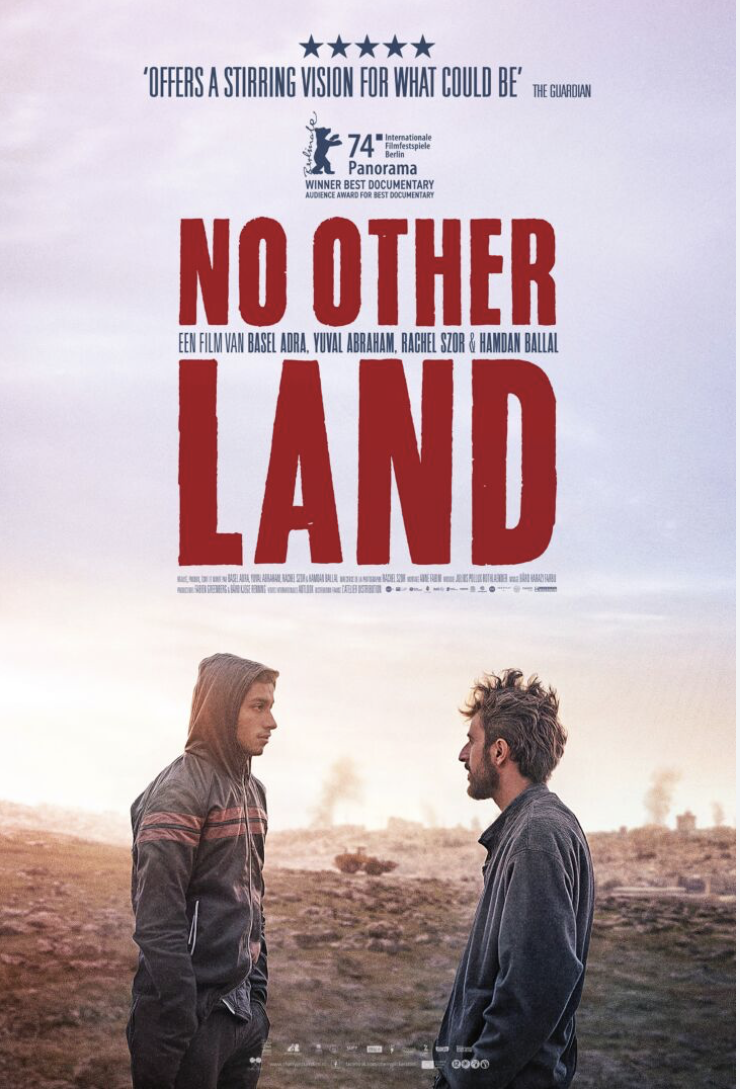
Two months ago, I saw No Other LandPoster for the movie 'No Other Land', in which we see the two main characters standing towards each other, against the background of the land that is the object of the movie. in a large movie theatre in Brussels. No Other Land is a documentary made by a team of two Palestinians and two Israeli.

We follow their reporting on the years-long destruction of Masafer Yatta, a village on the Palestinian Westbank, by Israeli forces. The Israeli State, backed up by its army, orders the villagers to leave the land because the land will be used by the army for training; but the villagers have lived there for generations and are the owners of the land. As one woman says, “there is no other land” they could go to.

The documentary was at the same time horrible and beautiful. [click to continue…]

Reasons for pessimism in Europe

by Chris Bertram on January 10, 2025

Those of us who live in Europe have reason to be very pessimistic about the next four years. The state that Europeans have relied upon as their security guarantee is now in the hands of the nationalist extreme right and the information space is saturated by the output of tech oligarchs such as Elon Musk who are either aligned with or beholden to that nationalist right and who openly fantasize about replacing elected European governments. These pressures come on top of military aggression from Russia in Ukraine and elsewhere, austerity in public services, increased energy costs, stagnant living standards, a difficult green transition, demographic decline, and anxiety about immigration and cultural diversity. Most of these pressures are likely to be deliberately worsened by the incoming Trump regime in the hope of having its ideological allies come to power in European countries. In fact the very same figures who vaunted the importance of national sovereignty are salivating at the prospect of a great power interfering to their benefit in domesic affairs: so much for patriotism!

Resistance will be hampered on several fronts. First, the left and the labour movement, a popular bastion against fascism during earlier waves of ultra-nationalism, is weak and divided with its institutions such as parties and trade unions shells of what they once were as the result of changes in the class structure. Second, liberal and democratic values, tolerance and human rights, that might form some kind of principled rallying point have been badly compromised by mainstream parties’ desire to accomodate the so-called “legitimate concerns” of voters around migration and security, Widespread discrimination against minorities and growing toleration of mass death among irregular migrants as well as deals with dictatorships at Europe’s margins to contain would-be migrants exacerbate the abandonment of any pretence at humanitarian univeralism. European governments have been reluctant (or worse) to resist Israel’s actions in Palestine and the wider Middle East, again making a joke of Europe’s claimed values. Third, European leaders will be prevented from mounting any kind of principled resistance to US attack by the fact that, in the face of Russian aggression, they will feel the need to carry on pretending that the American enemy is in fact their friend and ally. The parallels with a toxic relationship with an abuser are obvious.
[click to continue…]

Donald Trump has made very public threats to persecute his political opponents should he be re-elected and statements by him and by other leading Republicans suggests that he might persecute others on the grounds of their religion or their membership of certain social groups. If this were happen (rather than simply being bluster) then it could turn out, very soon, that some US citizens will find themselves outside of their country, with a well-founded fear of persecution on grounds outlined in the 1951 Refugee Convention, and on the territory of a state signatory of the Convention. Some of those states will also be allies of the US through NATO and other treaties and will have extradition treaties with the US. In which case what might happen?

  1. Currently most of the relevant states try to prevent people likely to claim asylum from arriving on their territory (and their leaders denounce those who do arrive as “illegal immigrants”). Most of the states concerned currently have visa waiver programmes for US citizens and would probably be reluctant on economic and geopolitical grounds to shut those down, although it is possible they might in response to a similar tightening by a Trump administation. So one question is whether such states will try to make it more difficult for Americans to visit. If they don’t then US citizens will find it relatively easy to escape to those countries.
    [click to continue…]

Am I The Immoral Person

by Belle Waring on September 5, 2024

Plain People of Crooked Timber: can’t see why you’re drafting us in here so often after leaving us out in the cold for five years or whatever, we are busy people with our own lives and so on.

Me: but I love you and you’re the best!

Plain People of Crooked Timber: well if you’re going to resort to flattery, I suppose it’s alright but you should probably give it a rest for a bit after this.

Me: OK, is it immoral to convince people they hold immoral beliefs, despite knowing they may commit immoral actions as a result? Should I troll people into being bad people?

Plain People of Crooked Timber: those are daft questions and the answers are obviously yes and then no.

Me: OK, but hear me out. Anti-abortion believers’ stated views are that fertilised embryos are people (with souls) even when they haven’t implanted into the uterine wall. Blastocysts too. This entails regarding IVF as a grotesque parade of murder. Multiple embryos are produced, several implanted due to the staggering cost of a single round, and then the number often brought down via selective abortion since who wants to have triplets sweet Christ not to speak of quadruplets, and one is usually not thriving as much, so it’s easier to make a decision. Well, easy; I have never been in this position and many people probably find it far from easy, and perhaps even agonising, who am I to say, and I am deeply sorry for people in this difficult situation, which may be the worst of their lives. I retract the whole easy concept I am being ignorant and even unkind. BUT all of this is completely moral at every stage and every level and I am cheering on everyone who does this, best of luck, I hope this works for you and you have all the children you wish for. I love mine and everyone who wants children should be able to have them, just as people who don’t want children should be able to not have them.

The remainder lie forever in stasis like the astronauts of some commercial venture the Weyland-Yutani Corp has deemed unprofitable, or are destroyed, with fewer than five percent adopted by some other couple. I hope that changes if people want it to, I hope they all get used and people get to pay less for what is an unreasonably exorbitant procedure. Carry on! Also, if they were not used, kept in stasis, or discarded, that would also be moral and right and not murder under any conceivable definition of murder.
[click to continue…]

I’m just back from France, where my direct experience of riots and looting was non-existent, although I had walked past a Montpellier branch of Swarkowski the day before it ceased to be. My indirect experience was quite extensive though, since I watched the talking heads on French TV project their instant analysis onto the unfolding anarchy. Naturally, they discovered that all their existing prejudices were entirely confirmed by events. The act that caused the wave of protests and then wider disorder was the police killing of Nahel Merzouk, 17, one of a succession of such acts of police violence against minorites. Another Arab kid from a poor area. French police kill about three times as many people as the British ones do, though Americans can look away now.

One of the things that makes it difficult for me to write blogs these days is the my growing disgust at the professional opinion-writers who churn out thought about topics they barely understand, coupled with the knowledge that the democratization of that practice, about twenty years ago, merely meant there were more people doing the same. And so it is with opinion writers and micro-bloggers about France, a ritual performance of pre-formed clichés and positions, informed by some half-remembered French history and its literary and filmic representations (Les Misérables, La Haine), and, depending on the flavour you want, some some Huntingtonian clashing or some revolting against structural injustice. Francophone and Anglophone commentators alike, trapped in Herderian fantasies about the nation, see these events as a manifestation of essential Frenchness that tells us something about that Frenchness and where it is heading to next. Rarely, we’ll get a take that makes some comparison to BLM and George Floyd.
[click to continue…]

The UK’s debased asylum “debate”

by Chris Bertram on March 10, 2023

In a democracy one might, naively, imagine that political deliberation would involve the presentation of the arguments that people think bear on the question at hand. That is, if someone is in favour of a policy they would present the arguments that they believe support it and if someone is against it they they would do the opposite. One of the surreal aspects of British parliamentary debate on refugees and asylum is that neither the government nor the opposition do anything of the kind, and nor, for that matter do the media do much to improve things.

Consider, that everybody knows that Rishi Sunak’s harsh denial of the right to claim asylum of those who arrive “illegally” is motivated by the fact that the base of the Tory party and a sizeable chunk of “red wall” voters are strongly anti-immigration and that Tory strategists are concerned about the “small boats” issue, both because they are worried that a lack of border control gives off a sign of incompetence and because they want to expose Labour as “weak” on “illegal immigration”. In the Tory press, refugees and asylum seekers are constantly demonized as freeloaders, economic migrants, and young male invaders who pose a threat both of sexual predation and terrorism. (The European far-right, including Italy’s Salvini, France’s Zemmour, and the German AfD, in praising the British policy, do so explicitly as keeping the brown hordes at bay.) Labour, on the other hand, while they have a poor record of support for refugee rights, at least stand for maintaining the current human rights framework and upholding the right to claim asylum as set out in the 1951 Convention.
[click to continue…]

The UK abandons refugees

by Chris Bertram on March 6, 2023

The UK is a signatory of the 1951 Refugee Convention, along with a number of other international instruments providing for humanitarian protection. The Convention provides that someone who is a refugee – a status that they have on the basis of their objective circumstances, having a well-founded fear of persecution on specific grounds and being outside their country of citizenship or habitual residence – must be granted certain protections by signatory countries. The most important of these is that they not be sent back to a place where they are at risk of persecution. The weakness of the Convention is that people cannot usually secure recognition as refugees by a country unless they claim asylum on its territory. Accordingly, wealthy nations seek to make it the case that those wanting protection cannot physically or legally get onto the territory to make a claim. That way, states can both vaunt their status as human rights defenders (“we support the Convention”) and nullify its effect in practice.

Today, ostensibly as a response to the “small boats” crisis, which has seen tens of thousands of people from countries such as Afghanistan and Iran arrive in the south of England after crossing the channel, the Conservative government has announced new plans to deter refugees. Those arriving will no longer be able to claim asylum in the UK, as the government will not try to find out whether they are refugees or not, they will be detained, and then they will be removed to their country of origin or to a third country (potentially breaching the non-refoulement provision of the Convention). The plan has been to send them to Rwanda, although because of legal challenges nobody has actually been sent and, anyway, Rwanda lacks the capacity. Even the plan to detain arrivals in the UK runs up against the problem that the UK lacks the accommodation to do so. In addition, people who cross in small boats are to be denied the possibility of ever settling in the UK or of securing citizenship. So as well as being a stain on the UK’s human rights record and a measure of great cruelty, the plans appear to be practically unworkable.

The government, echoed by the Labour opposition, blames “evil smuggling gangs” as the “root cause” of the small boats crisis. But, of course, the real root cause of the crisis are the measures the UK takes to evade its obligations under the Refugee Conventions, measures that make it necessary for anyone wanting to claim asylum on the territory to enter without the authorization of the UK government. People at risk of persecution, whether Iranian women protesting against the veil, or Afghan translators who worked with the British government, are not granted regular visas to hop on a flight, nor will they be able to get to the UK by road or rail. The UK has sealed these routes, making those who want to cross turn to the boats as a solution.
[click to continue…]

Iran uprising open thread

by Ingrid Robeyns on October 9, 2022

I was hesitating whether I should use “Iran revolution” in the title of this post, but I guess it is too early to tell. I do very much hope for the incredibly courageous people of Iran, that their protests will lead to a revolution which will bring basic freedoms and a respect of their basic human rights.

I have no expertise on Iran, so will not write a post with anything substative, but wanted to open up a space for those of you who do, or for those of you who have come across interesting pieces on the web, to share them.

The heroic women of Iran have asked us, those who live in societies where access to internet is guaranteed and who can express our thoughts freely without having to fear for anything significant, to amplify their voices. My simple strategy to do this has been to try to seek out and follow on Twitter Iranian refugees abroad and journalists who report on Iran, and retweet their reportings and the videos that they share of the women and men who are on the streets, risking their lives, while demanding a regime change.

Also – if I may allow myself a small digression – on moments such as this one, I cannot express how grateful I am to be able to write on a public platform (this blog) where we can have a discussion among people from all continents and all persuasions, and no-one is telling us what to publish and what not. Let’s remember the Lessons from Timothy Snyder, and never take the importance of that freedom for granted.

Book note: Sally Hayden, My Fourth Time We Drowned

by Chris Bertram on August 13, 2022

A few years ago at Crooked Timber, I posted a review of Oscar Martinez’s book The Beast, about the migration route to the United States from Central America through Mexico. It was a horrifying catalogue of coercion, physical injuries, murders and rapes and one friend who read it on my recommendation told me he regretted having done so, because it was so disturbing. If anything a more horrible story is told in My Fourth Time We Drowned: Seeking Refuge on the World’s Deadliest Migration Route, by the Irish journalist Sally Hayden. It is a book that exposes the deadly migration route across the Sahara to Libya, the Libyan detention camps run by militias, and then the attempts to cross the Mediterranean that are often foiled by the EU-funded Libyan “coastguard”, that often lead to mass drownings and only sometimes to an arrival in Italy or Malta.

There are many nationalities trying to cross to Europe, but many of them, and a particular focus of Hayden’s narrative, are Eritreans. Eritrea is the most repressive state in Africa and by some measures more repressive than North Korea. The Eritreans who are trying to flee this police state are trying to escape a life of indefinite conscription, often punctuated by violence and by sexual abuse. European states, in an echo of their actions in trying to prevent Jews from fleeing Germany in the 1930s, act so as to make it as difficult for people to escape as possible. In doing so, they empower and enrich both the people smugglers who treat these escapees as exploitable assets and the various militias who run detention camps within Libya.

As they make their way across the desert, where many are abandoned and die, migrants fall into the hands of smugglers to whom they may already have paid a fee. They are held and their relatives receive pictures of them demanding more money for their onward transit, pictures of sons and daughter being tortured that resemble for all the world those pictures of Abu Ghraib. The smugglers who hold them in these coralls, not only torture for money and recreation, they also rape large numbers of the women held there.
[click to continue…]

Book Note: Erin Pineda, Seeing Like an Activist

by Chris Bertram on June 22, 2022

I’ve just finished Erin Pineda’s Seeing Like an Activist: Civil Disobedience and the Civil Rights Movement (Oxford University Press, 2021), and it is a very welcome addition to the literature on both civil disobedience and the history of the US civil rights movement that anyone interested in either topic should read. Pineda is keen to push back against a particular liberal constitutionalist theory of civil disobedience, associated with Bedau and Rawls that purports to draw on the US civil rights movement but which, according to her, ends up both falsifying the history and provides succour to a narrative about civil rights that is used to discipline subsequent movements (such as Black Lives Matter) as failing to live up to the standards set by the activists of the 1960s. That narrative and theory also supports what we might call a form of soft white supremacy, according to which a nearly-just republic composed largely of white citizens was already in place and the task of civil disobedience was to communicate the anomalous exclusion of black Americans from the polity, so that white citizens, apprised of this injustice and stricken by conscience, would act to rectify things.

This standard liberal narrative around civil disobedience has fidelity to law and an acknowledgement of the basic justice and legitimacy of the established order at its heart. The task of civil disobedients on this view is to act non-coercively and non-violently but to break the law (a bit) only to raise the awareness of citizens considered as fellows who are thought of not as themselves implicated in the injustice but as basically good people who would act if only they knew. The civil disobedient on this view submits willingly, even eagerly, to punishment in order to testify to injustice whilst also accepting the shared framework of law. The tacit framework here is also a nationalist one (or at least a statist one) of shared co-operation among fellows who want to establish a just order on national territory together.
[click to continue…]

I was reading a book on migration ethics recently – I may write a review later 1 — and it reminded me how a certain picture of the normal liberal state and its place in the world figures in a lot of political philosophy. Although the normative arguments are supposedly independent of historical facts, history is to be found everywhere, but only in a highly selective version that reflects the dominance of the United States within the discipline and the prominence of prosperous white liberals as both the writers of the important texts and as the readers and gatekeepers. 2 Their assumptions about the world and the US place in it shine through and form a "common ground" that is presupposed in much of this writing.3

In this vision, all the world is America 4 — though not one that corresponds to the actual history of the US — and the rest of the world mostly consists of little proto-Americas that will or should get there in the end (thereby echoing Marx’s dictum that the more developed country shows the less developed one a picture of its own future). This imaginary, but also not-imaginary, state is a sort-of cleaned-up and aspirational version of the actual one, cleansed of embarrassing details that are mere contingencies that detract or distract from what US liberals suppose to be its real essence or telos. Crucially, it is also considered as a basically self-contained entity, where all the important relationships are ones among people on the territory.5 It is an association of free and equal persons that has simply arisen on virgin soil. Both the actual United States and other countries fall short of this model, of course, but with time and good will wrinkles and carbuncles will be removed. 6

[click to continue…]